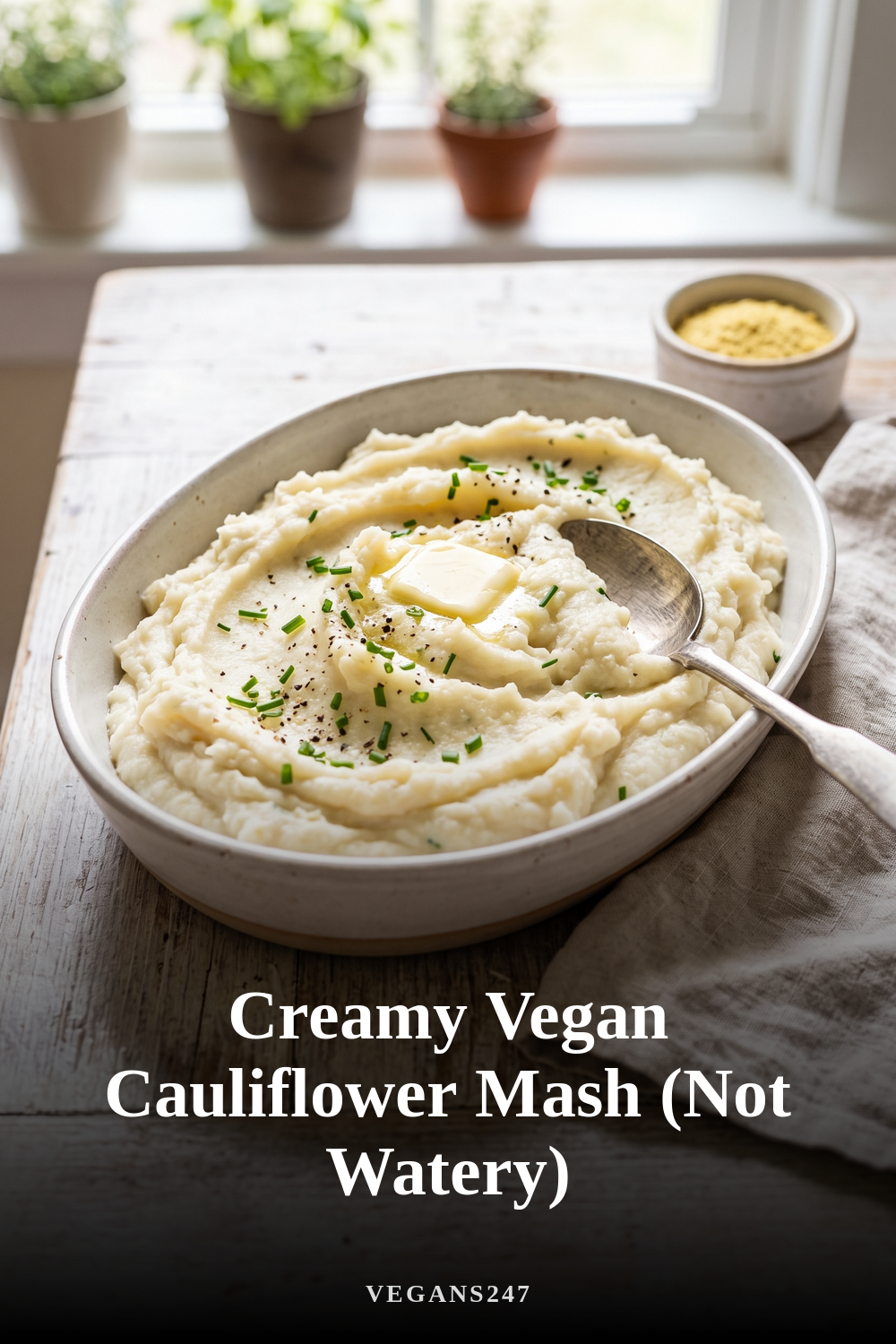
Steaming the cauliflower and then drying it out in a hot pan is the whole trick behind this vegan cauliflower mash. Cauliflower holds onto water like a sponge, and blending it straight from the pot gives you something closer to pureed soup than the fluffy side dish you were after. A food processor, garlic-infused olive oil, and a few minutes on the stove fix that without a single spoonful of thickener.
The method is closer to mashed potatoes than you might expect, and it works just as well next to vegan gravy on a holiday plate as it does beside a bowl of vegan broccoli cheddar soup on a weeknight. Warm sliced garlic in good olive oil first, then use every drop of that oil, because the fat carries the garlic through the whole mash and keeps it from tasting flat. Finish with vegan butter and a splash of unsweetened oat milk, and the texture lands somewhere between whipped potatoes and a soft puree.
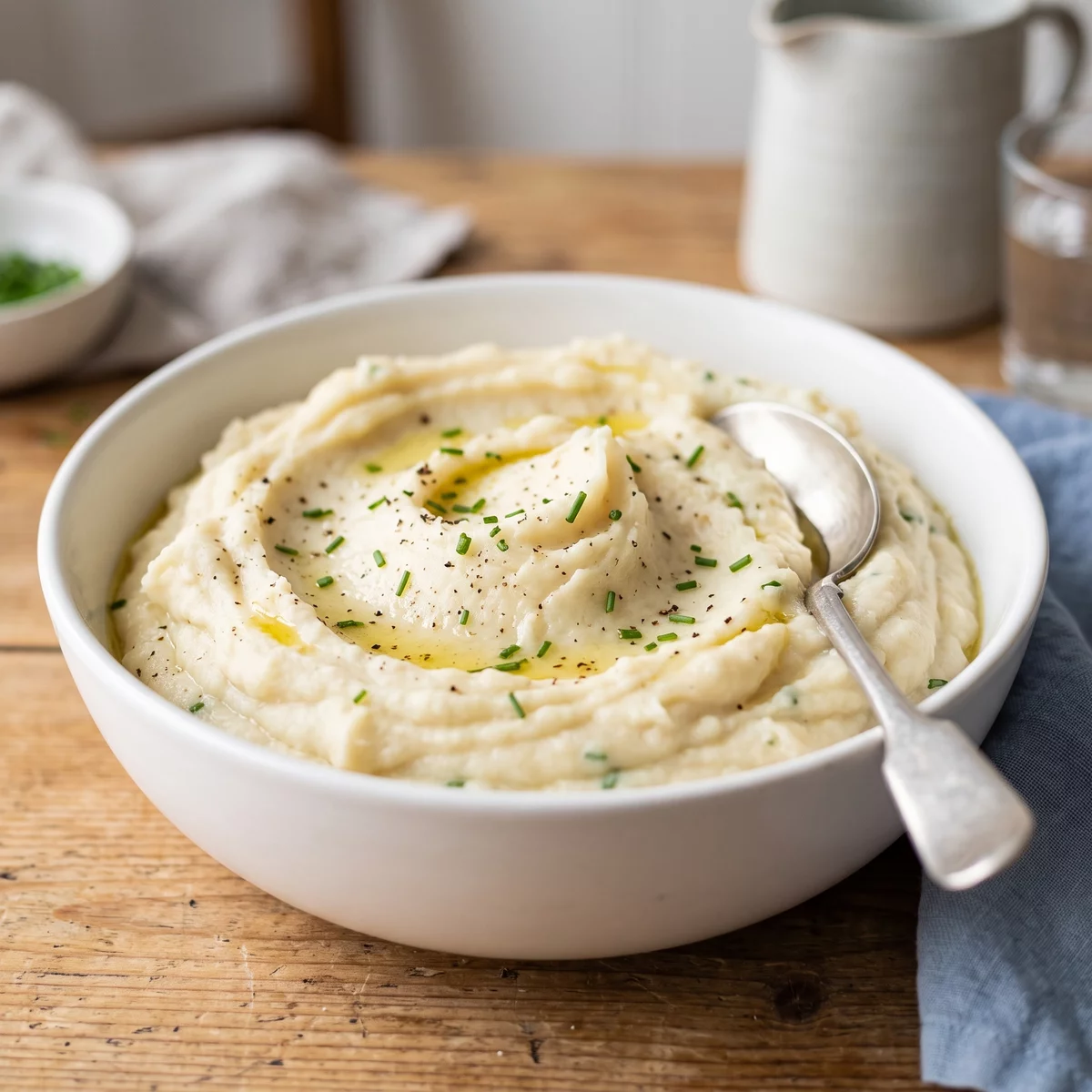
Vegan Cauliflower Mash
Ingredients
Method
- Cut the cauliflower into even florets so they cook at the same rate, then set them in a steamer basket over a pot of boiling water. Cover and steam for 12 to 15 minutes, until a knife slides into the thickest stem with no resistance.
- While the cauliflower steams, combine the olive oil and sliced garlic in a small skillet over medium-low heat. Cook for 3 to 4 minutes, stirring often, until the garlic turns soft and pale gold. Pull it off the heat before any of it browns, because burnt garlic turns the whole mash bitter.
- Lift the steamed cauliflower into a dry skillet in a single layer and set it over medium heat. Toss it for 3 to 4 minutes, until the surface looks matte and you stop seeing steam rise. This step is what keeps the mash thick instead of watery.
- Add half the cauliflower to a food processor with half the garlic oil, vegan butter, oat milk, nutritional yeast, salt, and pepper. Pulse until mostly smooth, stopping to scrape down the sides, then repeat with the second half.
- Taste and adjust the salt, adding more oat milk a tablespoon at a time only if the mash feels tight. Serve warm with a spoon of vegan butter and a scatter of chives or parsley.
Notes
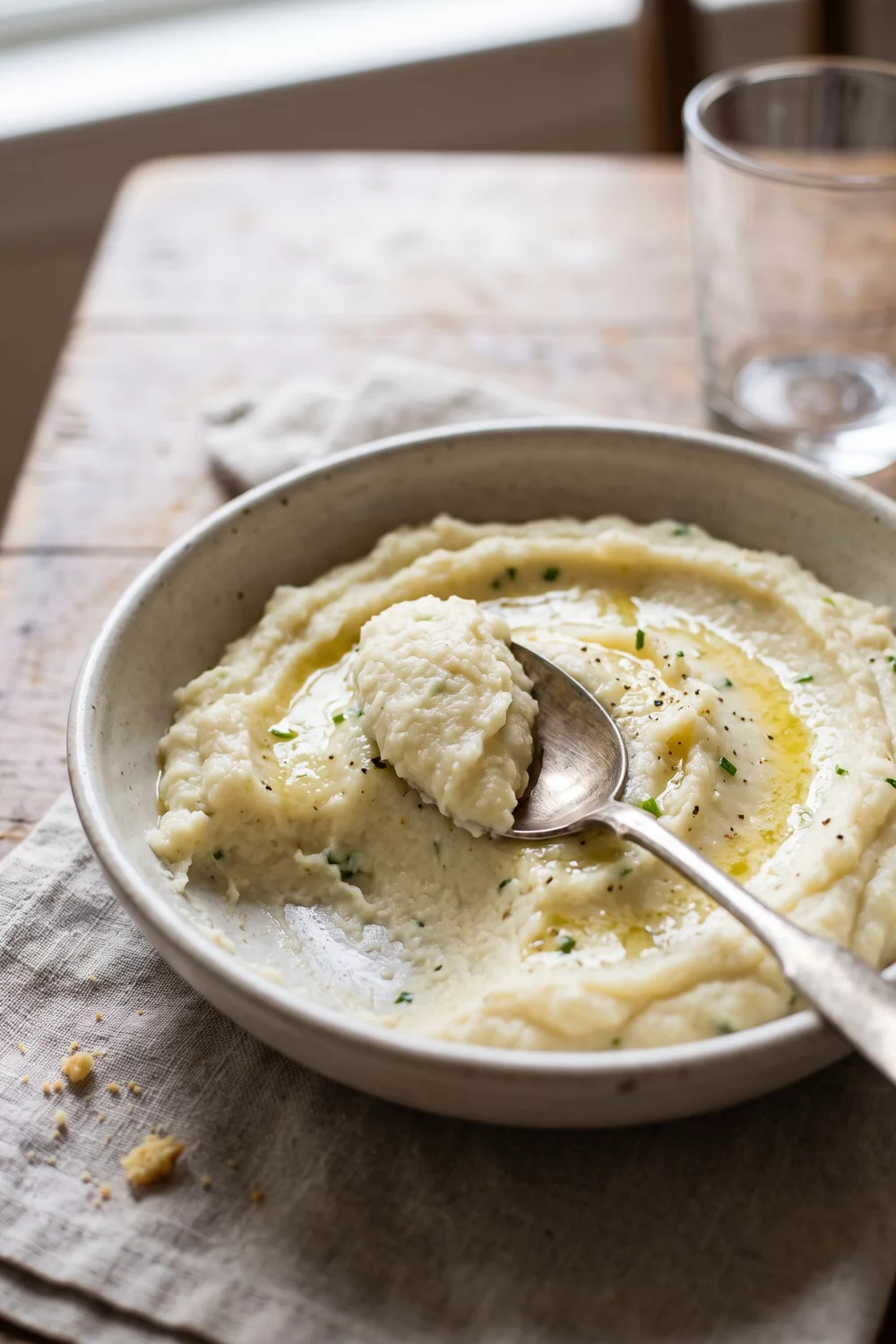
Tips for Vegan Cauliflower Mash
A few small choices separate a fluffy mash from a watery one, and all of them happen before the cauliflower meets the blade.
- Start with a dry head of cauliflower. Rinse it early and let it drain, or pat the florets dry, because every drop left on the surface is water you have to cook off later.
- Steam the florets instead of boiling them, because a steamer basket keeps them above the water so they cook by vapor, while boiling soaks them through and stacks the odds against you.
- Dry the steamed florets in a hot pan. Spread them in one layer for a few minutes until the shine fades and the steam stops, which is the single biggest fix for a loose mash.
- Pulse in a food processor rather than a blender. Short pulses build the potato-like body, while a high-speed blender whips in air and can turn the cauliflower to paste.
- Infuse the oil with garlic, then use both. Gently warming sliced garlic in olive oil softens its bite and spreads the flavor through the whole dish, so nothing tastes raw.
- Add the oat milk a splash at a time. The mash firms up as it sits, so start with less than you think you need and loosen it at the end if it needs it.
- Keep the pot lid off once the cauliflower is tender. Trapped steam condenses and drips right back onto the florets you just dried.
- Skip the flour and cornstarch entirely, because if the mash still looks loose, a couple of minutes in a dry skillet over low heat cooks off the extra moisture without dulling the flavor.
- Plan on two heads of cauliflower for four people. Raw cauliflower looks like a mountain in the bag, but it cooks down by about half and a single head makes a surprisingly small bowl.
- Season the mash in two passes. Cauliflower swallows salt more quietly than potatoes do, so taste it after the first pulse, then taste again right before it goes to the table.
- Warm the serving bowl before the mash goes in. A cold bowl pulls the heat out of a soft side dish fast, and this one is at its best eaten hot.
- Think about contrast on the plate. A soft mash benefits from something crisp alongside it, and vegan coleslaw does that job without stealing the spotlight.
Storage
Leftover mash keeps in an airtight container in the fridge for 3 to 4 days. Reheat it gently in a saucepan over low heat with a splash of oat milk, stirring until it loosens, because the microwave tends to heat the edges faster than the middle. It also freezes well for up to 2 months, and thaws overnight in the fridge before you warm it back up on the stove with a little vegan butter stirred through. For a make-ahead holiday, steam and dry the cauliflower earlier in the day, then pulse and season it just before everyone sits down.
FAQ
Why does my cauliflower mash turn out watery?
Almost always because the cauliflower still holds water when it reaches the blender. Steaming adds less water than boiling, drying the florets in a hot pan removes the rest, and skipping that drying step is the most common reason a mash turns to soup. It also helps to keep the lid off the pot once the cauliflower is tender, so the steam escapes instead of raining back down. If the mash still looks thin, a few minutes back in a dry skillet will tighten it more reliably than any thickener.
Can I make cauliflower mash without a food processor?
Yes, and an immersion blender is the easiest swap because you can run it right in the pot. A potato masher gives you a chunkier mash if you cook the cauliflower a few extra minutes first. A regular blender works in small batches too, but pulse it briefly, since running it at full speed whips the cauliflower into a gluey paste.
Can I use frozen cauliflower?
You can, and it saves the chopping, but frozen florets carry more water and tend to mash up less smooth. Steam them until tender, dry them in a hot pan longer than you would fresh cauliflower, and taste for salt at the end since frozen vegetables can taste flat. If you keep a bag in the freezer, use the florets straight from frozen rather than thawing them first, because thawing drains away even more of their structure.
What should I serve with vegan cauliflower mash?
It stands in for mashed potatoes almost anywhere. Spoon vegan gravy over it on a holiday plate, serve it next to vegan scalloped potatoes when you want two creamy sides, or use it as the base of a bowl piled with roasted vegetables. The flavor is mild on purpose, so it takes on whatever sauce lands on top.