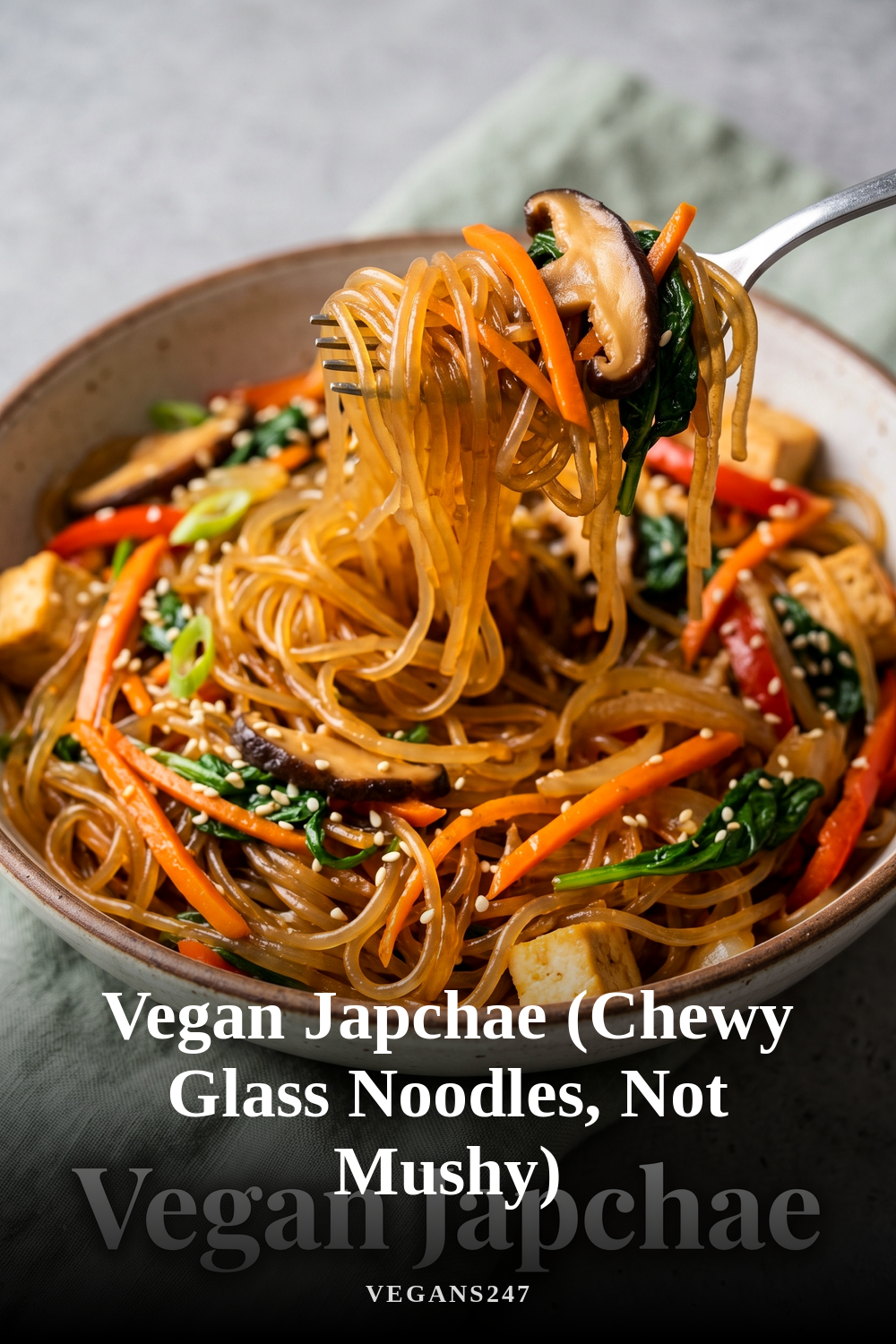
A bowl of vegan japchae is what I make when I want a noodle dish that works warm or cold, as a side or the whole meal. The noodles are made from sweet potato starch, and their whole job is to soak up a sweet-savory soy sauce while staying springy, which is why the timing matters more here than in almost any other stir-fry. Get the noodles right and the rest is a quick tumble of tofu and vegetables in a hot pan. It is the kind of dish that looks like you fussed over it, when really the whole thing comes together in about half an hour.
The sauce is simple on purpose, just soy sauce, brown sugar, toasted sesame oil, and garlic, so the vegetables keep their own flavor instead of disappearing under a heavy glaze. I brown the tofu first so it has a firm edge to hold onto, then cook the vegetables from firmest to softest, and finally fold everything together with the noodles in two passes so the sauce coats each strand instead of pooling at the bottom of the pan. If you have never worked with dangmyeon before, the one thing to remember is that they keep softening after they leave the water, so pull them early and let the cold rinse stop them dead. A bowl of japchae sits happily next to anything else you are putting out, and it holds up on a table for a while, which makes it a steady choice for a potluck or a big Korean-style spread.
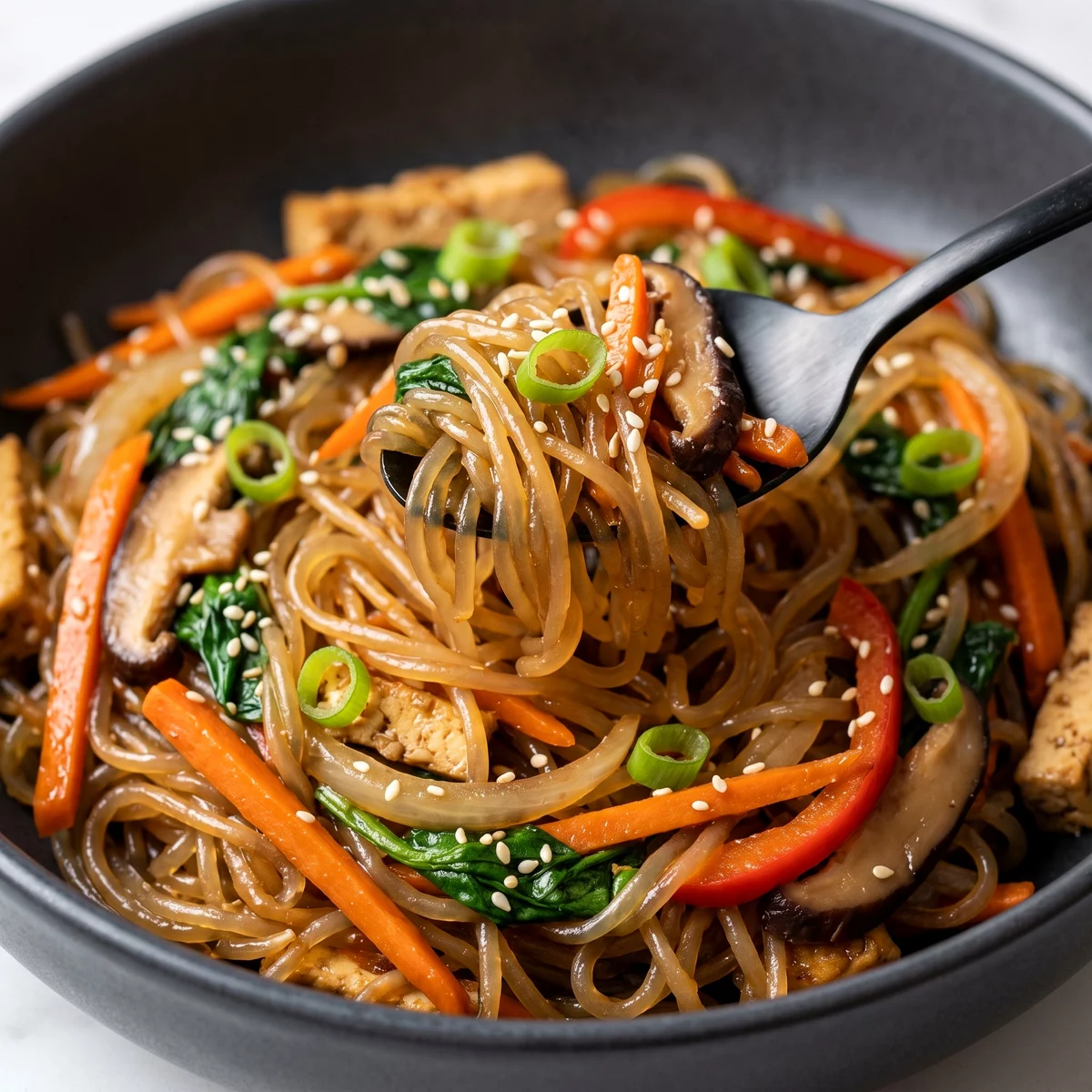
Vegan Japchae
Ingredients
Method
- Bring a large pot of water to a rolling boil. Add the sweet potato noodles and cook them for 5 to 6 minutes, until they are tender but still springy when you bite one. Start tasting at 4 minutes, because they soften quickly and there is no way to undo it.
- Drain the noodles and rinse them under cold running water until they are cool, then snip through the pile three or four times with kitchen scissors so the strands are easier to toss and eat. Toss them with 1 teaspoon of the sesame oil so they do not stick together.
- Stir together the soy sauce, brown sugar, sesame oil, and black pepper in a small bowl until the sugar dissolves. Set the sauce aside.
- Heat 1 tablespoon of the neutral oil in a large skillet or wok over medium-high heat. Add the tofu in a single layer and cook for 4 to 5 minutes, turning once, until the pieces are golden at the edges. Move the tofu to a plate.
- Add the remaining tablespoon of oil to the pan, then cook the onion, carrot, and bell pepper for 3 minutes, stirring often. Add the mushrooms and cook for 2 minutes more, then add the garlic and cook for 30 seconds, until it smells fragrant.
- Add the spinach and stir just until it wilts, about 30 seconds, then return the tofu to the pan. Add the noodles and pour over half the sauce. Toss everything together for 1 minute, then add the rest of the sauce and toss again until the noodles are glossy and every strand is coated.
- Turn off the heat, scatter the scallions and sesame seeds over the top, and serve warm or at room temperature.
Notes
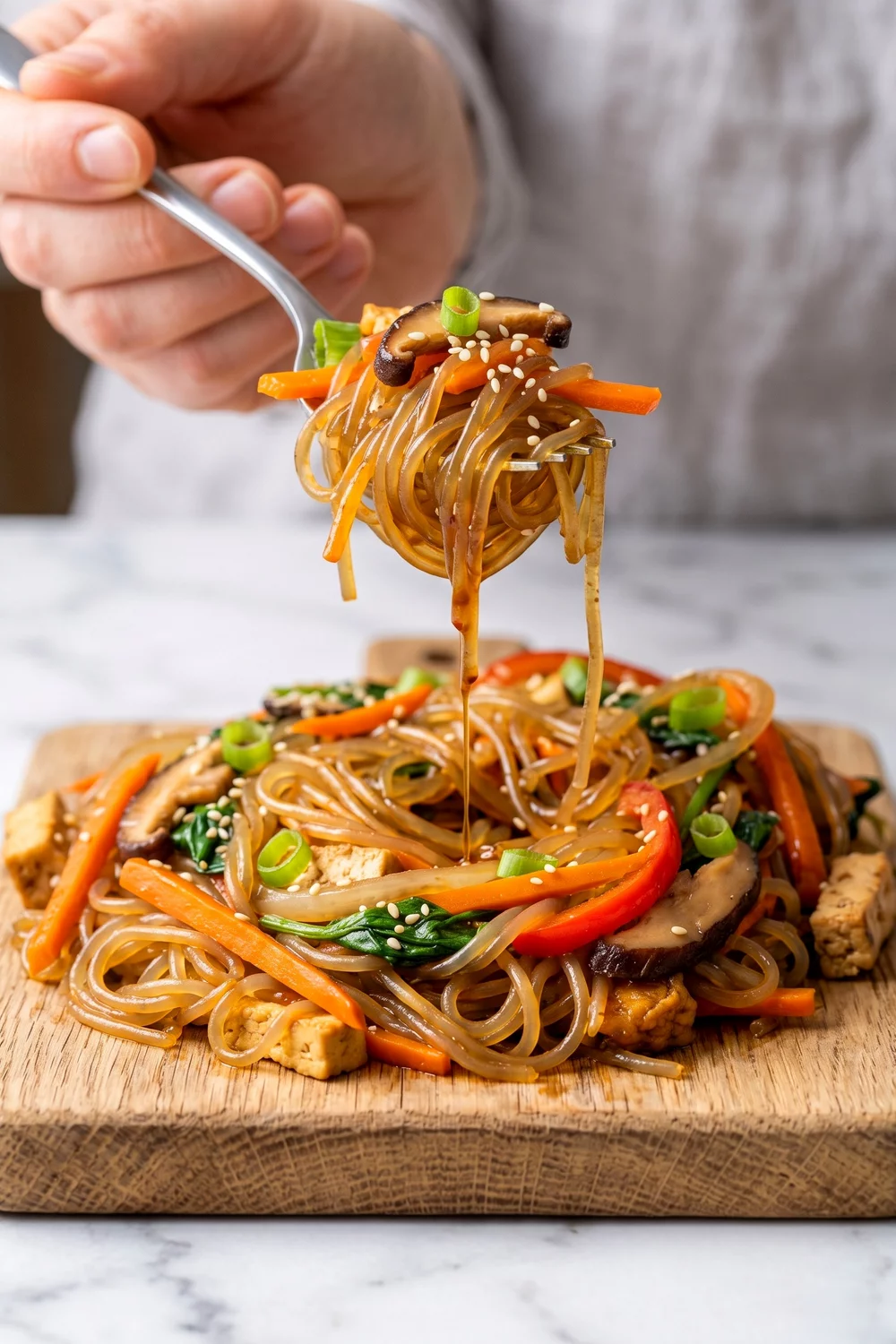
Tips for Vegan Japchae
Japchae is a forgiving dish once the noodles are right, and almost every problem traces back to how they were cooked and how the sauce goes on. These are the details that keep the strands separate and the vegetables crisp.
- Pull the noodles early. Sweet potato glass noodles keep softening after they drain, so cook them to just bouncy and no further. If they already feel soft in the pot, they will be gluey on the plate.
- Rinse them cold and oil them right away. Cold water stops the cooking, and a teaspoon of sesame oil keeps the strands from welding into one block while you cook the vegetables.
- Cut the pile with scissors. Dangmyeon are long, and a few snips make them far easier to toss and to eat without chasing a single endless strand around the bowl.
- Cook the vegetables firmest first. Onion, carrot, and pepper go in before the mushrooms and spinach, so the crunchy ones get their time and the tender ones do not overcook.
- Add the sauce in two passes. Half goes in with the noodles to soak in, and the rest goes on at the end so the dish stays glossy instead of sitting in a puddle of sauce.
- Keep the pan hot and move fast. A crowded, cooler pan steams the vegetables soft, so use the biggest skillet you have and let it come back to heat between additions.
Storage
Japchae keeps well in an airtight container in the fridge for 3 to 4 days, and it is one of the rare stir-fries that tastes just as good cold, which makes it an easy lunch. The noodles soak up the sauce as it sits, so if the dish looks dry the next day, loosen it with a teaspoon of water or a little more soy sauce before serving. To reheat, warm it in a skillet over medium heat for 2 to 3 minutes, or in the microwave in short bursts, adding a splash of water so the noodles do not seize up. I would not freeze it, because the glass noodles turn rubbery once thawed. For a make-ahead shortcut, cook the noodles, mix the sauce, and prep the vegetables a day ahead, then stir-fry everything fresh when you are ready to eat. The cooked dish also travels well to a picnic or a lunch box, since it does not need to stay hot to taste right.
FAQ
What are japchae noodles made of?
Japchae is made with dangmyeon, noodles made from sweet potato starch. They cook up translucent and chewy, and they are naturally gluten free. They do not taste like sweet potato at all, which is exactly why they work so well at soaking up the soy sauce. Look for the words dangmyeon or sweet potato starch on the package, and give them a squeeze to check that the strands are still flexible before you buy.
Why did my japchae turn mushy?
It almost always comes down to overcooking the noodles. Sweet potato glass noodles keep softening after they leave the pot, so they need to come out while they still have a springy bite. Rinsing them under cold water right away stops the cooking and keeps them firm. Taste a strand a minute before the package time suggests, and trust your teeth over the clock.
Can I make vegan japchae gluten free?
Yes. The noodles are already gluten free, so the only change is the soy sauce. Use tamari or a soy sauce labeled gluten free in the same amount, and the dish stays exactly the same otherwise. Check the sesame oil and the sesame seeds too, since a few brands add wheat or barley.
Can I use different vegetables or skip the tofu?
The vegetables are flexible, and any stir-fry-friendly ones work, such as cabbage, broccoli, or bok choy. If you leave out the tofu, add an extra handful of mushrooms so the dish still has something with a firm, substantial bite.