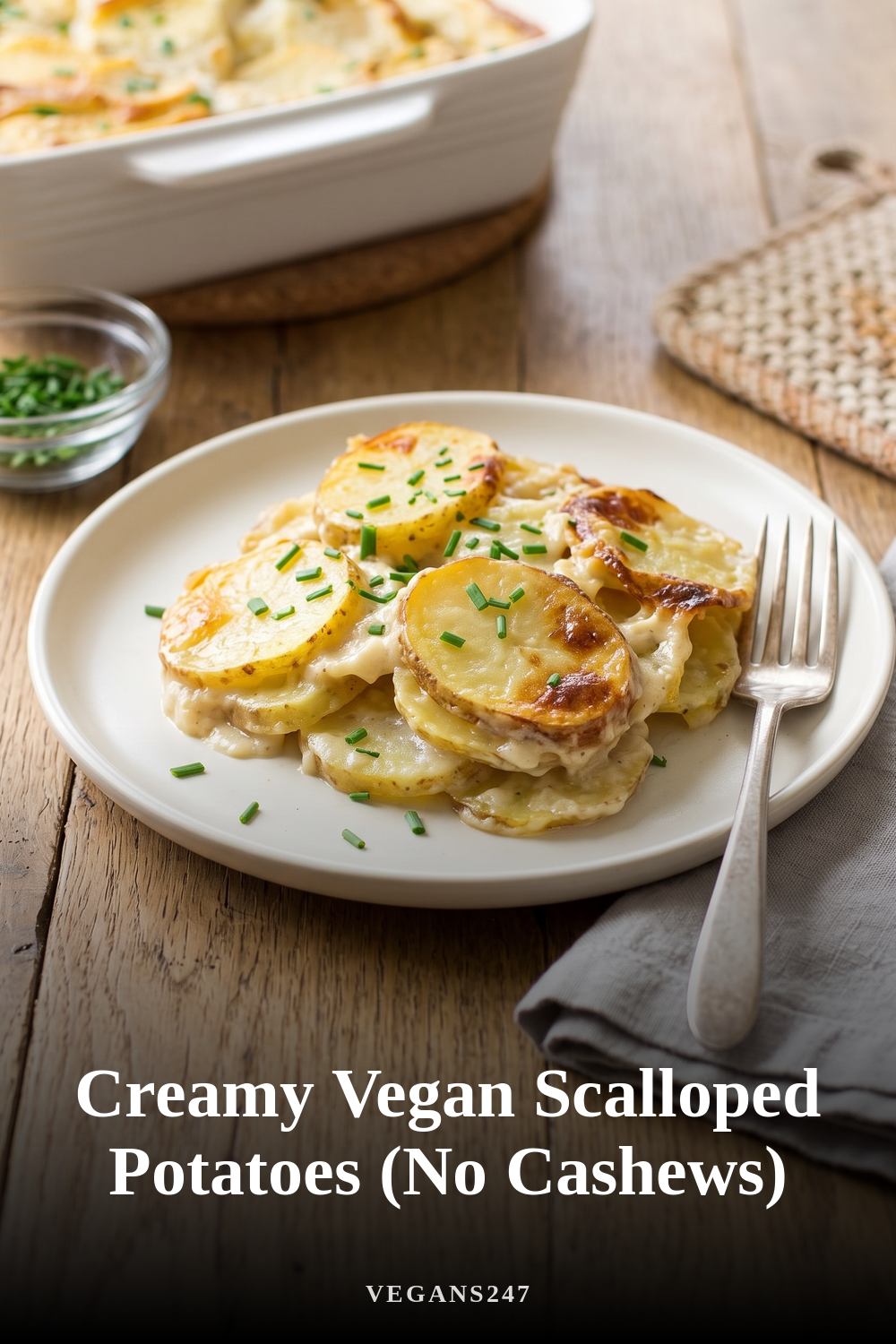
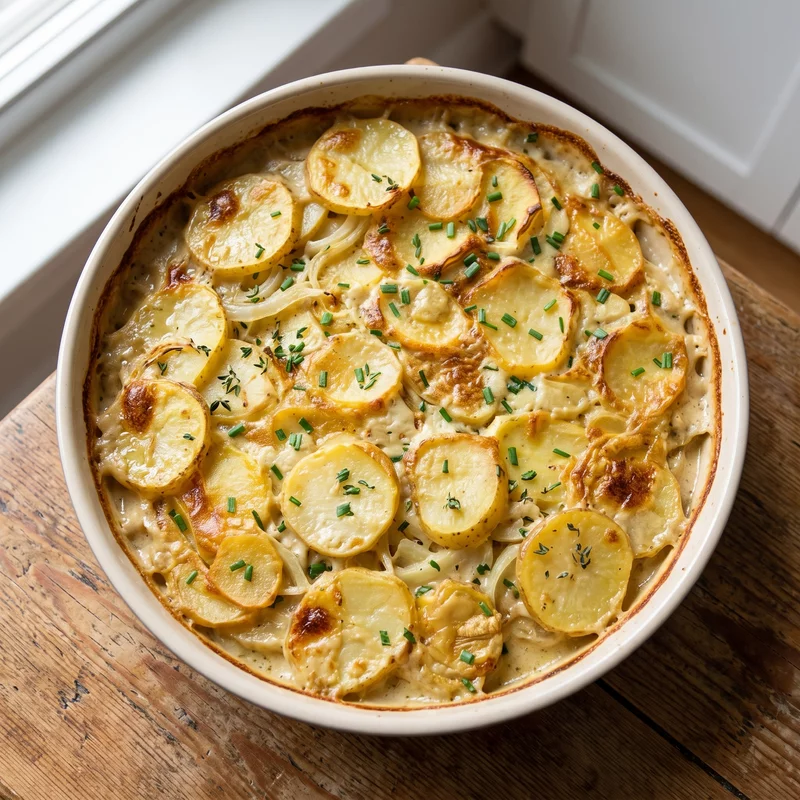
These vegan scalloped potatoes come out of the oven bubbling at the edges, with tender layers underneath and a sauce that never touches a blender or a bag of store-bought vegan cheese. The sauce is built on the stovetop from flour, oat milk, and nutritional yeast, so it turns smooth and savory right in the pan, then it settles down between paper-thin potato slices as they bake. What lands on the table is the classic creamy side dish without cashews, without a high-speed blender, and without any dairy.
The technique matters more than the ingredient list here. Potatoes sliced too thick stay hard in the middle no matter how long they bake, and a sauce that’s too thin leaves you with watery layers instead of a cohesive casserole. Slicing the potatoes about an eighth of an inch thick and letting the sauce thicken until it coats the back of a spoon solves both problems before the dish ever goes in the oven. It’s an hour of mostly hands-off oven time, which makes it easy enough for a regular weeknight and good enough for a holiday table. The nutritional yeast and Dijon give the sauce a tangy, savory edge that reads as cheesy even though there’s no cheese in it, and a short rest after baking lets the sauce set just enough to hold the layers together when you spoon them out. I serve it next to my easy vegan turkey roast when I want a full spread, and it works just as well beside easy homemade seitan or a plate of homemade vegan bacon at brunch.
Vegan Scalloped Potatoes
Ingredients
Method
- Heat the oven to 375 F (190 C). Grease a 9x13-inch baking dish or a 3-quart casserole with a little olive oil or vegan butter. Slice the potatoes about 1/8 inch thick with a mandoline, a food processor, or the slicing side of a box grater, and leave the slices unrinsed so their surface starch stays on.
- Heat the olive oil or vegan butter in a large skillet over medium heat. Add the onion with a pinch of salt and cook, stirring now and then, until soft and lightly golden, 5 to 6 minutes. Stir in the garlic and thyme and cook for 30 seconds, until fragrant.
- Sprinkle the flour over the onion and stir constantly for 1 minute, until it smells lightly toasted and no dry powder remains. Pour in the oat milk in a slow, steady stream while whisking, then add the vegetable broth the same way, scraping up anything stuck to the pan.
- Add the nutritional yeast, Dijon mustard, smoked paprika, 1 teaspoon of salt, and several grinds of black pepper. Bring the sauce to a gentle simmer and cook, whisking often, until it thickens enough to coat the back of a spoon, 5 to 7 minutes. Taste and adjust the salt; the sauce should be a little more seasoned than you want the finished dish to be.
- Spread a thin layer of sauce across the bottom of the baking dish. Arrange a third of the potato slices in an even layer, overlapping them slightly, and season with salt and pepper. Spoon over a third of the sauce, then repeat twice more, finishing with the last of the sauce on top. Press the potatoes down with the back of a spoon so the liquid sits just level with the top layer.
- Cover the dish tightly with foil and bake for 40 minutes. Remove the foil and bake for another 25 to 30 minutes, until the top is golden and bubbling and a knife slides into the center with no resistance. If the top browns before the potatoes are tender, cover it again and keep baking. Let the dish rest for 10 minutes before serving, then dust with a little more smoked paprika.
Notes
What makes the layers turn out tender
| What to do | Why it matters |
|---|---|
| Slice the potatoes 1/8 inch thick and keep the slices even | Thick or uneven slices cook at different speeds, so some turn to mush while others stay firm in the middle. A mandoline or the slicing side of a box grater keeps every slice the same. |
| Don’t rinse the slices after cutting them | The surface starch is what helps the sauce cling to the potatoes and thicken around the layers. Rinsing it off leaves you with a looser, soupier casserole. |
| Thicken the sauce until it coats the back of a spoon before layering | A thin sauce sinks to the bottom and leaves the upper layers dry. It should fall off the spoon in a slow, thick ribbon as it comes off the heat. |
| Press the potatoes down so the sauce sits level with the top layer | Any slices poking above the liquid brown too quickly and stay hard underneath. Push them under so they cook in the sauce. |
| Bake covered first, then uncovered | The foil traps steam so the potatoes cook all the way through, and removing it lets the top brown and the sauce bubble at the edges. |
| Fit the potatoes snugly in the dish | A dish that’s too large spreads the layers thin and leaves the sauce with nowhere to pool. A 9×13-inch pan or a 3-quart casserole holds about 3 pounds of sliced potatoes. |
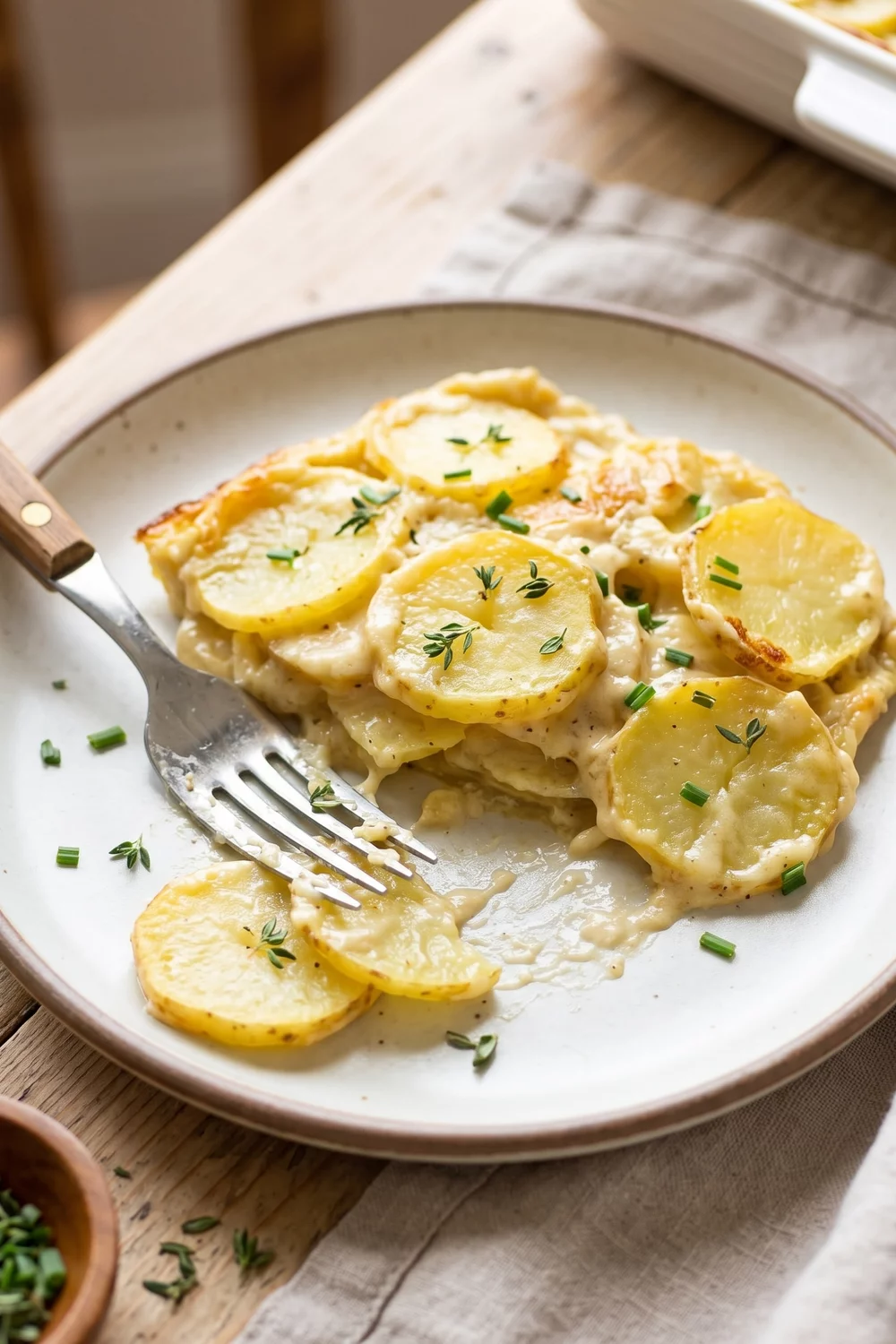
| Let the dish rest for 10 minutes before serving | The sauce is loose straight out of the oven. A short rest lets it thicken and set so the layers hold together on the plate instead of sliding apart. |
Scalloped potatoes are at their best within about 30 minutes of coming out of the oven, while the sauce is still loose and the top is crisp. Leftovers keep for 3 to 4 days in a sealed container in the fridge. Reheat them covered in a 350 F oven with a splash of oat milk or vegetable broth to loosen the sauce, since it firms up a lot when cold. The microwave works in a pinch, though it softens the browned top. I don’t freeze this dish, because the potatoes turn grainy and watery as they thaw.
FAQ
Do I need cashews or vegan cheese to make this creamy?
No. The creaminess comes from a flour-thickened sauce made with oat milk, vegetable broth, and nutritional yeast. The nutritional yeast gives it a savory, lightly cheesy flavor without any dairy, and the flour does the thickening work that cashews usually handle in vegan sauces. That’s also why this version needs no blender: everything comes together in the pan with a whisk.
Why are my scalloped potatoes still hard after baking?
The slices were probably too thick or the dish was too crowded. Aim for slices about an eighth of an inch thick, use a dish big enough that the sauce can move between the layers, and keep it covered for the first stretch of baking so steam can cook the potatoes through before the top browns. A knife should slide into the center with no resistance when they’re done, and if it doesn’t, cover the dish again and give it more time.
Can I make this recipe gluten-free?
Yes. Swap the all-purpose flour for the same amount of cornstarch or a gluten-free flour blend, and whisk it into the fat the same way before adding the liquid. Cornstarch thickens a little faster than flour, so pull the sauce off the heat as soon as it coats the back of a spoon. Check that your vegetable broth is labeled gluten-free, since some brands sneak in barley or wheat.
Can I assemble scalloped potatoes ahead of time?
You can build the whole dish up to a day ahead and keep it covered in the fridge. Add about 10 minutes to the covered baking time since it starts cold, and don’t put a cold glass or ceramic dish straight into a hot oven; let it sit on the counter for 20 minutes first so it doesn’t crack. You can also slice the potatoes and make the sauce separately a day ahead, then layer and bake the next day.