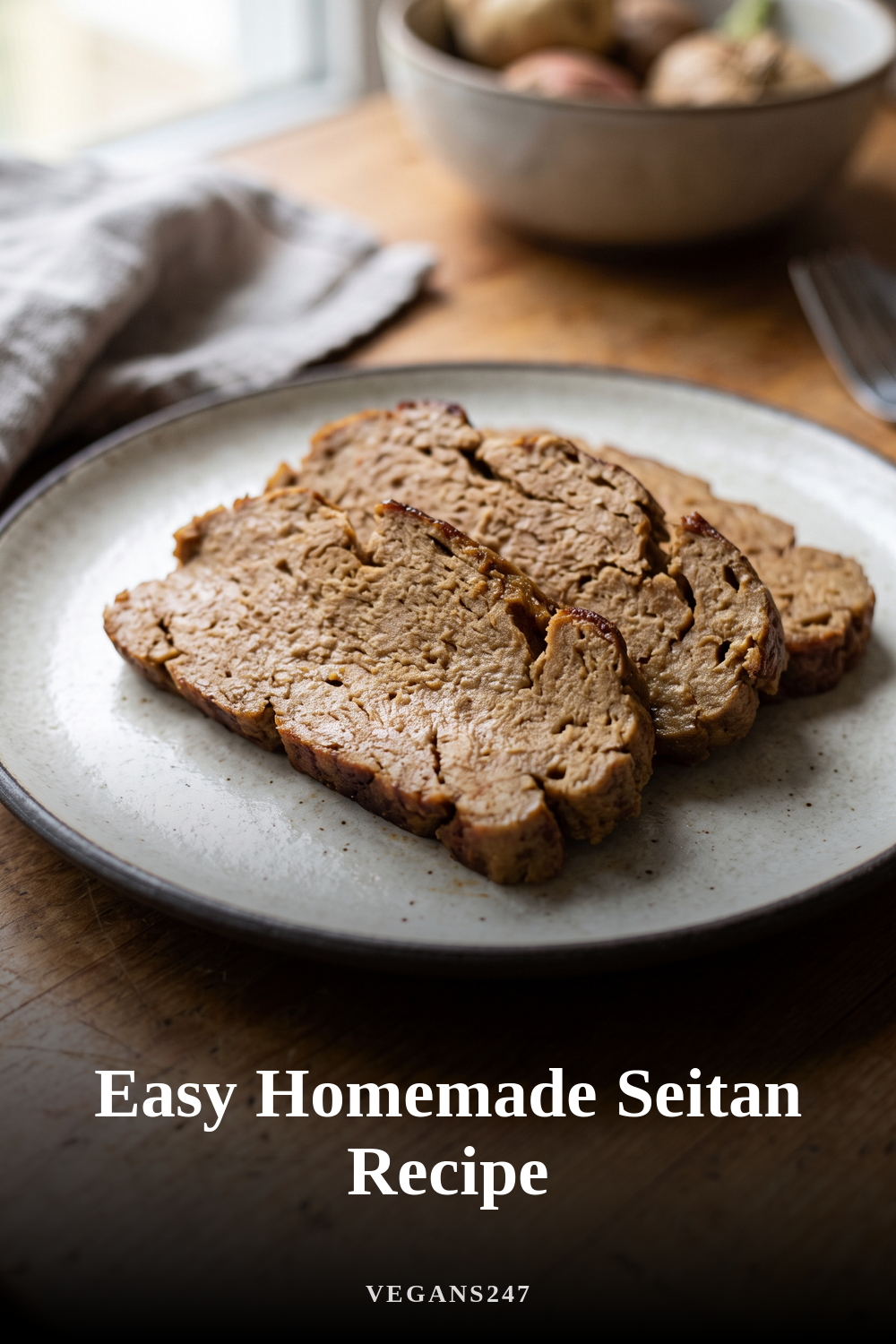
This is the seitan recipe I go back to whenever a recipe on this site calls for a chewy, savory protein and I don’t want to rely on a store-bought package. Vital wheat gluten is the whole trick here: mix it with a little seasoning and broth, knead it briefly, and it turns into a dense, stretchy dough that firms up into something genuinely meaty once it simmers.
The two things that make or break homemade seitan are the kneading and the simmer. A short knead builds up the gluten strands that give seitan its chew, and a gentle simmer (never a hard boil) keeps the outside from turning spongy while the inside cooks through. I season the simmering broth generously with garlic, soy sauce, and a bay leaf, and the seitan drinks in a good amount of that flavor as it cooks.
Once it’s done, I let it cool in the broth before slicing, which keeps it from falling apart. From there it’s ready to pan-sear, slice into a sandwich, or cube into whatever savory dish needs a plant-based protein with real bite to it.
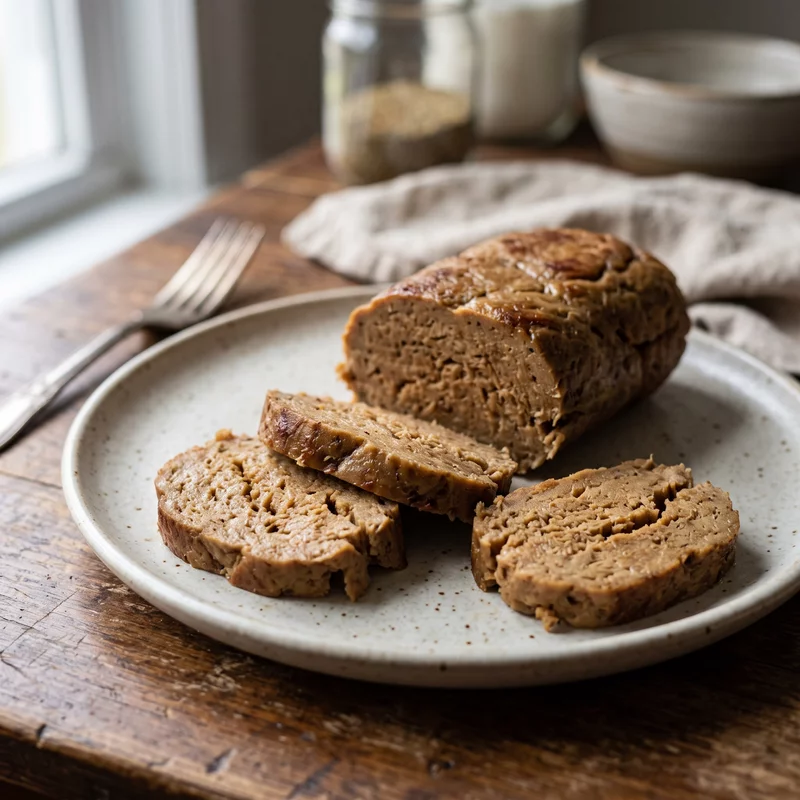
Homemade Seitan
Ingredients
Method
- In a mixing bowl, whisk together the vital wheat gluten, nutritional yeast, garlic powder, onion powder, and smoked paprika.
- In a separate bowl or measuring cup, stir together the vegetable broth, soy sauce, and olive oil.
- Pour the wet mixture into the dry mixture and stir with a fork until it comes together into a shaggy dough, then use your hands to bring it into a rough ball.
- Knead the dough right in the bowl for about 3 to 4 minutes. It will feel tight and springy as the gluten develops - that resistance is exactly what gives seitan its chew. Let the dough rest for 5 minutes, then shape it into a short, thick log.
- In a large pot, combine the vegetable broth, soy sauce, smashed garlic, bay leaf, and peppercorns for the simmering broth. Bring it to a gentle simmer over medium heat.
- Lower the seitan log into the broth. It should be mostly submerged; top up with a little water if it isn't. Reduce the heat so the broth barely simmers - small, lazy bubbles, not a boil. A hard boil makes seitan puff up and turn spongy instead of dense and chewy.
- Partially cover the pot and let the seitan simmer gently for 45 to 50 minutes, turning it over once about halfway through so it cooks evenly.
- Turn off the heat and let the seitan cool in the broth for at least 15 minutes before lifting it out. Slice or cube it once it's cool enough to handle - it firms up further as it cools, so resist cutting into it right away.
Notes
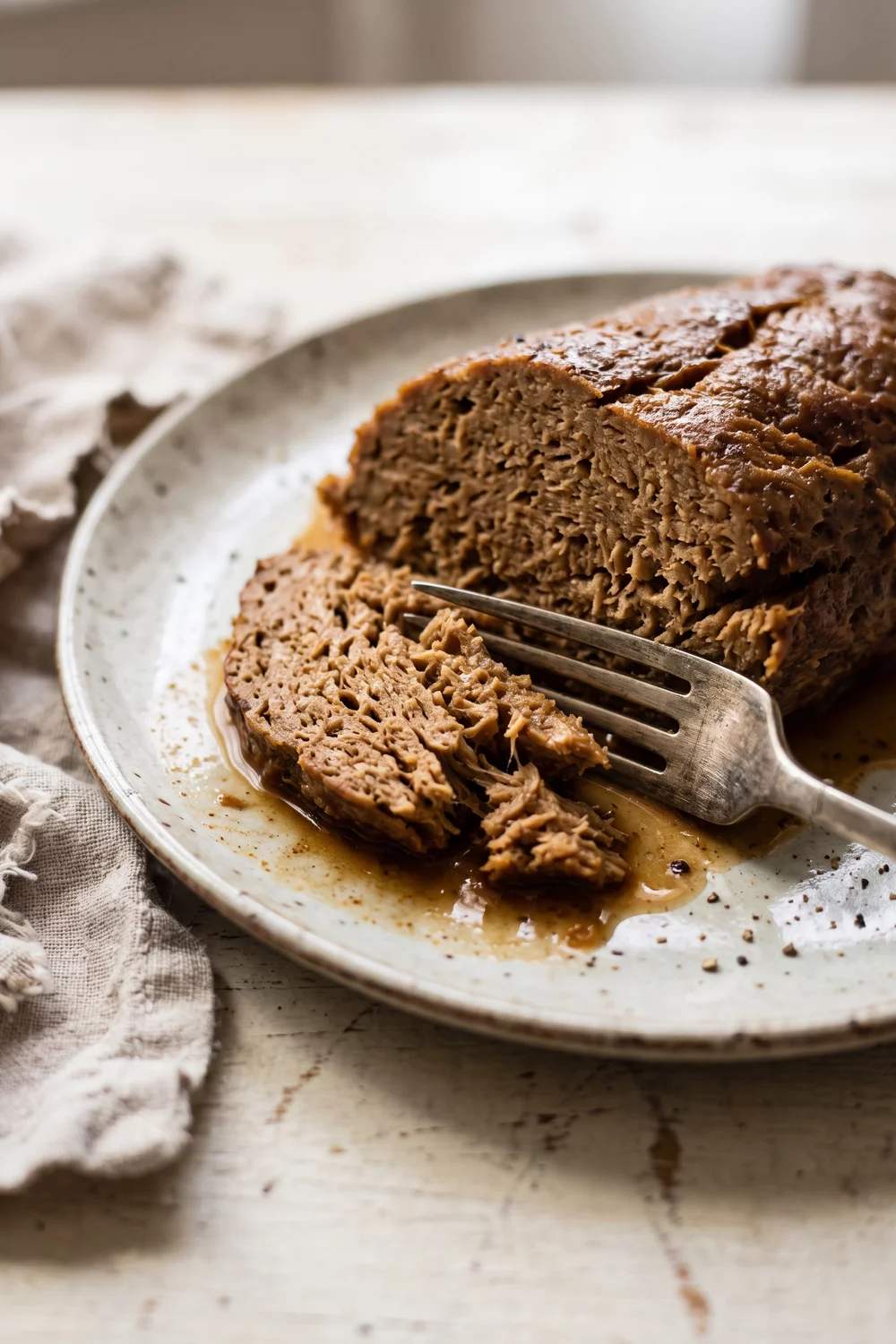
Tips for the best homemade seitan
- Don’t skip the short knead. It only takes a few minutes, but it’s what develops the gluten strands responsible for seitan’s signature chew – a dough that’s just stirred together without kneading turns out noticeably softer and less meaty.
- Keep the broth at a gentle simmer, never a rolling boil. Vital wheat gluten expands as it cooks, and a hard boil pushes too much gas into the dough, leaving you with a spongy, airy texture instead of a dense one.
- Let it cool before slicing. Seitan is still setting up in those first several minutes out of the broth, and slicing into it too early makes it fall apart rather than hold a clean cut.
Ways to use homemade seitan
Once it’s made, homemade seitan is ready for pretty much anything you’d do with a chewy, savory protein: sliced thin and pan-seared until the edges crisp up for a sandwich, cubed and tossed into a stir-fry, or shredded into a saucy skillet dish.
FAQ
Can I use all-purpose flour instead of vital wheat gluten?
No – vital wheat gluten is the gluten protein isolated out of wheat flour, and it’s what gives seitan its chewy structure. All-purpose flour is mostly starch and won’t work as a substitute; you need the concentrated vital wheat gluten itself, which is usually sold in the baking or health food aisle.
Why did my seitan turn out spongy instead of chewy?
This almost always comes down to the simmer being too vigorous. A hard boil makes the dough puff up with trapped gas, giving it a spongy, bread-like texture. Keeping the broth at a bare, gentle simmer the whole time is what keeps the texture dense and meaty instead.
Can I bake or steam the seitan instead of simmering it?
This recipe is written for simmering, which is the most forgiving method for a first attempt and keeps the seitan moist throughout. If you steam or bake seitan, the texture and cook time both come out differently, so I’d treat those as a separate method rather than a straight swap in this recipe.
How long does homemade seitan last in the fridge?
Stored in an airtight container with a bit of its cooking broth, homemade seitan keeps for about 4 days in the fridge. It also freezes well if you want to make a batch ahead.