
The trick to a vegan gyro that slices like the real thing is to steam the seitan first and sear it second. Steaming sets the loaf at an even, gentle heat so it turns firm enough to slice without the rubbery bounce you get from boiling, and a hard sear on the cut strips is what builds the browned, crisp edges people actually want in a gyro. I blend black beans straight into the dough with oregano, rosemary, and smoked paprika, and that is the detail that keeps the filling tender instead of tough. You do not need a rotisserie here, just a pot, a steamer basket, and a hot skillet.
Once the loaf is steamed and rested, the rest moves fast. I slice it thin, flash the strips in a hot pan until the edges curl and brown, then pile everything into warm pita with tomato, red onion, lettuce, and a garlicky vegan tzatziki made from unsweetened vegan yogurt. If you already make my easy homemade seitan, the dough will feel familiar, and a scoop of creamy vegan cucumber salad or classic vegan potato salad on the side turns it into a proper Greek-style spread. The loaf keeps for days, so a weeknight dinner and a packed lunch come out of the same batch.
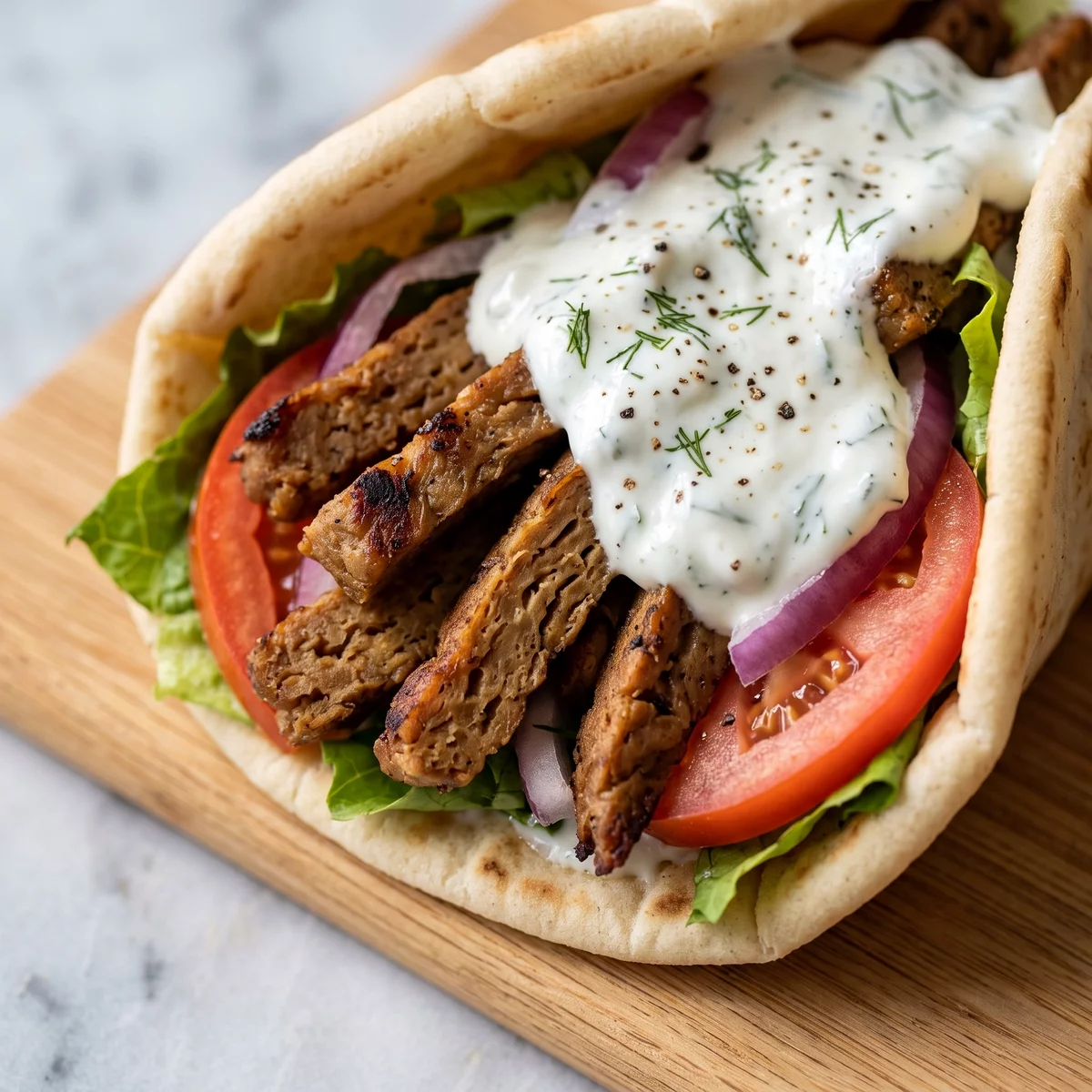
Vegan Gyro
Ingredients
Method
- Add the black beans, vegetable broth, soy sauce, olive oil, garlic, oregano, marjoram, rosemary, smoked paprika, onion powder, garlic powder, black pepper, and salt to a blender. Blend for about a minute, until the mixture is completely smooth with no whole beans left.
- Pour the puree into a large bowl and add the vital wheat gluten. Stir with a spatula or your hands until a shaggy dough forms, then knead it in the bowl for 2 to 3 minutes, just until it comes together into a firm, slightly springy ball. Stop there, because more kneading makes the seitan tough.
- Shape the dough into a log about 8 inches long and 3 inches thick. Wrap it tightly in foil, twisting the ends like a candy wrapper so no water can get inside.
- Set a steamer basket in a large pot with about an inch of water below it and bring the water to a boil. Put the wrapped log in the basket, cover the pot, and steam over medium heat for 50 to 60 minutes, adding hot water if the pot runs dry. The loaf is done when it feels firm and springs back when pressed.
- Take the log out and let it cool, still wrapped, for at least 15 minutes so it firms up. Unwrap it and slice it thinly across the log, about 1/8 to 1/4 inch thick, into strips.
- While the loaf rests, make the tzatziki. Grate the cucumber, sprinkle it with a pinch of salt, and squeeze it dry in a clean towel. Stir it together with the vegan yogurt, grated garlic, lemon juice, dill, and salt, then chill it until serving.
- Heat the olive oil in a large skillet over medium-high heat. Lay the seitan strips in a single layer, working in batches so the pan is not crowded, and sear for 2 to 3 minutes per side, until the edges are browned and crisp. Return all the strips to the pan, add the lemon juice and oregano, and toss for 30 seconds.
- Warm the pitas, then fill each one with lettuce, tomato, red onion, and the seared strips. Spoon the tzatziki over the top, fold the pita around the filling, and serve right away.
Notes
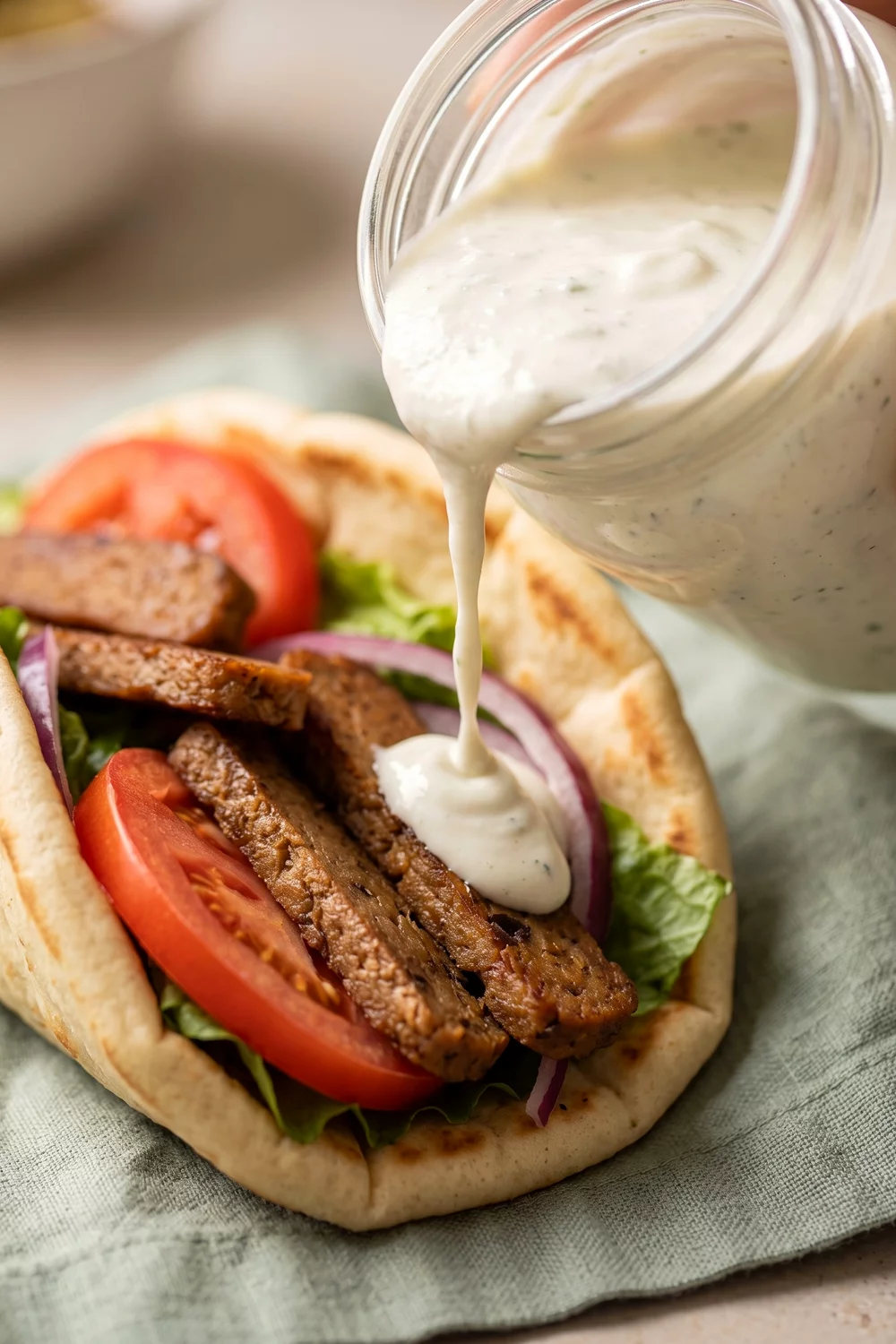
Why This Vegan Gyro Works
- **Steaming sets the loaf before any browning** – Steam holds the seitan at a steady, gentle heat, so the gluten sets into a firm loaf you can slice clean. Boil it instead and the outside goes waterlogged while the middle turns spongy.
- **Blended black beans keep the gluten tender** – The pureed beans dilute the gluten just enough to stop the chew from turning rubbery, and they add protein and a deeper color along with it. Leave them out and the loaf comes out tighter and tougher.
- **A rested loaf slices clean** – A seitan log straight from the steamer is soft enough to tear under the knife. Fifteen minutes of resting lets it firm up, so the strips come out even instead of ragged.
- **A hot, uncrowded skillet builds the crust** – The whole gyro character lives in the browned edges of each strip. Crowd the pan and the slices steam pale, but keep them in a single layer and they caramelize the way the rotisserie version does at the edges.
- **Finishing with lemon and oregano keeps it bright** – The dried herbs bloom in the dough, but the squeeze of lemon over the seared strips at the end is what stops the finished bite from tasting flat and heavy.
Storage
The cooled seitan loaf keeps in the fridge for up to 5 days, tightly wrapped, and the sliced strips reheat best in a hot skillet for 2 to 3 minutes so the edges crisp back up. The microwave leaves them soft, so I skip it. To keep them longer, slice the loaf and freeze the strips in a sealed bag for up to 3 months, then sear them from frozen with a little extra oil. The tzatziki is best within 3 or 4 days, and it will release some water as it sits, so give it a stir before serving. I keep the parts separate and build the pitas to order, because a filled and wrapped gyro softens within an hour.
FAQ
What is the gyro filling made from?
This recipe builds the filling from seitan, which is made by mixing vital wheat gluten with a seasoned puree of black beans, vegetable broth, soy sauce, olive oil, garlic, and dried herbs. Steaming sets that mixture into a firm loaf that you slice and sear. The result is chewy and savory, and it holds its shape in a pita far better than a loose crumble would. If you have cooked with vital wheat gluten before, the dough will feel familiar, and if you have not, it is the same ingredient behind a classic homemade seitan.
Why did my seitan come out rubbery?
Rubbery seitan almost always comes from overworking the dough or cooking it too hard. Knead the dough for only 2 to 3 minutes, just until it comes together, because every extra minute develops the gluten into a tighter, bouncier texture. Steam it rather than boil it, and do not push the steaming time past an hour, since longer cooking only firms it further. A rested loaf that springs back when you press it is ready.
Do I need a steamer basket for this?
A steamer basket is the easiest way, but it is not the only one. You can set the wrapped loaf on a metal colander or a small rack inside a covered pot with an inch of water below it, or wrap the log tightly in foil and steam it directly. Keep the water under the loaf and top the pot up with hot water if it runs low. If you would rather skip steaming entirely, a foil-wrapped loaf bakes on a sheet pan at 350F for about an hour.
Can I make the seitan ahead of time?
Yes, and it is the best way to break up the work. The steamed loaf keeps in the fridge for up to 5 days, or you can slice it and freeze the strips for up to 3 months. Sear the strips just before you serve so the edges stay crisp, and make the tzatziki up to 3 days ahead and keep it cold. Warm the pitas and assemble at the last minute so nothing goes soggy.