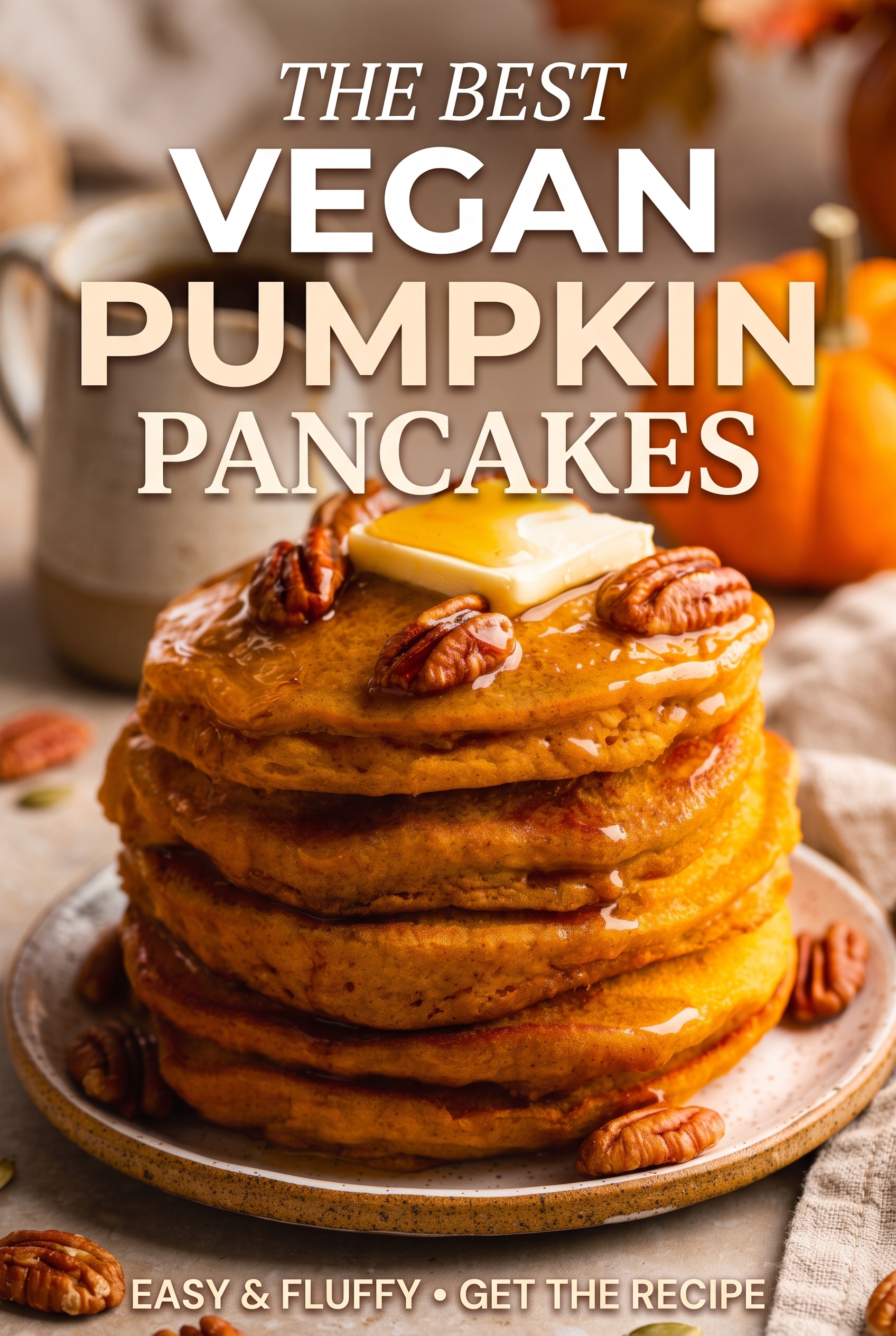
Vegan pumpkin pancakes live or die by one thing most recipes rush: getting the moisture under control before the batter hits the pan. Canned pumpkin holds a lot of water, and when all of it goes in at once the pancakes steam instead of browning, so the centers stay damp however long you leave them on the griddle. I pat the puree dry, keep the pumpkin measured against the flour, and rest the batter so it thickens before it cooks. The result is a stack that puffs up tall, browns evenly, and tastes like pumpkin instead of a wet sponge.
The spice here is the same warm blend in my chewy vegan pumpkin cookies and my pumpkin spice latte, so a fall brunch comes together fast. Serve them next to a plate of custardy vegan French toast, or keep the morning simple with a bowl of vegan overnight oats on the days you want to prep ahead. A short rest and steady medium heat are the whole trick, and once you have them down, leftovers reheat almost as well as the first batch. They are also a good home for the half can of pumpkin that lingers in the fridge after a pie, so nothing goes to waste.

Vegan Pumpkin Pancakes
Ingredients
Method
- Whisk the oat milk and apple cider vinegar together in a small bowl and set it aside for 5 minutes, until it looks slightly thickened and curdled. Press the pumpkin puree between a few layers of paper towel to pull out excess water, then measure out 3/4 cup of the drier puree.
- In a large bowl, whisk the flour, cane sugar, baking powder, baking soda, pumpkin pie spice, and salt until evenly combined. In a medium bowl, whisk the drained pumpkin, the curdled oat milk, melted coconut oil, and vanilla until smooth.
- Pour the wet ingredients into the dry and fold with a spatula until just combined, stopping while a few small lumps still show. Do not overmix. If the batter looks thin, sprinkle in another tablespoon of flour. Let the batter rest for 10 minutes to thicken while you heat the pan.
- Heat a nonstick skillet or griddle over medium heat, around 350F, and brush it lightly with refined coconut oil. Pour about 1/4 cup of batter per pancake and gently spread it into a round. Cook for 2 to 3 minutes, until bubbles break across the surface and the edges look dry and set.
- Flip the pancakes and cook for 1 to 2 minutes more, until the second side is golden brown and the centers feel firm when you press them. Move the cooked pancakes to a plate and keep them warm while you cook the rest, adjusting the heat down a notch if the pan starts to run hot.
- Serve the pancakes warm with maple syrup, a pat of vegan butter, and a scatter of pecans or chocolate chips if you like. Leftovers cool completely before they are stored.
Notes
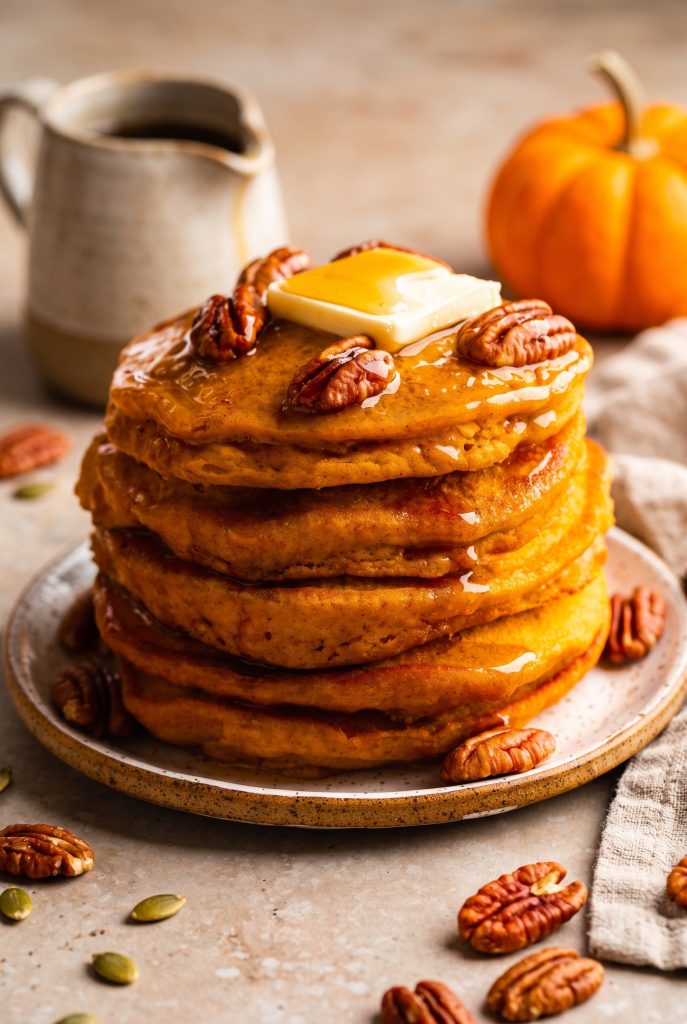

Why This Vegan Pumpkin Pancakes Works
Three things separate a tall, even stack from a flat, gummy one, and they all come down to water, lift, and heat. Handle the pumpkin’s moisture, give the leaveners something to work with, and keep the pan steady, and the rest is just flipping. Get those right and the pancakes come out light every time, with no special flour or binder required.
- Drying the pumpkin first – Canned pumpkin carries enough water to weigh down the batter, so patting it dry in paper towels keeps the pancakes from steaming in the middle.
- A measured pumpkin-to-flour ratio – Three quarters of a cup of puree against one and three quarter cups of flour gives a batter thick enough to set as it cooks, not one that spreads thin and stays wet.
- Vinegar in the oat milk – A teaspoon of apple cider vinegar curdles the oat milk into a vegan buttermilk, and that acid reacts with the baking soda so the pancakes lift.
- A ten-minute rest – Letting the batter sit gives the flour time to absorb liquid and the leaveners time to start, which is what makes the first pancake as light as the last.
- Steady medium heat – Pumpkin batter browns quickly, so a moderate griddle cooks the middle through before the outside burns.
Storage
Keep the pancakes in an airtight container in the fridge for up to 3 days, and reheat them in a toaster or a dry skillet so they crisp back up rather than turning rubbery in the microwave. To freeze, lay them flat in a single layer, freeze until solid, then move them to a freezer bag and keep for up to 2 months, reheating straight from frozen in a toaster or a 350F oven. The batter is best cooked fresh, though it will hold in the fridge overnight if you cover it tightly, and it may thicken as it sits, so loosen it with a splash of oat milk before cooking. A stack cooked in the morning is still good for a fast weekday breakfast, since the pancakes warm up gently and keep their pumpkin flavor once chilled.
FAQ
Why are my vegan pumpkin pancakes gummy in the middle?
Gummy centers usually mean too much liquid rather than too little cooking. Canned pumpkin and oat milk both add water, so drain and pat the puree dry, measure the flour leveled rather than heaped, and give the batter its ten-minute rest before cooking. A griddle that runs too hot sets the outside before the middle firms up, so keep the heat at medium and wait for bubbles across the surface before you flip. If the middle still looks wet, cook the next batch a touch longer on the second side, and check that your baking powder is not past its date, because old leavener leaves a dense, heavy pancake.
Can I make these vegan pumpkin pancakes gluten-free?
A one-to-one gluten-free all-purpose blend swaps in fairly well here, since the pumpkin and the plant milk already carry plenty of moisture and flavor. The texture will be a little more tender and fragile, so let the batter rest the full ten minutes and keep the pancakes a bit smaller for easier flipping. Avoid a single flour like almond or coconut on its own, because those need extra binder and will not set the same way.
Do I need a flax egg or another egg replacer?
No. The pumpkin puree, the curdled oat milk, and the baking powder and soda do the work an egg would otherwise do, binding the batter and helping it rise. That keeps the ingredient list short and saves a step. If you want a little more richness, the melted refined coconut oil already in the batter covers it.
Can I use fresh pumpkin instead of canned?
You can, as long as you cook it first. Roast or steam the pumpkin and mash it smooth, then drain the puree well, because fresh pumpkin is often wetter than the canned kind. Add it by the same three-quarter cup, and if the batter looks loose, sprinkle in another tablespoon of flour until it holds a thick ribbon. Canned is the safer starting point for a first batch, since its water content stays more consistent than a fresh mashed pumpkin.