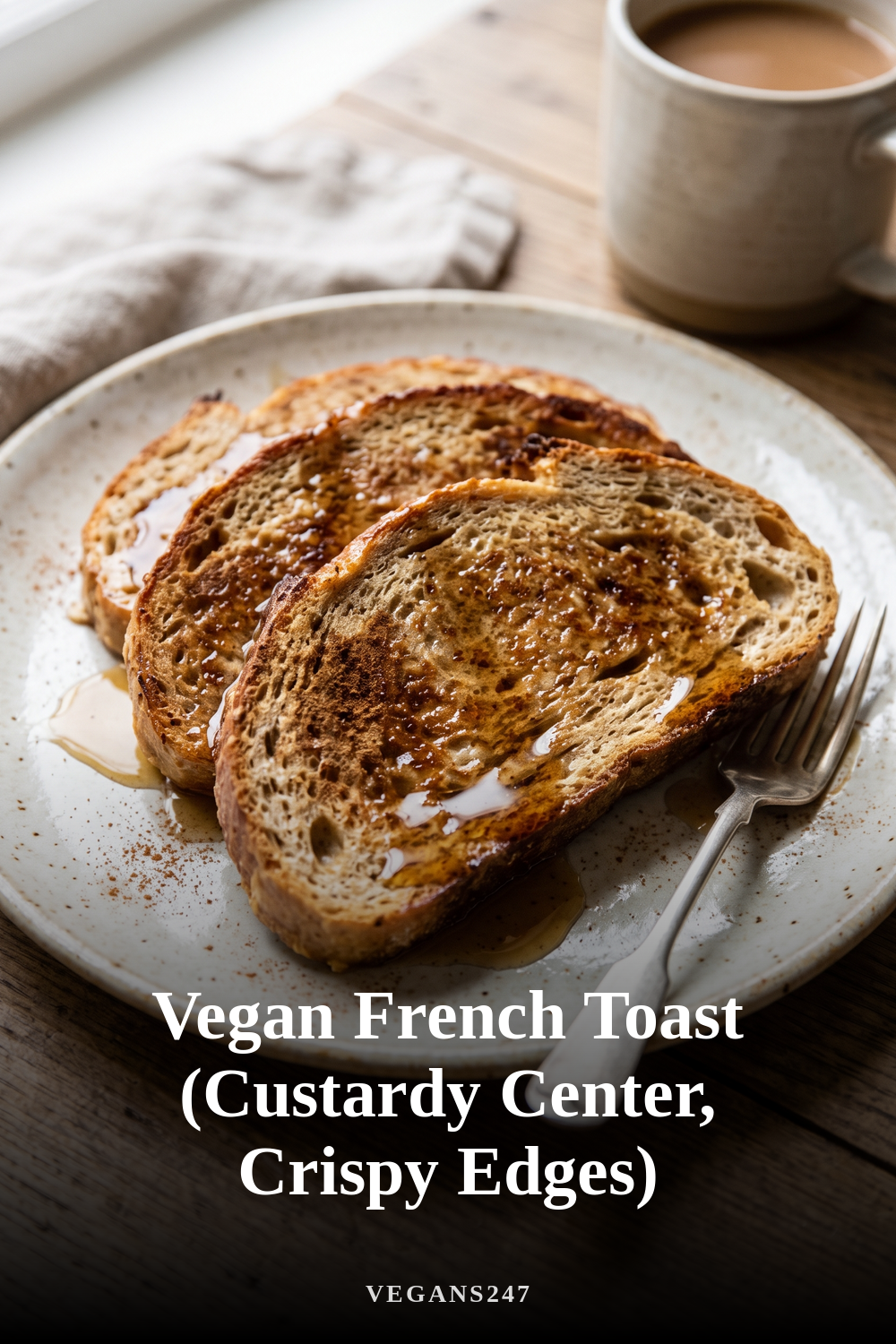
For vegan french toast to taste like the real thing, the batter has to do two jobs at once: cling to the bread like a custard and set as it cooks. Chickpea flour is what makes that happen here. It thickens oat milk into a loose, creamy bath with a little help from cornstarch, so each slice soaks up enough to stay soft in the middle but still browns and crisps at the edges. A spoonful of maple syrup and a good hit of cinnamon round out the flavor, and a pinch of kala namak is optional if you want a faint savory note.
The thing that ruins most batches is bread that soaks too long and collapses into mush, and the fix comes down to matching the soak to the loaf. Day-old bread with some backbone drinks up the batter and holds its shape, while soft sandwich bread only needs a quick dip. Thick slices that stay wobbly in the center can finish in a warm oven, which sets the custard without drying out the crust. I like to serve this on a slow weekend morning next to a vegan chai latte or a tray of vegan cinnamon rolls, and it fits a make-ahead breakfast spread with vegan overnight oats when I want the morning to run itself.
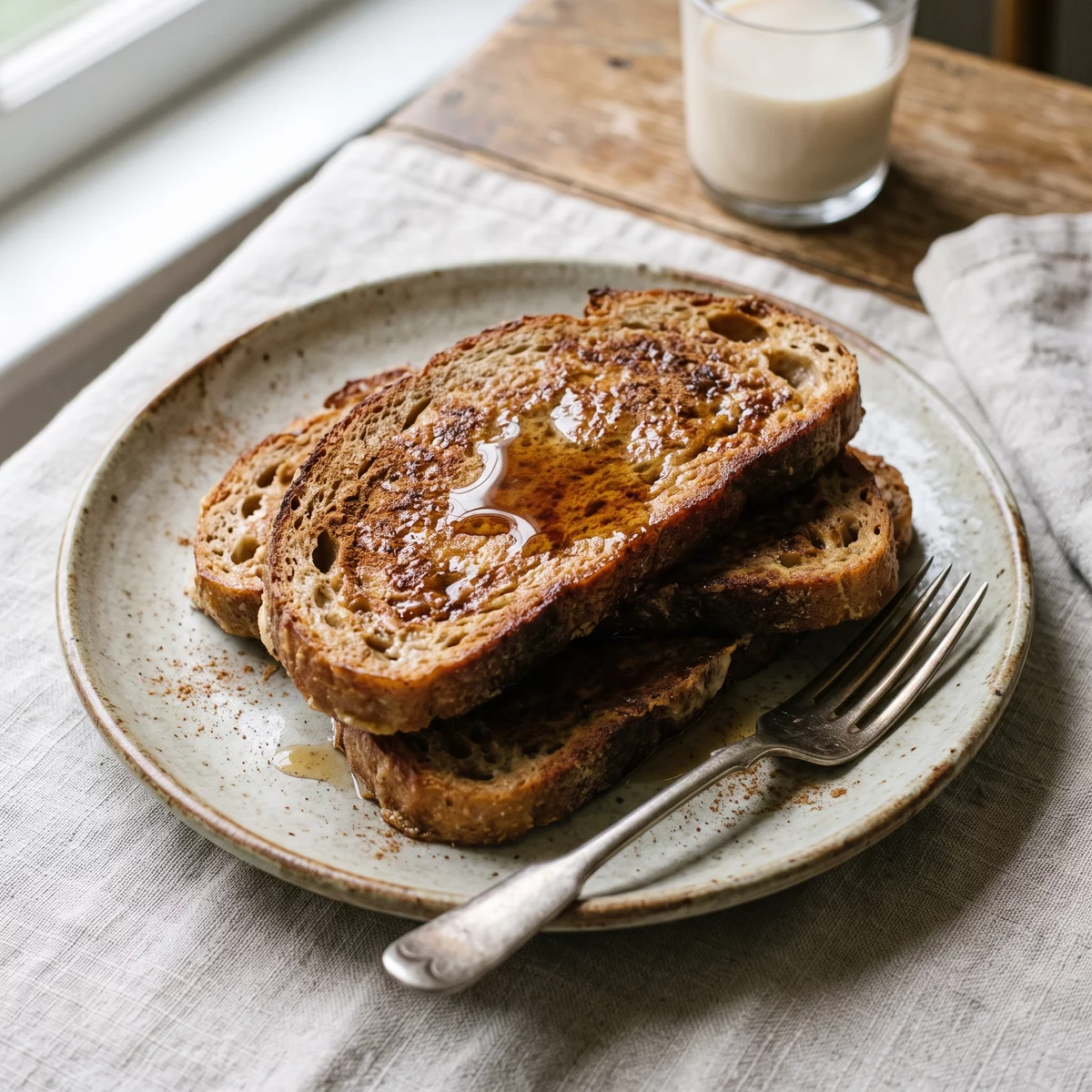
Vegan French Toast
Ingredients
Method
- Whisk the oat milk, chickpea flour, cornstarch, maple syrup, vanilla, cinnamon, salt, and kala namak if using in a wide, shallow dish until completely smooth. Let the batter sit for 5 minutes so the chickpea flour hydrates, then whisk it again. It should look like thin pancake batter.
- Heat a large nonstick or cast-iron skillet over medium-low heat and add 1 tablespoon of the vegan butter, swirling to coat the pan. Medium-low is the sweet spot here, because a pan that runs too hot browns the outside before the custard in the center has set.
- Dip one slice of bread into the batter and let it soak for 15 to 20 seconds per side if the loaf is sturdy and day-old. For softer sandwich bread, dip for just 3 to 5 seconds per side. Lift the slice and let the excess batter drip back into the dish.
- Place the slice in the skillet and cook for 2 to 3 minutes per side, until it is deep golden brown and crisp at the edges. Cook only two or three slices at a time so the pan stays hot and the bread does not steam.
- Add another small piece of vegan butter between batches, and lower the heat if the slices are browning faster than the center is setting.
- For thick slices that still feel soft in the middle, move them to a rack set on a baking sheet and finish in a 350F (175C) oven for 5 to 8 minutes, which sets the custard without drying the crust. Serve warm with maple syrup and berries.
Notes
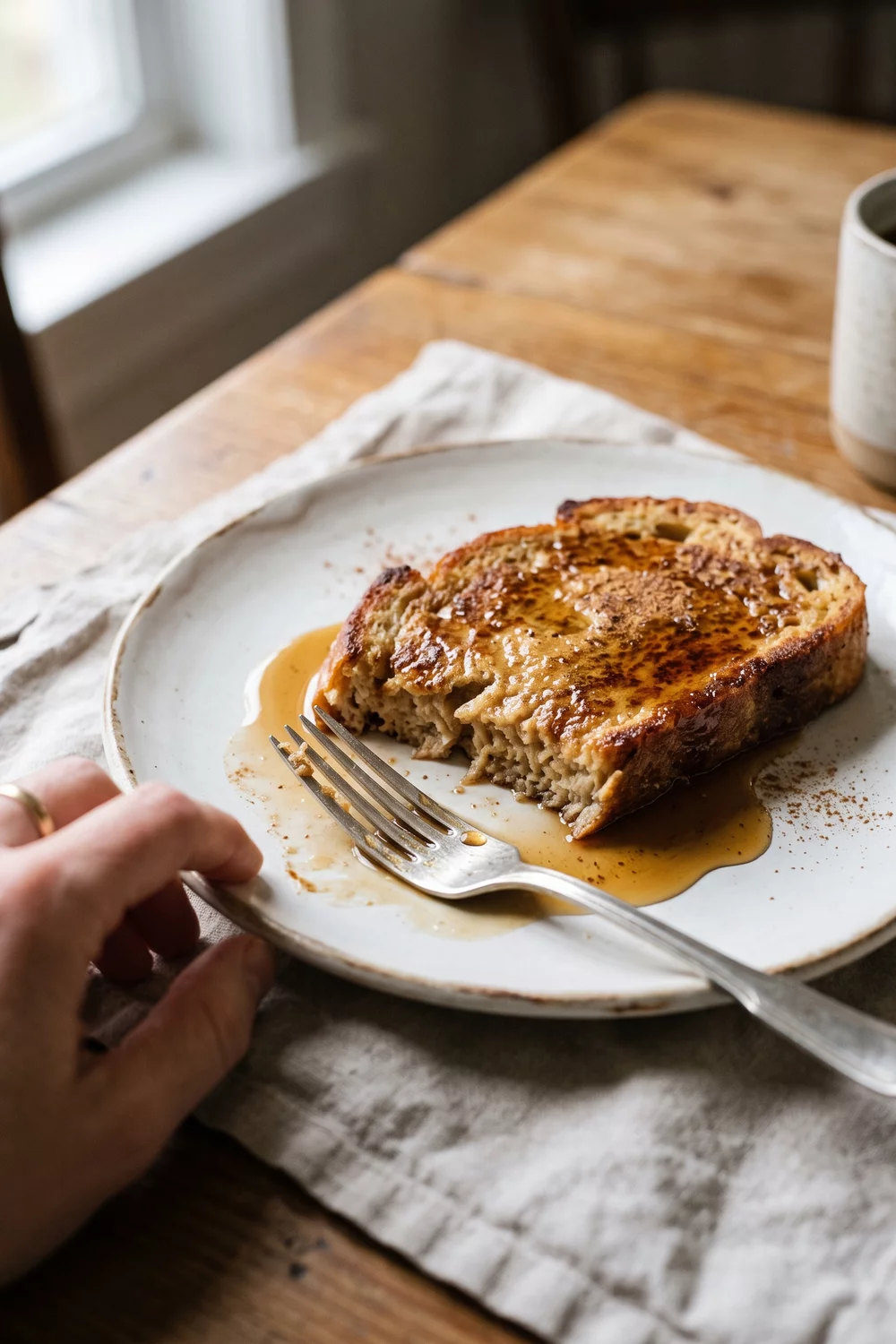
Tips for Vegan French Toast
French toast is a simple dish, and the details are what separate a custardy slice from a soggy one. A quick whisk before each batch keeps the chickpea flour from settling, and these are the rest of the moves that matter most.
- Day-old bread beats fresh bread every time. A fresh loaf holds too much moisture, so it steams in the pan instead of crisping, while a day on the counter firms the crumb just enough to soak up batter without falling apart.
- Chickpea flour is the workhorse of this batter. It thickens the oat milk and sets into a soft custard as it cooks, which is what gives the middle that tender, almost creamy texture instead of a wet center.
- Match the dip to the bread, not to a timer. Sturdy sourdough or French bread can take 15 to 20 seconds per side, while soft sandwich bread only needs a quick 3 to 5 second dip before it starts to break down.
- Keep the pan at medium-low, and don’t crowd it. Two or three slices at a time keeps the heat steady; pile in more and the bread steams, which is the fastest way to lose the crisp edge you are after.
- Finish thick slices in the oven if the center feels soft. Five to eight minutes on a rack at 350F (175C) sets the custard all the way through without turning the crust soggy.
- These slices fit a slow brunch next to vegan breakfast burrito for something savory and vegan banana bread for the table, and both can be made ahead so the morning stays easy.
Storage
French toast is at its best straight from the pan, but leftovers hold up fine. Let the slices cool completely, then stack them with a sheet of parchment between each one and store them in an airtight container in the fridge for up to three days. Reheat on a dry skillet over medium-low heat or in a toaster, which brings the edges back to crisp. The microwave works in a pinch, though it leaves them soft. For longer storage, freeze the cooked slices in a single layer on a baking sheet, then move them to a freezer bag. They keep for about two months and reheat straight from frozen in a toaster or a 350F (175C) oven. I would not freeze the batter, since the chickpea flour settles and the texture suffers after it thaws.
FAQ
Can I make this without chickpea flour?
You can swap the chickpea flour for an equal amount of all-purpose flour, though the custard will not set quite as firmly and you will lose the subtle savory note. A gluten-free all-purpose blend works the same way. If you would rather use a flax or chia gel instead, add an extra teaspoon of cornstarch so the batter still clings to the bread and browns properly.
Why is my vegan french toast soggy in the middle?
Soggy centers almost always come from bread that soaked too long or a pan that was too hot. A hot pan sets the crust before the custard in the center has cooked, so the inside stays wet. Use day-old bread, keep the pan at medium-low, and pull back the soak time for softer loaves. If a thick slice still feels soft, finish it on a rack in a 350F (175C) oven for 5 to 8 minutes.
What is the best bread for vegan french toast?
A sturdy, slightly dry loaf gives the best result. Sourdough, French bread, and vegan brioche all have the structure to hold up to the batter, and a day-old loaf soaks without turning to mush. Soft sandwich bread works in a pinch, but keep the dip to a few seconds per side and watch it closely. Avoid very fresh, very soft bread, which tends to collapse.
Can I make this gluten free?
This works gluten free with one swap. Use a gluten-free all-purpose flour blend in place of the chickpea flour if you want, or keep the chickpea flour and simply choose a gluten-free loaf. A sturdy gluten-free bread made with a flour blend holds together better than a soft white one. Let the batter rest the full 5 minutes so the flour hydrates, then whisk it smooth before dipping.