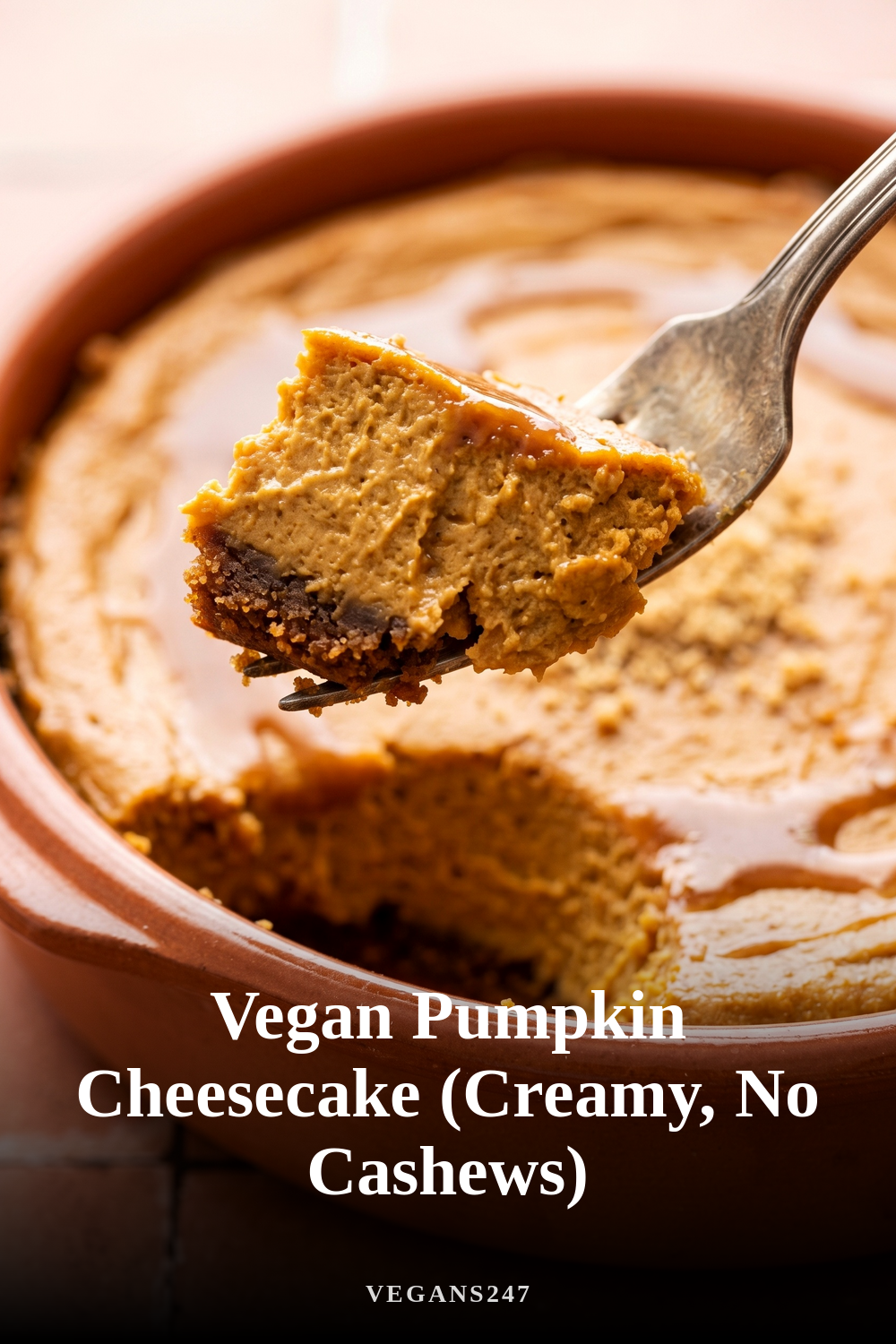
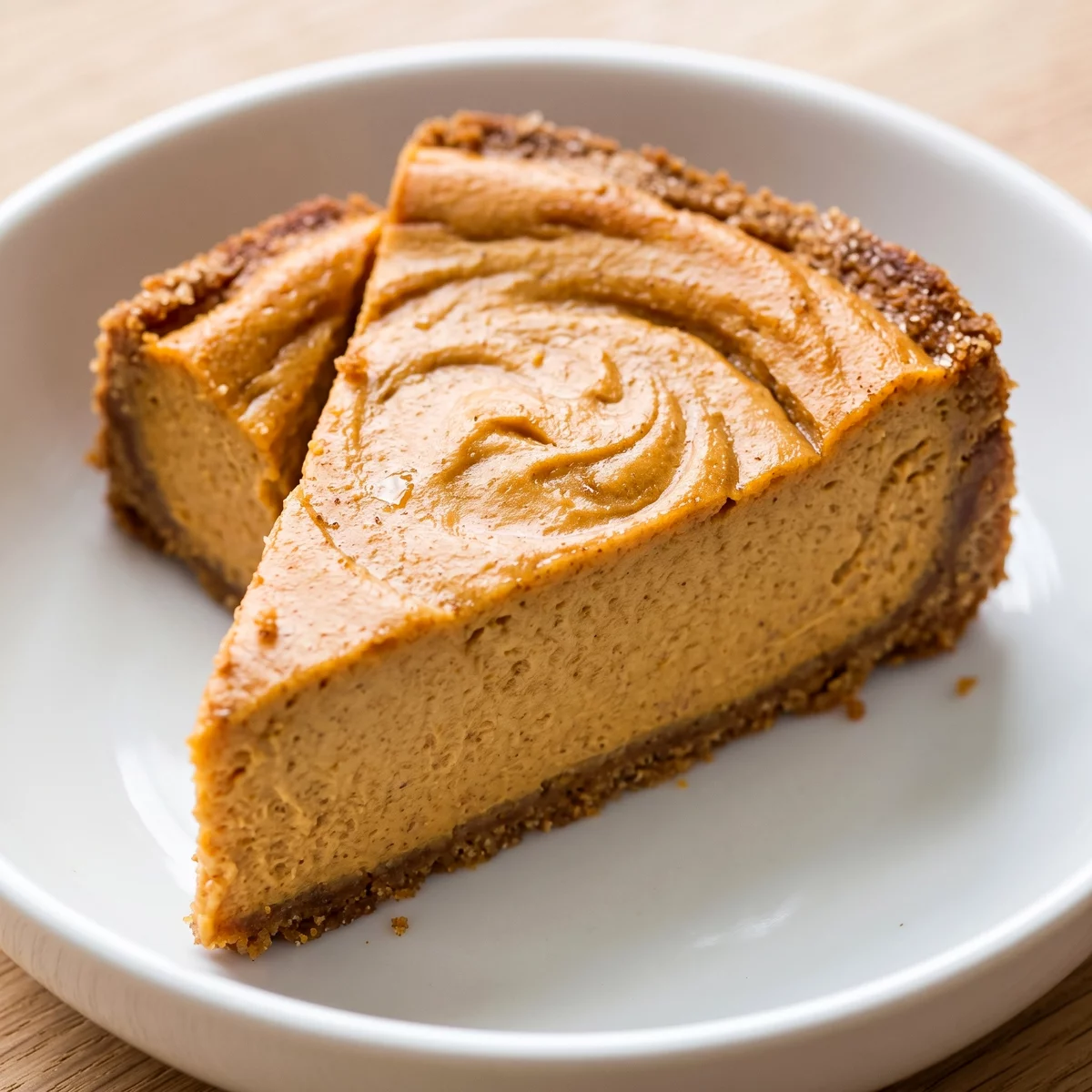
Vegan pumpkin cheesecake usually means either two pounds of store-bought vegan cream cheese or a bowl of soaked cashews, and I wanted neither. My base is silken tofu, blended until it vanishes into a smooth, pourable custard that carries the pumpkin and spice, with cornstarch doing the setting that holds the whole thing together. Baked low and slow in a water bath, it comes out tall, creamy, and firm enough to slice, sitting on a crisp spiced graham cracker crust. No nuts, no packaged cheese, and nothing you cannot find at a regular grocery store.
A good slice should taste like pumpkin first, with a tangy edge that keeps it from turning flat and cloying. If you have made my chewy vegan pumpkin cookies, this is the same warm spice in a cold, creamy form, and it sits naturally next to a classic vegan carrot cake or a dish of creamy vegan rice pudding on a holiday table. The filling sets soft and custardy rather than dense, so it wants a long chill in the fridge before it will slice cleanly. Serve it cold, straight from the fridge, with a spoon of vegan whipped cream and a light drizzle of caramel if you like.
Vegan Pumpkin Cheesecake
Ingredients
Method
- Heat the oven to 325F. Stir the graham cracker crumbs, cane sugar, cinnamon, and salt together in a bowl, then pour in the melted vegan butter and mix until the crumbs look like wet sand and hold together when you squeeze a handful. Press the mixture firmly into the bottom and about an inch up the sides of a 9-inch springform pan, using the flat bottom of a glass to even it out. Bake for 10 minutes, then set the crust aside to cool while you make the filling.
- Drain the silken tofu and pat it dry with a clean towel. Add the tofu, pumpkin puree, cane sugar, brown sugar, melted coconut oil, lemon juice, apple cider vinegar, vanilla, pumpkin pie spice, and salt to a blender and blend on high for a full minute, until the mixture is completely smooth with no visible curds. Scrape down the sides, add the cornstarch, and blend for another 15 seconds just to combine.
- Pour the filling over the cooled crust and smooth the top with a spatula. Tap the pan on the counter a couple of times to knock out large air bubbles.
- Wrap the bottom and sides of the springform pan in a layer of heavy foil so no water can seep in. Set the pan inside a larger roasting pan, put the whole thing in the oven, and carefully pour boiling water into the roasting pan until it comes about an inch up the side of the springform.
- Bake for 55 to 65 minutes, until the outer two inches of the filling look set and the center still wobbles gently when you nudge the pan. Turn the oven off, crack the door open a few inches, and leave the cheesecake inside for 1 hour to cool slowly.
- Take the pan out of the water bath and let the cheesecake come to room temperature on the counter, about 1 hour. Cover it and chill in the fridge for at least 8 hours, or overnight, until fully firm.
- Run a thin knife around the inside of the pan to loosen the cheesecake, release the springform ring, and slice with a knife wiped clean between cuts. Serve cold with vegan whipped cream.
Notes
Why This Vegan Pumpkin Cheesecake Works
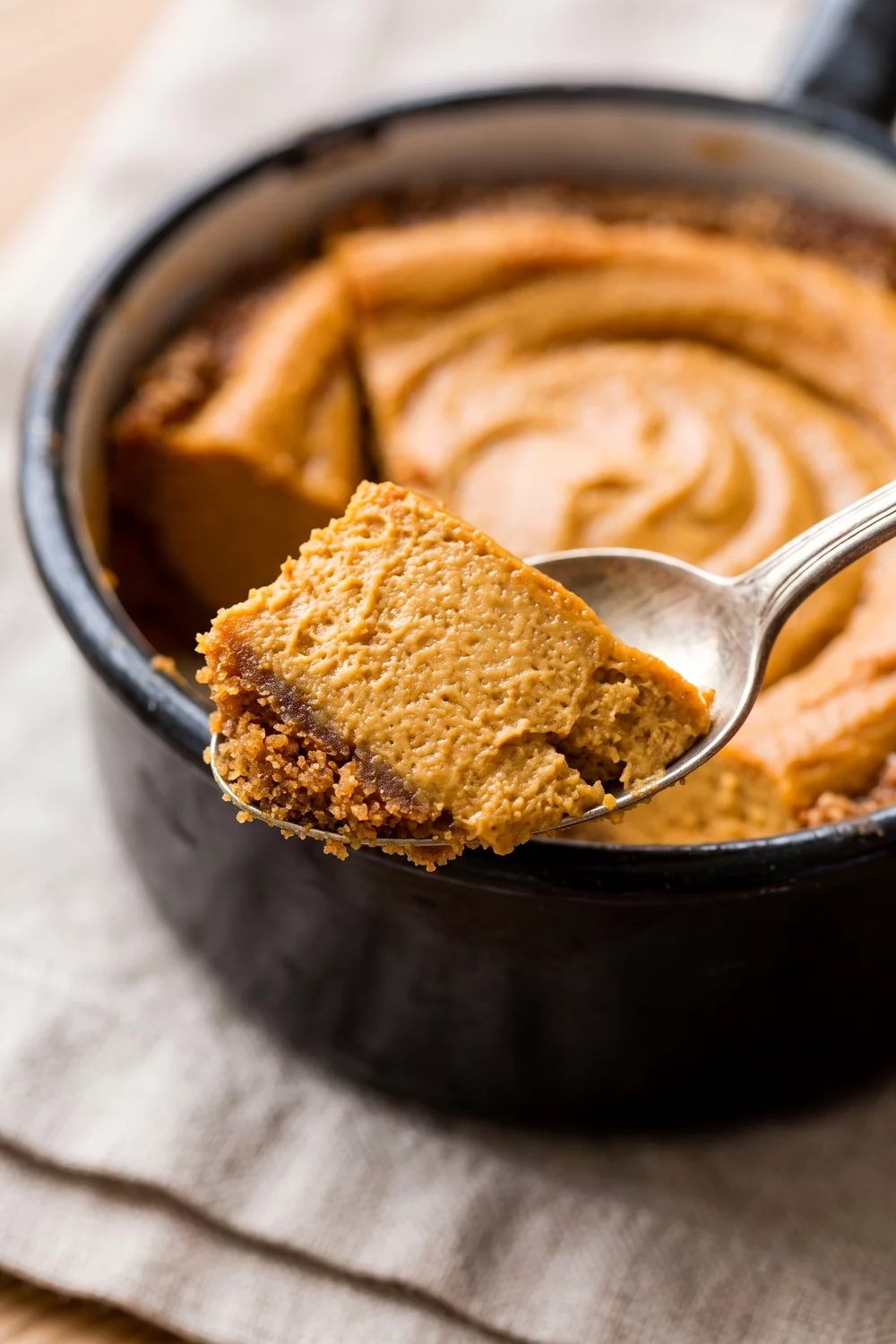
Three things separate a slice that holds its edge from one that slumps into a puddle, and they all come down to how the pumpkin base is built, set, and baked. Get the base smooth, let the starch and the chilled fat do their work, and keep the oven heat gentle, and the rest is just patience in the fridge.
- Silken tofu carries the creaminess without cashews – Blended silken tofu turns velvety smooth and gives the filling the rich body a cheesecake needs, so there are no nuts to soak, blend, or strain before you even start baking.
- Cornstarch does the setting – Cornstarch gelatinizes as the filling bakes, firming it into a sliceable set, while the tofu keeps the middle soft and custardy instead of rubbery or grainy.
- Refined coconut oil firms up as it chills – It stays liquid in the warm batter and then solidifies in the fridge, which is what gives a cold slice its clean edge and creamy bite.
- Lemon and a splash of vinegar build the tang – A pumpkin cheesecake should taste bright, so the filling leans on fresh lemon juice and a little apple cider vinegar for that tang without any chalkiness.
- A low bake and a slow cool stop cracks and sinking – Baking at 325F in a water bath and then cooling the cheesecake inside the oven keeps the top flat and even instead of cracked, domed, or deflated.
Storage
Keep the cheesecake covered in the fridge for up to 5 days, and slice only what you plan to eat so the rest stays cold and firm. It also freezes well: chill it completely, slice it, wrap each piece tightly, and freeze for up to 2 months, then thaw a slice in the fridge overnight before serving. Because the filling is soft-set, it is best served cold rather than at room temperature, and a cold knife wiped clean between cuts gives you the neatest slices with a clean edge every time. If you are taking it to a gathering, keep it in a cooler bag until you arrive so it does not soften on the way.
FAQ
Why did my vegan pumpkin cheesecake crack on top?
Cracks come from fast temperature changes and from overbaking. Baking the pan in a water bath keeps the oven heat gentle and even, and leaving the cheesecake in the switched-off oven with the door cracked for an hour lets it cool gradually instead of shocking the top. Pull it when the outer edge is set and the center still wobbles a little, because that jiggle is normal and it firms up fully as it chills overnight. If a small crack still shows up, it is only cosmetic, and a swirl of vegan whipped cream or caramel on top hides it completely.
Can I make this pumpkin cheesecake without a water bath?
You can, but expect a higher chance of a cracked top and a slightly denser texture. If you skip the water bath, bake it at 325F and start checking around 45 minutes, since the dry oven heat sets the outside faster than a water bath does. The water bath is what keeps the filling creamy and the surface smooth, so it is worth the extra few minutes when you have them. A cheesecake baked without one also tends to brown a little more around the rim.
Do I need to drain and dry the silken tofu?
Yes, and it matters more than it sounds. Silken tofu holds a lot of water, and any extra liquid that goes into the blender makes the filling loose and slow to set. Drain the block, press it gently in a clean towel, and blend it straight away so the batter stays thick enough to bake into a clean slice. If the block feels especially wet, press it between a few layers of paper towel and a plate for a couple of minutes first.
Are graham crackers vegan, and what crust can I use?
Most graham crackers are vegan, but some brands add dairy or honey, so read the label or use a vegan brand you trust. If you want a change from graham, a vegan digestive biscuit or a simple blended oat-and-maple crust both work here. Keep the same amount of crumbs and melted vegan butter so the crust still presses and sets the same way. Graham cracker crumbs are also easy to make at home from vegan crackers if you cannot find a brand you like.