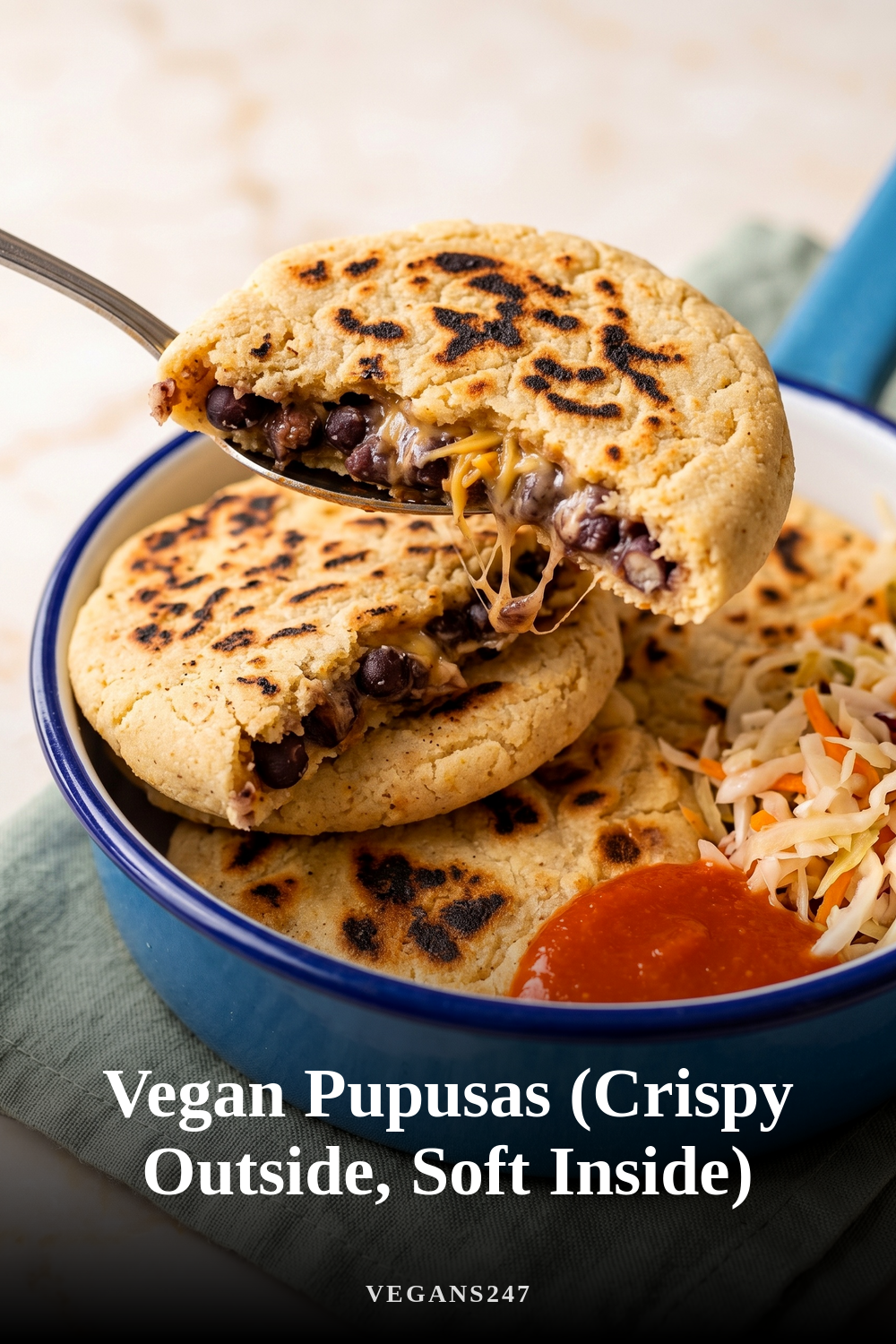
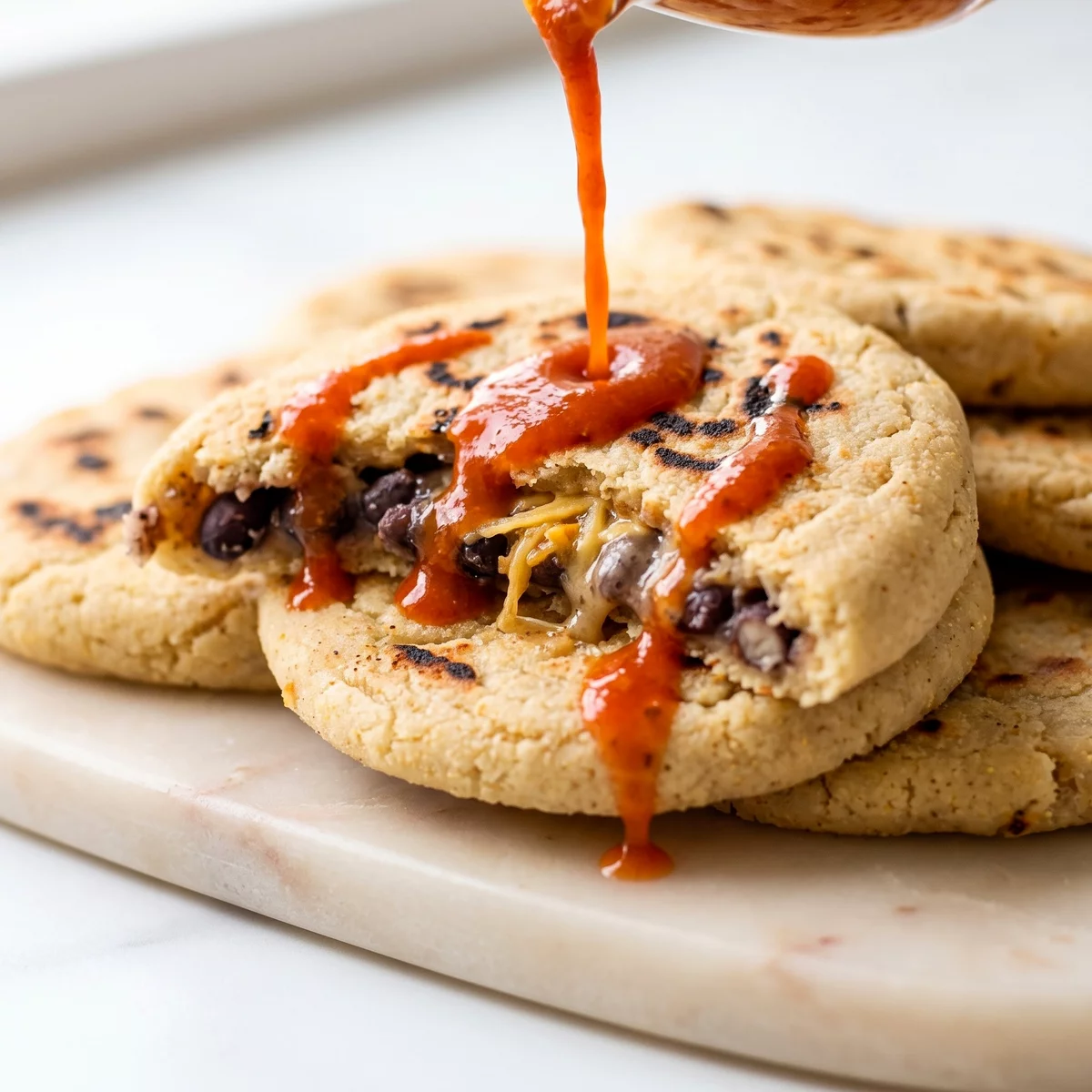
These vegan pupusas come off the griddle crisp and speckled brown on the outside with a soft, steamy middle, and the whole result hinges on the dough. Masa harina needs enough warm water to turn into a smooth, play-dough-soft ball, and once it rests for fifteen minutes it stops cracking when you pat it flat. I keep the filling simple, a cumin-scented black bean mash with a spoonful of dairy-free melting cheese sealed into the center, so the edges close cleanly and nothing leaks onto the pan.
A pupusa is a thick, hand-patted corn cake from El Salvador, traditionally stuffed with a savory filling and served with a tangy cabbage slaw called curtido. The vegan version swaps the classic filling for seasoned black beans and a melting dairy-free cheese, which keeps the middle rich without missing a thing. If you like the contrast of a cold, crunchy slaw against something hot off the pan, the idea is close to my creamy vegan coleslaw, just built with vinegar instead of mayo, and a glass of creamy vegan horchata is a natural pairing. They hold their own on a snack table too, so I often make a double batch and set them out with vegan jalapeno poppers.
Vegan Pupusas
Ingredients
Method
- Whisk the masa harina and salt together in a large bowl. Pour in the warm water and mix with a spoon, then knead with your hands for about 2 minutes, until it comes together into a soft, smooth ball that holds its shape and does not crack at the edges. If it crumbles and feels dry, work in warm water a tablespoon at a time; if it feels sticky, sprinkle in a little more masa harina.
- Cover the dough with a damp towel and let it rest for 15 minutes so the masa hydrates all the way through. While it rests, make the filling and the curtido.
- For the filling, mash the black beans with the cumin, smoked paprika, and garlic powder until mostly smooth, then stir in the vegan cheese shreds. For the curtido, toss the cabbage, carrot, and red onion with the vinegar, warm water, salt, and oregano in a bowl and set it aside to soften while you cook.
- Roll a scant quarter cup of dough into a ball and press it into a flat 4-inch round in your palm. Add about a teaspoon of the bean mash and a teaspoon of the vegan cheese to the center, then bring the edges up and pinch them together to seal. Press the filled ball back into a 4-inch round, working gently so the filling stays in the middle.
- Patch any cracks or thin spots with a scrap of dough pressed on and smoothed with a wet finger. Set the finished pupusas on a parchment-lined plate and cover them with a towel as you work.
- Heat a cast-iron skillet or griddle over medium heat and brush it with a little oil. Cook the pupusas in a single layer for 3 to 4 minutes per side, turning once, until the surface is set and speckled brown and the pupusa feels firm when pressed with a spatula. Add a splash more oil between batches if the pan looks dry.
- Serve the pupusas hot with the curtido spooned over the top, and add a spoonful of tomato salsa if you like.
Notes
Why These Vegan Pupusas Work
- Masa harina keeps drinking water after mixing – Corn masa soaks up its liquid over several minutes, so a dough that looks right too early dries out at the center and splits under your palm. Letting it rest covered is what makes it press flat.
- The water ratio is a feel, not a number – Masa behaves nothing like wheat flour, and too little water is the single most common reason pupusas crack. Soft, slightly tacky dough that rolls into a clean ball is the target.
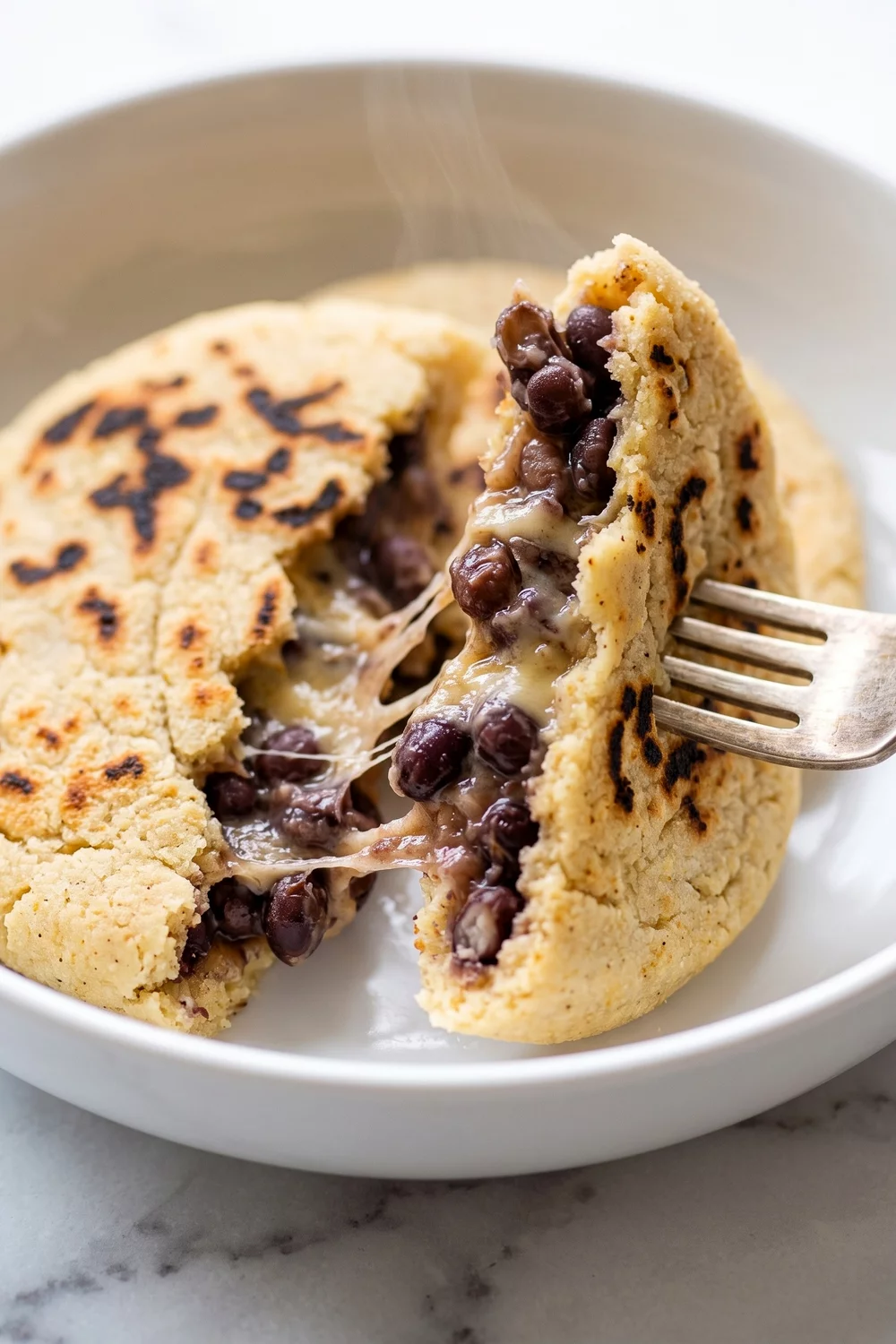
- The filling steams inside a sealed pocket – Once the edges are pinched shut, the beans and dairy-free cheese release steam as the cake cooks, so the middle turns warm and tender while the outside fries golden.
- Medium heat cooks the corn through first – Masa needs time to set all the way to the center. A screaming-hot pan browns the surface before the middle is done, which is how you end up with a raw center in an already-dark crust.
- Keeping the cheese off the seam prevents blowouts – Dairy-free cheese melts and spreads, so a center pocket ringed by beans holds the melt away from the sealed edge and stops the pupusa from bursting open.
Tips for Vegan Pupusas
- Let the dough rest covered for a full 15 minutes before shaping, even if it already looks smooth.
- Judge the dough by feel and work in warm water a tablespoon at a time if it crumbles. It should be soft like play dough and press flat without tearing.
- Use a scant quarter cup of dough per pupusa and keep the filling to about two teaspoons, one of beans and one of dairy-free cheese. Overstuffing is the top reason they split.
- Patch thin spots or small cracks with a scrap of dough pressed on and smoothed with a wet finger before the pupusa goes into the pan.
- Keep the shaped pupusas on a parchment-lined plate under a towel as you work, so the surface stays soft and does not dry out.
- Brush the skillet with just a little oil and cook over medium heat, 3 to 4 minutes per side, turning once, until the crust is set and speckled brown. Add a splash more oil between batches if the pan looks dry.
Storage
The cooked pupusas keep in the fridge for up to 4 days in an airtight container. The best way to bring them back is a dry skillet over medium heat for about 2 minutes per side, which re-crisps the outside without making them greasy, while a microwave softens the crust. To freeze, lay them flat between sheets of parchment in a sealed bag for up to 2 months, then reheat straight from frozen in a covered skillet with a splash of water for the first minute to steam the middle. The raw dough is best used the day you make it, so form and cook the whole batch rather than holding it overnight. Keep the curtido and salsa separate and spoon them on at the table so nothing goes soggy.
FAQ
Why did my pupusas crack or burst while cooking?
Cracking almost always comes down to dry dough, dough that was not rested, or too much filling. Masa harina needs enough warm water to turn into a soft, pliable ball, and it needs those 15 covered minutes to hydrate fully before you shape it. Keep the filling to about two teaspoons per pupusa, patch any thin spots with a scrap of dough before the cake hits the pan, and you should get a clean seal every time.
Can I use cornmeal or cornflour instead of masa harina?
No, and this is the one swap worth avoiding. Masa harina is corn that has been cooked with lime and ground into a fine flour, and that treatment is what lets it form a smooth, workable dough. Cornmeal is far too coarse to hold together, and cornflour (cornstarch) is a thickener that behaves nothing like masa. Look for a bag labeled instant corn masa flour.
Are pupusas gluten-free?
Made with masa harina, the dough itself contains no wheat, so the base is naturally gluten-free. Check the labels on your dairy-free cheese and any other packaged fillings, since those are the parts that can carry gluten depending on the brand.
Can I make vegan pupusas ahead of time?
Yes, the cooked pupusas reheat well. Let them cool completely, then store them in the fridge for up to 4 days or freeze them flat between sheets of parchment for up to 2 months. A dry skillet over medium heat brings the crust back, and frozen ones reheat well in a covered pan with a splash of water for the first minute so the middle steams through.