
Most vegan hot and sour soup recipes lean on chili paste for the heat and tip the vinegar in at the start, and the bowl ends up either flat or sharp without much depth. My version gets its real heat from ground white pepper cooked into the broth, the way a Chinese restaurant kitchen does it, and saves the rice vinegar for the very end so the sour stays bright. The base is a pot of vegetable broth boosted with the water I soaked the dried shiitake in, thickened at the last minute with a cornstarch slurry until it coats the back of a spoon.
A bowl of this sits right next to my hearty vegan mushroom barley soup and my cozy vegan lentil soup in the cold-month rotation, though it comes together much faster. Everything happens in one pot, and most of the work is soaking the mushrooms and chopping the vegetables before the broth ever hits the stove.
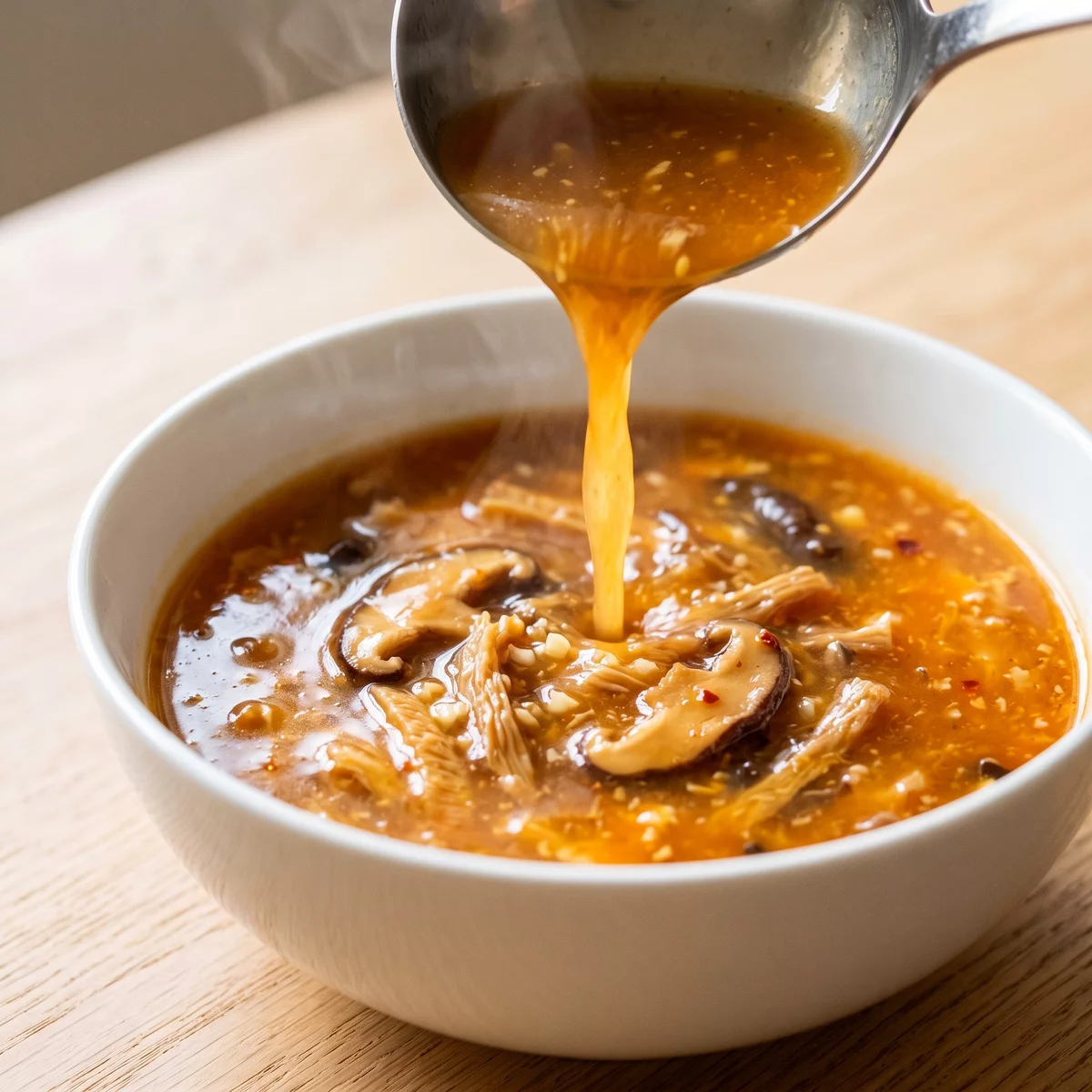
Vegan Hot and Sour Soup
Ingredients
Method
- Put the dried shiitake and wood ear mushrooms in a bowl and cover them with 2 cups of hot water. Let them soak for 30 minutes, until soft and pliable. Lift the mushrooms out, squeeze them gently over the bowl, and strain the soaking water through a fine sieve into another bowl to catch any grit. You should have about a cup of dark, savory liquid, so save it.
- Slice the shiitake, cutting away any tough stems, and cut the wood ear into bite-size pieces after trimming off the hard knuckles. Soaking the mushrooms can be done a day ahead; keep them and their liquid covered in the fridge.
- Heat the vegetable oil in a large pot over medium heat. Add the garlic and ginger and cook for about 30 seconds, until fragrant but not browned. Add the shiitake, wood ear, carrot, and bamboo shoots and stir-fry for 3 to 4 minutes, until the carrot starts to soften. Splash in 1 tablespoon of the soy sauce and stir to coat.
- Pour in the vegetable broth and the reserved mushroom soaking liquid and bring the pot to a boil. Add the tofu strips, the remaining 2 tablespoons of soy sauce, and the cane sugar. Lower the heat and simmer, uncovered, for 8 to 10 minutes so the tofu takes on the flavor of the broth.
- Whisk the cornstarch with the cold water until it is completely smooth, then whisk it again right before using. With the soup at a gentle simmer, pour the slurry in a thin stream while stirring. Keep stirring for 1 to 2 minutes, until the broth thickens enough to coat the back of a spoon.
- Take the pot off the heat, then stir in the rice vinegar, the ground white pepper, the toasted sesame oil, and the green parts of the onions. Taste and adjust the balance, adding more rice vinegar for sour or more white pepper for heat. Ladle into bowls and finish with a drizzle of chili oil and chopped cilantro if you like.
Notes
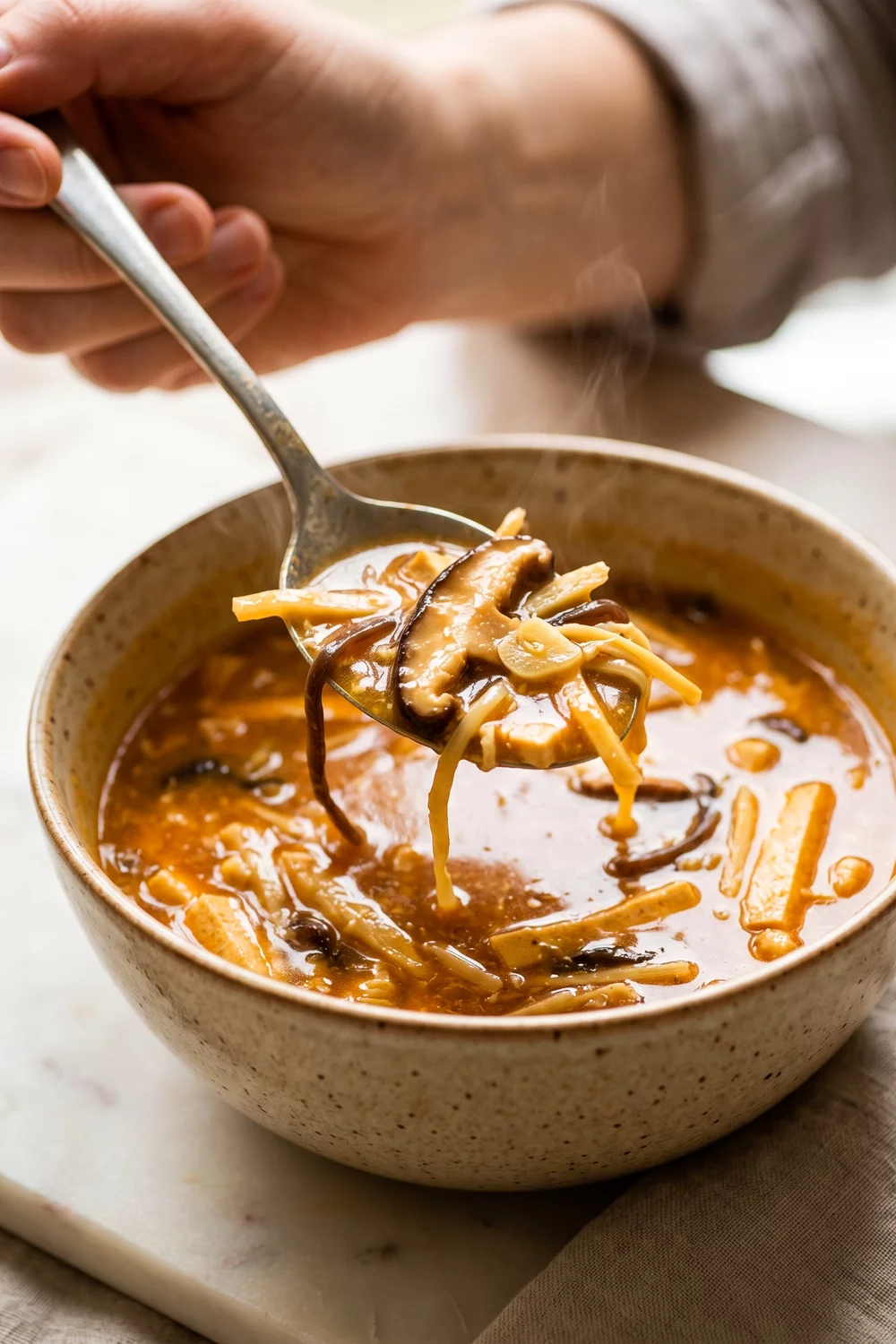
What to Serve with Vegan Hot and Sour Soup
Hot and sour soup is hearty enough to be a light meal on its own, but it shines as one bowl in a small spread of Chinese-style dishes. Keep the sides plain and let the soup carry the heat and the tang.
- Steamed jasmine rice – a plain bowl of rice soaks up the broth and turns the soup into a fuller meal without adding competing flavors.
- Vegan Japchae – a chewy glass-noodle side that rounds out an Asian-style table and works just as well warm or at room temperature.
- Crispy wonton strips or fried noodles – scattered over the top right before eating, they add the crunch a takeout container usually comes with.
- Scallion pancakes or vegetable spring rolls – a crisp, savory starter that stands up to the vinegar and the pepper in the soup.
- A pot of jasmine or oolong tea – a light, hot drink between spoonfuls keeps the heat from building up too fast.
Tips for Vegan Hot and Sour Soup
The soup comes together quickly once everything is prepped, and a few small moves decide whether the bowl tastes flat or lively.
- Soak the dried mushrooms in hot water and keep that water – the liquid the shiitake and wood ear soak in is full of umami, so strain it and use it as part of the broth instead of pouring it away.
- Squeeze the soaked shiitake gently before slicing – a soaked mushroom holds a lot of liquid, and pressing out the extra keeps the finished broth from turning watery.
- Stir the cornstarch slurry again right before it goes in – the starch settles to the bottom as it sits, and mixing it back in is what stops lumps from forming in the pot.
- Add the vinegar and white pepper off the heat – cooked into the soup, the rice vinegar loses its sharpness and the white pepper can taste bitter, so both go in once the pot is off the burner.
- Balance heat and sourness at the end – taste first, then add rice vinegar for sour or white pepper for heat, so you can dial in the bowl you actually want.
- Use tamari for a gluten-free pot – it swaps in for the soy sauce one for one and keeps the soup safe for anyone avoiding wheat.
Storage
Keep leftovers in a covered container in the fridge for up to 3 days, and reheat them gently on the stove rather than in the microwave so the tofu stays intact. The soup thickens as it sits because the cornstarch keeps setting, so loosen it with a splash of water or broth as you reheat. It also freezes for up to 2 months, though the tofu turns spongy after freezing; if you plan to freeze a batch, leave the tofu out and add fresh pieces when you reheat. Cool the soup completely before it goes in the fridge or the freezer, and do not leave it sitting out for more than a couple of hours.
FAQ
What makes hot and sour soup hot, and does it come from chili?
The heat in a Chinese restaurant hot and sour soup comes mostly from ground white pepper, not chili. White pepper is stirred into the broth while it simmers, so the peppery warmth spreads through the whole pot instead of sitting on the surface. Chili oil is a finishing drizzle for anyone who wants a sharper, spicier kick on top of that. If you want more heat, add white pepper a little at a time and taste as you go, because it builds quickly once it blooms in the hot broth.
Can I make this vegan hot and sour soup gluten free?
Yes, with two swaps. Use tamari or a certified gluten-free soy sauce in place of the regular soy sauce, and check that your vegetable broth is wheat free, since some brands add soy sauce or a barley-based yeast extract. The rice vinegar, cornstarch, tofu, bamboo shoots, and fresh vegetables are all naturally gluten free, so the rest of the pot stays as it is.
What can I use instead of wood ear mushrooms?
If you cannot find wood ear mushrooms, double the shiitake and slice them into thin strips, or add a handful of sliced fresh mushrooms, and the soup will still taste right. What you lose is the wood ear’s firm, slightly crunchy bite, which is a real part of the texture in the classic bowl. Sliced bamboo shoots and water chestnuts can bring some of that crunch back, so add an extra half cup of either if you have them. Dried wood ear keeps for a long time, so it is worth picking up a bag from an Asian market or online when you can.
Why is my hot and sour soup too thin?
Cornstarch needs to be cooked to thicken, so if the soup looks thin, keep it at a gentle simmer for another minute or two and stir. The most common cause is a slurry that was too weak, so make a fresh batch with one more tablespoon of cornstarch and one of cold water, whisk it smooth, and stream it in while stirring. Remember that the soup sets up more as it cools, so pull it off the heat a touch looser than you want the final bowl and it will tighten as it rests. The vinegar also thins a slurry slightly, which is another reason it goes in at the very end.