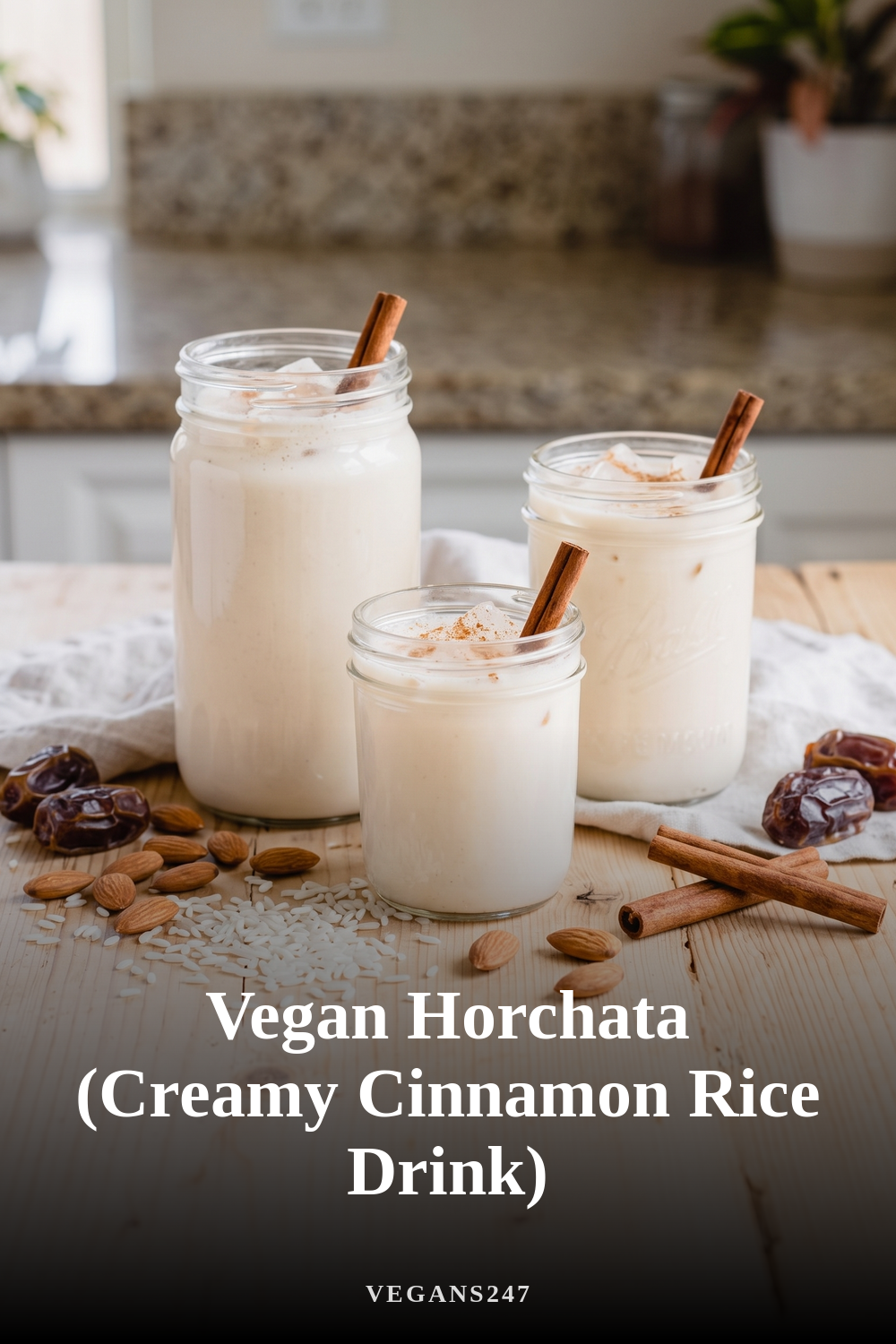
A lot of horchata recipes lean on dairy for body, which is why so many of them aren’t dairy free at all. This vegan horchata keeps the same cinnamon rice flavor and builds the creaminess a different way. I simmer the rice with cinnamon sticks first, blend it while it’s still warm, and strain it once, so the starch the rice releases thickens the drink on its own. There’s no overnight soak and no store-bought carton, just rice, water, and cinnamon working on the stove.
The rice does the heavy lifting here, and the almond milk is there for a little richness rather than as the main event. If you like building drinks from whole ingredients, this follows the same logic as my vegan chai latte, vegan hot chocolate, and vegan pumpkin spice latte, where the flavor base gets made first and the almond milk goes in at the end. Serve it cold over ice, and it holds up next to anything spicy.
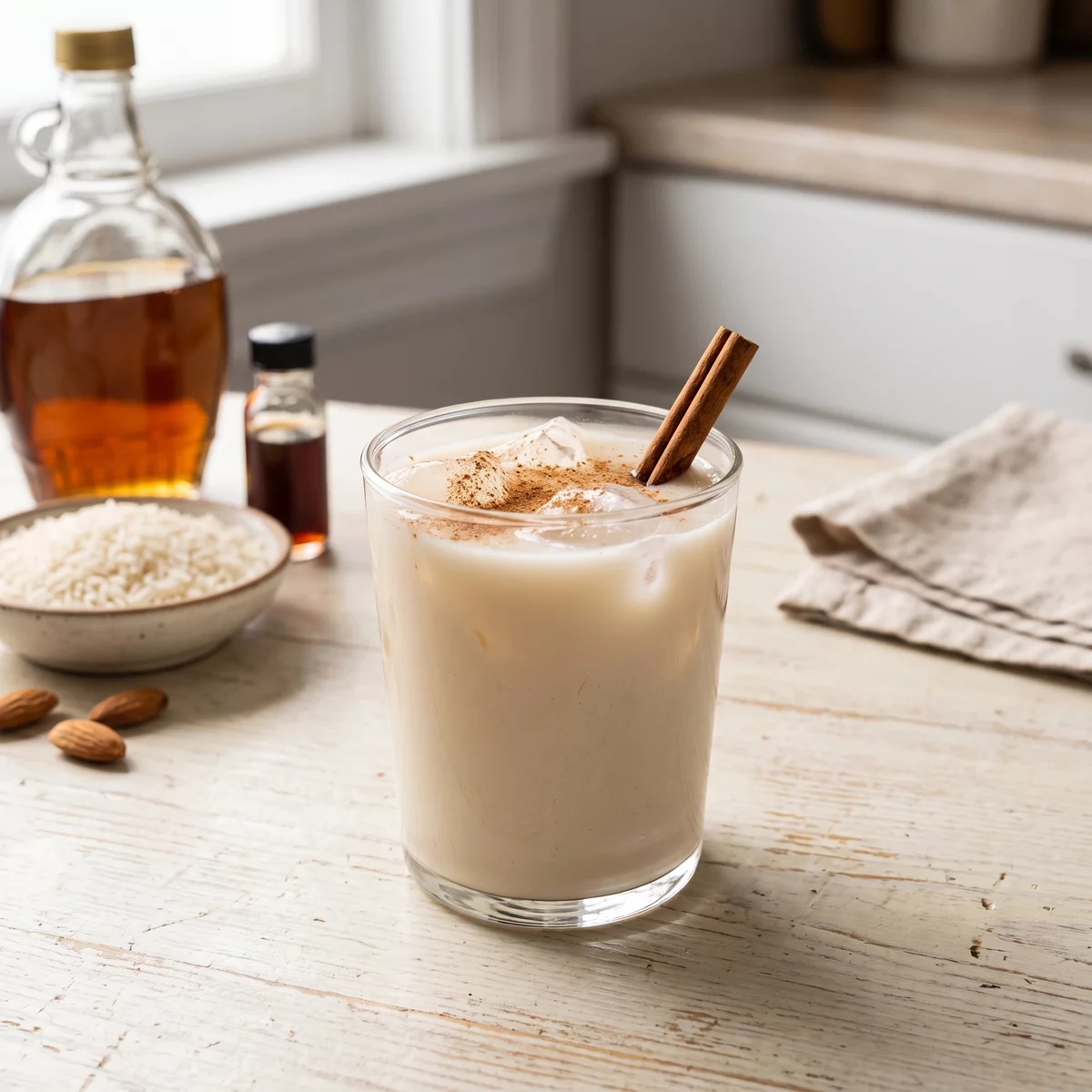
Vegan Horchata
Ingredients
Method
- Rinse the rice under cold water until the water runs mostly clear, then drain it well so no loose starch is left clinging to the grains.
- Add the drained rice, the 4 cups of water, and the cinnamon sticks to a saucepan. Bring it to a boil, lower the heat, and simmer uncovered for 15 minutes, until the rice is soft enough to squash easily between your fingers.
- Take the pot off the heat and let it cool for about 10 minutes. Cooling it first matters, because a blender full of steaming liquid can blow its lid off.
- Pour the rice, its cooking liquid, and the cinnamon sticks into a blender and blend on high for a full 2 minutes, until the mixture looks like a smooth, cloudy rice milk with no whole grains left.
- Set a fine mesh sieve over a large bowl or jug, line it with a double layer of cheesecloth or a clean thin towel, and pour the blended mixture through. Let it drain for a few minutes, then gather the cloth and squeeze gently to press out the last of the liquid, and discard the pulp.
- Stir the almond milk, maple syrup, vanilla extract, salt, and ground cinnamon into the strained rice liquid. Taste it and add another tablespoon of maple syrup if you want it sweeter.
- Cover and chill for at least 2 hours, or until cold. Stir well before pouring over ice, dust the top with ground cinnamon, and serve right away.
Notes
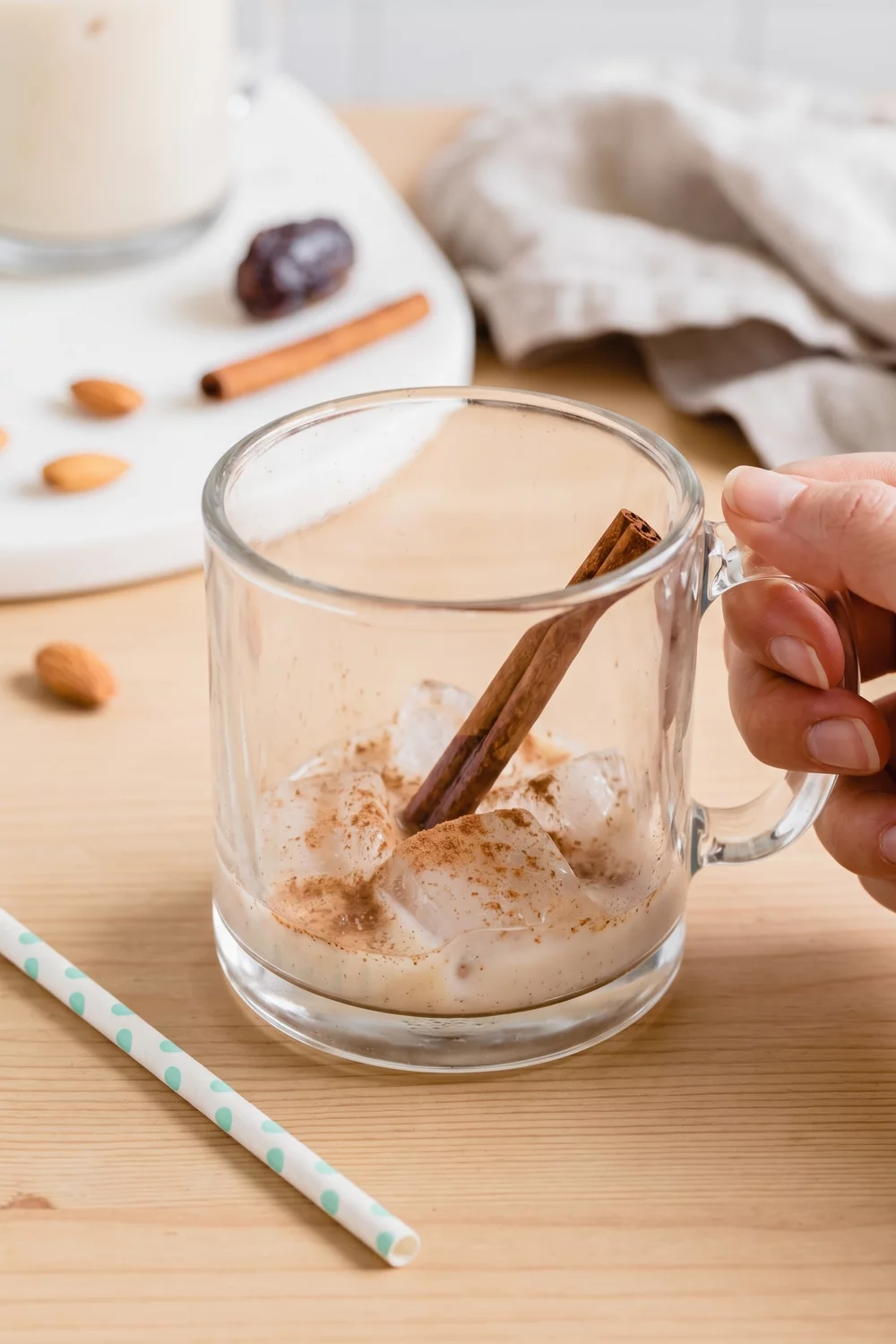
Tips for Vegan Horchata
Horchata is only a handful of ingredients, so the small choices decide whether it tastes creamy or like watered-down rice. The three things that matter most are rinsing the rice, simmering it until it’s soft, and straining it twice over. I like a cold glass next to a plate of vegan breakfast burrito when I want something cooling against something spicy.
- Rinse the rice until the water runs mostly clear. That step washes off loose surface starch, which is the exact stuff that turns a batch chalky and dull instead of smooth.
- Simmer the rice instead of only soaking it. Soft, cooked grains break down completely in the blender, so the rice releases enough starch to thicken the drink without any dairy or nuts.
- Let the rice cool for about ten minutes before it goes in the blender. Hot liquid pressurizes the jar and can blow the lid off, and this is the one spot where the recipe can go badly wrong.
- Strain through a double layer of cheesecloth or a thin clean towel, then squeeze the pulp. A single metal sieve lets fine grit slip through, and the squeeze is where a surprising amount of body hides.
- Blend for a full two minutes on high. Short blending leaves gritty bits behind, and the extra time costs you nothing but a little noise.
- Sweeten after straining and taste it again once chilled. Maple syrup stirred into the finished liquid blends evenly, and cold horchata reads less sweet than warm, so adjust at the end rather than the start.
Storage
Vegan horchata keeps in a sealed jar or pitcher in the fridge for 3 to 4 days. It separates as it sits, and that’s normal for a rice drink, so give it a good stir or shake before each glass. Serve it cold over ice, and don’t leave it sitting at room temperature for more than an hour or two. A tightly sealed jar keeps the cinnamon from fading, so it tastes nearly as fresh on day three as it did on day one. I don’t recommend freezing it, because the texture turns grainy once it thaws, and a grainy horchata is hard to bring back. For a make-ahead version, blend and strain the base the night before, then stir in the almond milk and maple syrup just before you serve.
FAQ
Why is my vegan horchata gritty?
Grit usually comes from two places: rice that wasn’t blended long enough, or liquid that only passed through a single sieve. Blend on high for a full two minutes and strain through a double layer of cheesecloth or a thin towel, then squeeze the pulp to get the fine particles out. If you can still feel grit, pour it through the cloth a second time. A high-speed blender plus a slow, steady strain fixes almost every gritty batch, and grit that settles at the bottom is usually a sign the blend was cut short.
Is horchata always vegan?
No, horchata isn’t always a vegan drink. Horchata de arroz starts from rice, water, cinnamon, and sugar, which is dairy free by default, but many modern recipes and restaurant versions add dairy for creaminess. If you’re buying it, check the ingredients, and if you’re making it at home, this version skips dairy from start to finish.
Can I make horchata without a high-speed blender?
Yes, you can make horchata without a high-speed blender. Simmering the rice until it’s very soft does most of the work, then blend it in batches in a regular blender for three to four minutes instead of two. If your blender is on the weaker side, soak the rice in the water for an hour before cooking, and strain slowly so the cloth catches anything the blades missed. Cold rice blends more stubbornly than warm rice, so keep it on the warmer side of room temperature while you work.
What kind of rice should I use for horchata?
Long-grain white rice gives the cleanest, most neutral flavor and blends down to a smooth base, and medium-grain rice works in a pinch. Avoid short-grain or sticky rice, which turns gluey and thick in a way that’s hard to strain and leaves the drink heavy rather than refreshing. Whatever rice you choose, rinse it well and cook it fully, since the texture of the finished drink depends more on those two steps than on the exact grain.