Good vegan pierogi come down to three humble things: flour, a pot of potatoes, and an onion that’s had time to turn sweet. The dough is just flour, water, oil, and salt, so there are no eggs and no dairy to work around, and it handles more like fresh pasta than a bread dough. I make the filling first and let it go cold, because a warm filling steams the seam from the inside and that’s how dumplings open in the pot. One batch makes about two dozen, and they freeze well before they’re boiled, so a double batch costs me almost no extra effort.
The dough rewards you once you understand how it behaves. Warm water hydrates the flour faster and gives a stretchier sheet, and a short rest lets the gluten relax so your circles stop springing back under the rolling pin. If the dough fights you, it needs a rest rather than more flour. For the filling I mash Yukon Gold potatoes with onions cooked down until they’re jammy, plus vegan butter and nutritional yeast for the savory depth that usually comes from dairy cheese. I serve them with a spoon of vegan sour cream, a ladle of vegan gravy, and a pile of vegan coleslaw on the plate. When I’m feeding a crowd, they sit next to vegan stuffed mushrooms, and a few crumbles of homemade vegan bacon scattered over the top add a smoky crunch.

Vegan Pierogi
Ingredients
Method
- Whisk the flour and salt together in a large bowl. Pour in the warm water and the oil, then mix with a fork until a shaggy dough forms. Turn it out onto a lightly floured surface and knead for five to seven minutes, until the dough is smooth and only slightly tacky. If it sticks to your hands, work in flour a tablespoon at a time.
- Cover the dough with a clean towel or plastic wrap and let it rest at room temperature for thirty minutes. Resting relaxes the gluten, which is what lets you roll the circles thin without them shrinking back. Make the filling while it rests.
- Put the potatoes in a pot, cover them with cold water by an inch, and add a generous pinch of salt. Bring to a boil and cook for twelve to fifteen minutes, until a knife slides into a chunk with no resistance. Drain well and let the potatoes steam dry in the colander for a minute.
- While the potatoes cook, warm the olive oil in a wide skillet over medium-low heat. Add the onions and cook, stirring now and then, for twenty to twenty-five minutes, until they're soft, deep golden, and jammy. Stir in the garlic for the last minute. Scoop out about a third of the onions and set them aside for serving.
- Mash the drained potatoes with the caramelized onions, vegan butter, nutritional yeast, salt, and pepper until smooth. Spread the filling out in a bowl and chill it for at least twenty minutes, or up to two days, so it firms up and won't steam the seams open.
- Divide the dough in half and keep the half you're not rolling covered. On a floured surface, roll one half into a sheet about 1/8 inch (3 mm) thick. Cut out 3-inch circles with a cookie cutter or the rim of a glass, then gather the scraps, re-roll them, and cut again.
- Set two teaspoons of the chilled filling in the center of each circle. Fold the dough over into a half-moon, press out the air as you go, and pinch the edges together. Crimp the seam with the tines of a fork, and keep the assembled pierogi under a towel so they don't dry out.
- Bring a large pot of well-salted water to a gentle simmer, not a rolling boil. Lower in a batch of pierogi without crowding the pot and cook them for about five minutes, until they float, then let them cook for two more minutes. Lift them out with a slotted spoon and set them on a plate while you cook the rest.
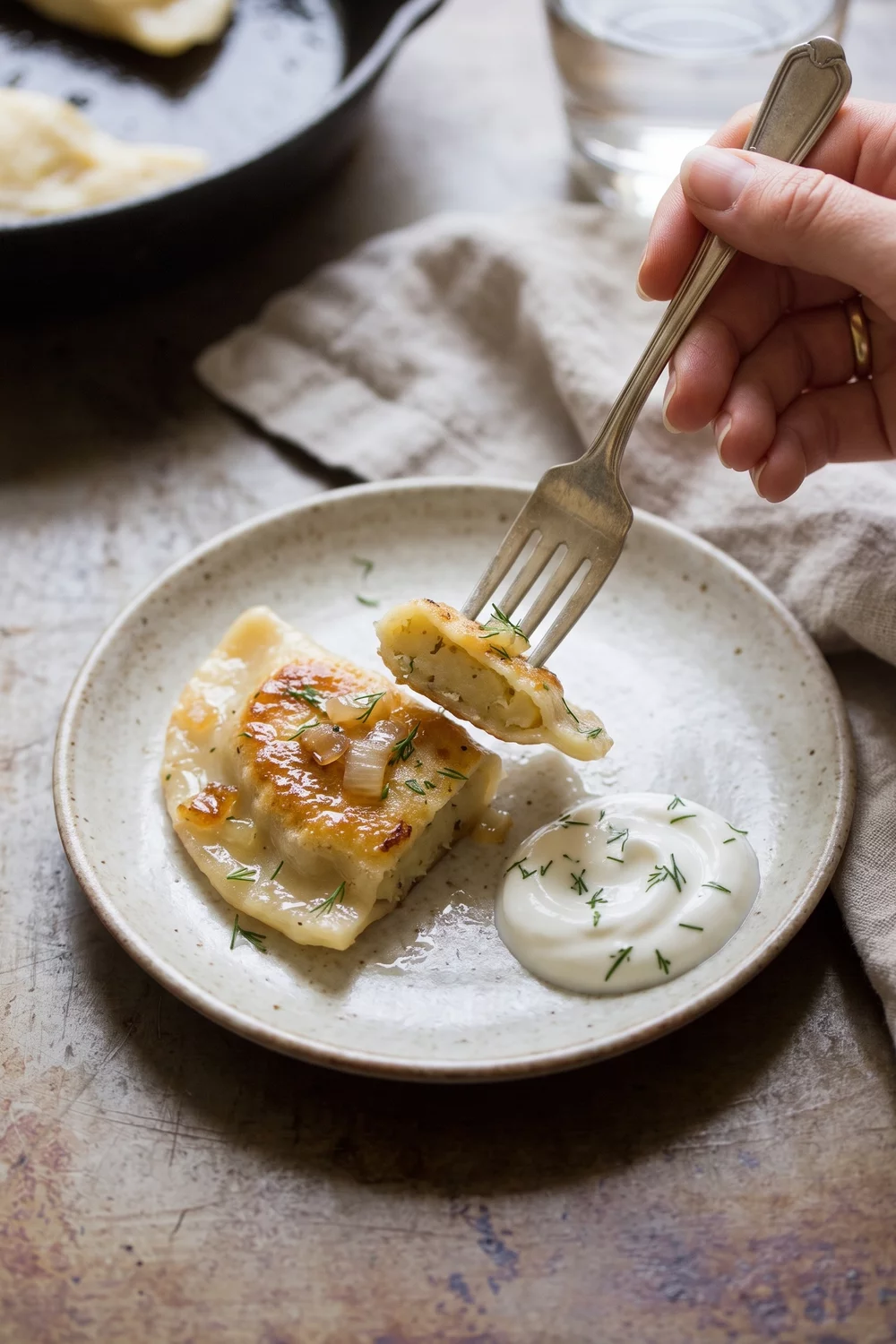
- Melt a tablespoon of vegan butter in a wide skillet over medium-high heat. Fry the boiled pierogi in a single layer for two to three minutes per side, until they're golden and crisp in spots. Work in batches, adding more vegan butter as needed, and serve them hot with the reserved onions, vegan sour cream, and fresh herbs.
Notes
Tips for Vegan Pierogi
Pierogi are simple food, and the small habits you build into the dough and the seal are what keep them whole in the pot.
- Use warm water, not cold, when you mix the dough. Warm water hydrates the flour faster and makes the gluten form sooner, which gives you a stretchier sheet that rolls thin without tearing.
- Rest the dough for a full thirty minutes. That rest relaxes the gluten, and without it the circles shrink back as you cut them and the seams pull open when you fold the dough over.
- Chill the filling until it’s firm before you wrap it. A warm filling steams the inside of the seam, and that trapped moisture is what splits a pierogi open in the boiling water.
- Keep the rim of each circle dry and press the air out before you seal it. Filling or a slick of oil on the edge is the most common reason a seam fails, so leave a clean border and run a finger around the inside edge before you crimp.
- Boil them gently, not at a hard boil, and don’t crowd the pot. A rolling boil tosses the dumplings against each other and tears the dough, so keep the water at a low simmer and work in small batches.
- Finish them in vegan butter after boiling. The boil sets the dough, but the pan-fry is what gives the exterior its golden, slightly crackly edge, and boiled-only pierogi taste flat next to that.
Storage
In an airtight container in the fridge, cooked vegan pierogi keep for about three to four days. Reheat them in a skillet with a teaspoon of vegan butter over medium heat for four to five minutes so they crisp back up, and skip the microwave, which leaves them rubbery. To freeze, lay the shaped, uncooked pierogi on a floured sheet pan, freeze them solid for a few hours, then bag them for up to three months; boil them straight from frozen and add a couple of minutes. Cooked pierogi also freeze for up to two months, though they lose some of their crisp edge. The filling can be made up to two days ahead and kept covered in the fridge, which means the day you cook is mostly dough and assembly.
FAQ
Are pierogi vegan?
It depends on the filling and the dough. The dough is usually just flour, water, oil, and salt, so it’s naturally egg-free, but many fillings use dairy cheese, and the pan-fry often calls for butter, which is why store-bought pierogi are hit or miss. This version is fully plant-based: potato and caramelized onion for the filling, vegan butter in the pan, and vegan sour cream to serve. Always check the label on frozen pierogi, since some brands add egg or dairy to the dough.
Can I make vegan pierogi ahead of time?
You can make the whole thing ahead. The filling can be made two days ahead and kept covered in the fridge, and the dough can rest in the fridge overnight in a covered bowl, then sit at room temperature for twenty minutes to soften before you roll it. For the biggest head start, shape the pierogi without boiling them, freeze them on a tray, and bag them, since they go straight into the pot from frozen when you’re ready. Boiled and pan-fried pierogi also reheat well the next day in a skillet.
Why did my pierogi open in the water?
A seam that opens usually comes from one of four things: filling or oil on the rim so the dough can’t stick to itself, trapped air puffing the dumpling in the heat, too much filling so the dough can’t be pressed flat, or water at a hard boil. Leave a clean border, press the air out as you fold, use two teaspoons of filling per circle, and keep the pot at a gentle simmer.
What do you serve with vegan pierogi?
They’re classic with caramelized onions piled on top, a spoon of vegan sour cream, and fresh dill or chives. I also like a vegan gravy poured over, or a bright vegan coleslaw on the side to cut the richness. If you want to make a full meal of them, add a bowl of soup or a simple green salad.