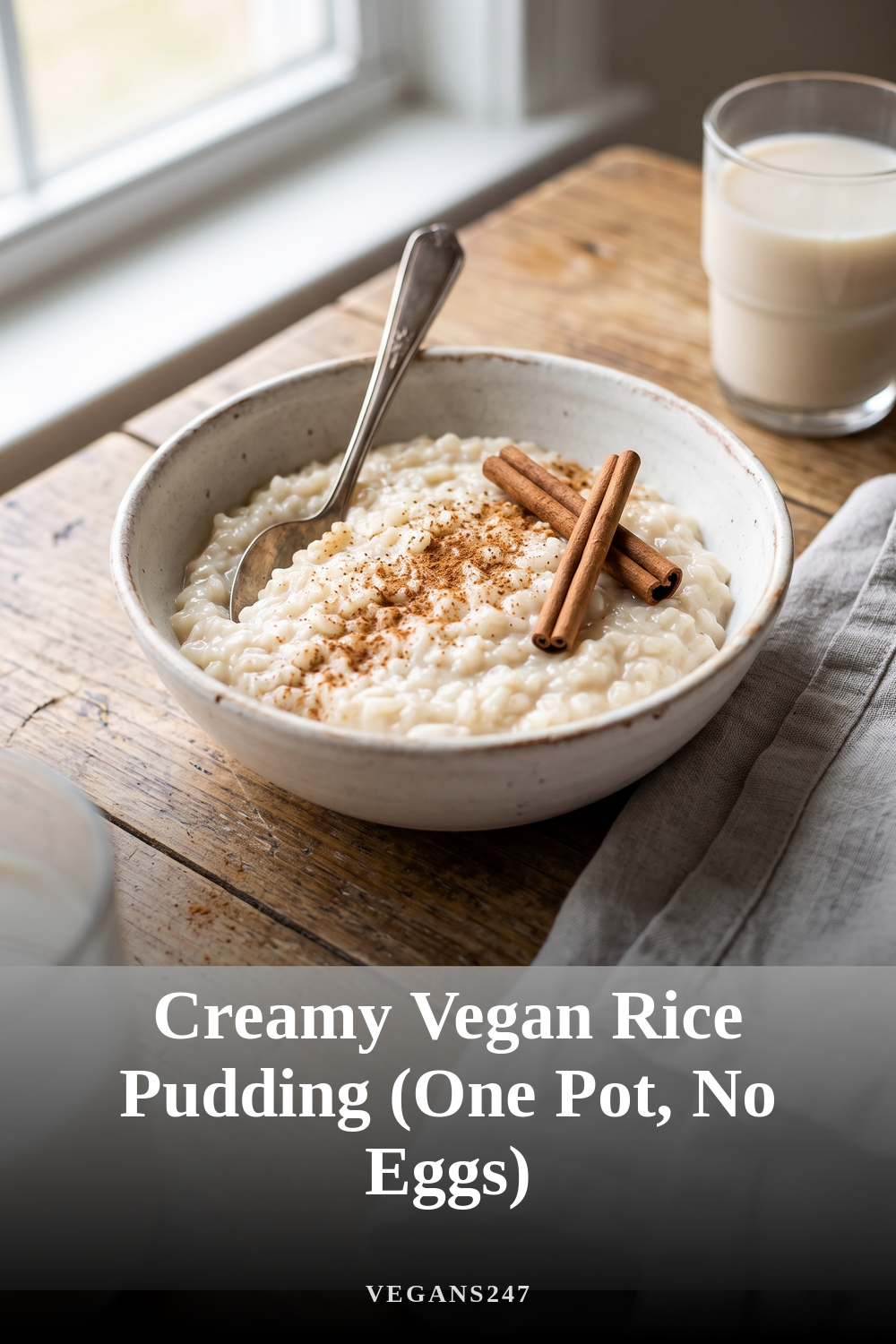
A lot of vegan rice pudding turns out either soupy or gluey, and the difference usually comes down to two things: how much liquid the rice absorbs and when you stop stirring. Rice releases starch as it cooks, so the pudding thickens on its own once the grains begin to soften. Push it with high heat and that same starch turns the whole pot sticky. Keep the heat low, stir often, and pull it off while it still looks a little looser than you want, because it sets up fast as it cools.
The base here is short-grain rice, water, and unsweetened oat milk, sweetened with plain sugar and finished with cinnamon and vanilla. Short-grain rice is what gives you that soft, creamy spoonful, the same way the starch does the work in a good vegan horchata. I cook the rice in water first and add the milk after, which keeps the plant milk from scorching before the grains are anywhere near tender.
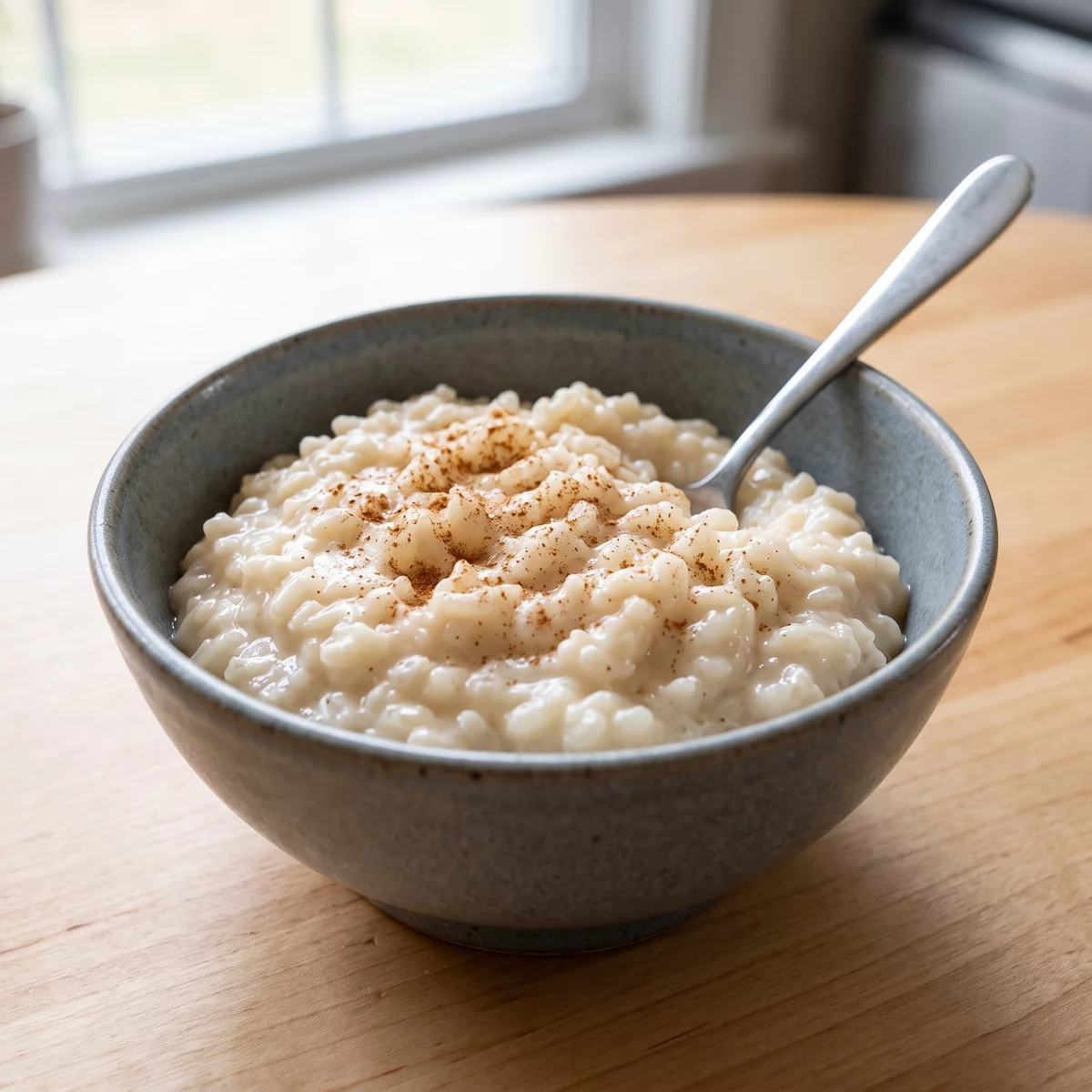
Vegan Rice Pudding
Ingredients
Method
- Rinse the rice in a fine-mesh strainer under cold water until the water runs mostly clear, about 30 seconds. This washes off the loose surface starch that would otherwise make the pudding gluey.
- Combine the rinsed rice, water, and salt in a heavy saucepan. Bring to a boil, then drop the heat to low, cover, and simmer for 8 to 10 minutes, until the water is mostly absorbed and the rice is starting to soften.
- Pour in the oat milk and cinnamon. Simmer uncovered on low for 20 to 25 minutes, stirring the bottom of the pan every few minutes, until the rice is fully tender and the liquid has thickened enough to coat the back of a spoon.
- Stir in the sugar and vanilla and cook for 2 to 3 more minutes, until the sugar dissolves. The pudding should still look a little loose at this point; it thickens noticeably as it cools.
- Take the pan off the heat and stir in the vegan butter if you are using it. Serve warm with a dusting of cinnamon, or chill it and serve cold. For cold pudding, press a piece of parchment or plastic wrap directly onto the surface so a skin doesn't form.
Notes
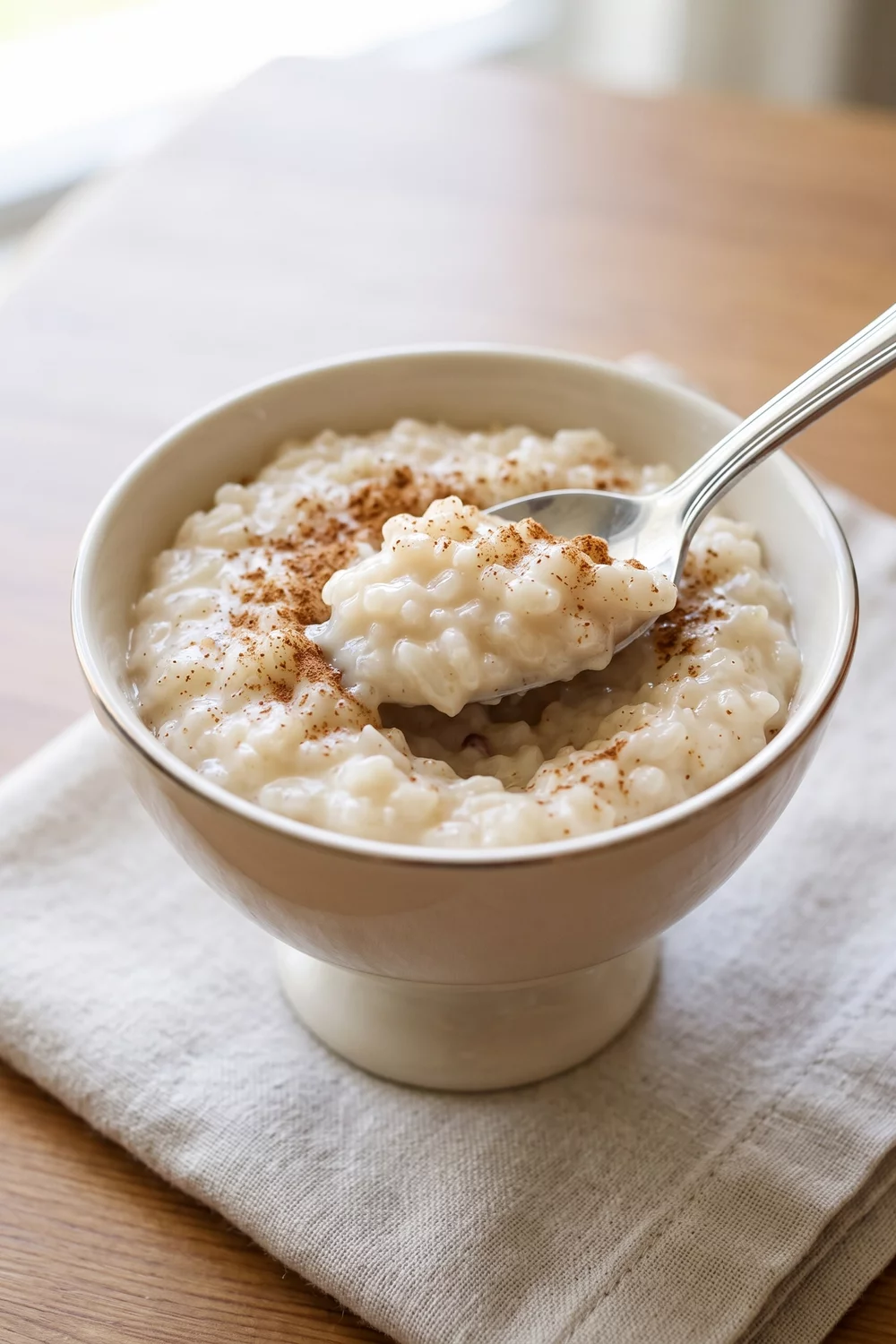
Tips for Best Vegan Rice Pudding
Rice pudding is forgiving, but a few small decisions separate a silky bowl from a starchy one. These are the moves that matter most.
- Short-grain rice is the whole game. Arborio, bomba, or a bag labeled pudding rice all work because they release more starch than long-grain. Long-grain rice still makes a decent pudding, but the texture comes out looser and less creamy.
- Cook the rice in water first, then add the oat milk. If you start with milk, the sugar and starch in it can catch on the bottom of the pan before the rice is anywhere near tender.
- Keep the heat at a low simmer and stir the bottom of the pan every few minutes. A heavy saucepan or a small Dutch oven gives you more margin, because the heat spreads evenly instead of concentrating in one spot.
- Stop cooking while it still looks a little runny. Rice pudding tightens as it cools, and a pot that looks perfect on the stove often turns stiff by the time it reaches the table.
- Add the sugar near the end. Sugar slows how quickly the rice softens, so stirring it in only once the grains are tender keeps the cooking time predictable.
- For the Spanish arroz con leche angle, steep a strip of lemon or orange peel in the oat milk while the rice cooks and lift it out before serving. The citrus is what makes that version taste like more than just sweet rice, and it plays nicely alongside a mug of vegan hot chocolate if you want a warm dessert pairing.
- A handful of raisins stirred in during the last few minutes plumps up and adds little pockets of sweetness. Add them at the start and they go mushy and dull the color of the pudding.
- The skin that forms on top is a divider, not a defect. Some people live for it and others can’t stand it, and pressing plastic wrap onto the surface while it chills is the way to skip it. Leave the pudding uncovered for the last hour of chilling if you actually want it.
- A big pinch of flaky salt over each bowl wakes up the cinnamon and keeps the sweetness from tasting flat, the same trick that makes a batch of vegan cinnamon rolls taste balanced.
Storage
Leftover rice pudding keeps in an airtight container in the fridge for up to four days. It firms up a lot once chilled, so loosen each portion with a splash of oat milk when you reheat it, either in a small pan over low heat or in short bursts in the microwave. Stir it well, because the rice settles and the liquid rises to the top. I don’t recommend freezing it, since the grains go grainy and watery when they thaw and reheating never brings the creaminess back. If you want a make-ahead vegan dessert that actually holds its texture, my vegan carrot cake is a better one to keep on hand.
FAQ
Why did my rice pudding turn gluey?
Usually it is too much starch combined with too much heat. Rinsing the rice before cooking and holding the pot at a low simmer instead of a boil keeps the surface starch from breaking down into paste. If the pudding is already too thick, warm a little oat milk and stir it in a splash at a time until the texture loosens.
Can I make vegan rice pudding with leftover cooked rice?
Yes, and it is faster. Use about three cups of cooked rice for every half cup of dry rice the recipe calls for, skip the water, and simmer it straight in the oat milk. Cooked rice releases less starch, so the result is a little less creamy unless you whisk in a teaspoon of cornstarch with the milk.
What is the best plant milk for rice pudding?
Oat milk is my default because it is naturally creamy and doesn’t fight the cinnamon. Canned coconut milk makes it richer but adds a coconut taste, so use half coconut and half oat if you want the richness without the flavor. Almond milk works too, though the pudding comes out lighter and needs a slightly longer simmer.
Can I make it in the oven instead?
Yes. Combine everything except the vanilla and vegan butter in a buttered baking dish and bake at 300F (150C) for about 1 1/2 hours, stirring once or twice, until the rice is tender. The oven version develops a skin on top, which some people love and others scrape off. The stovetop method stays smoother because you are stirring it as it cooks.