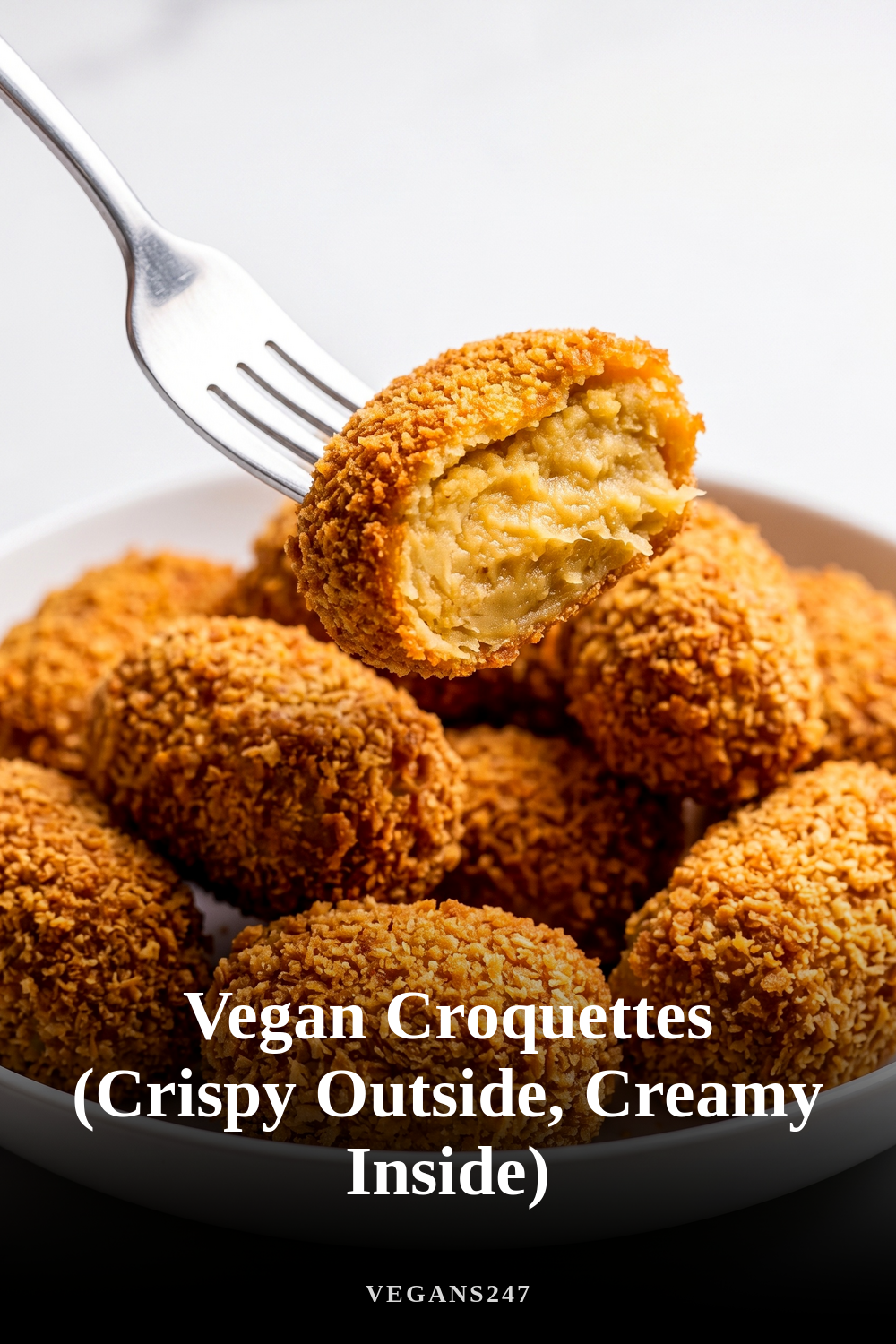
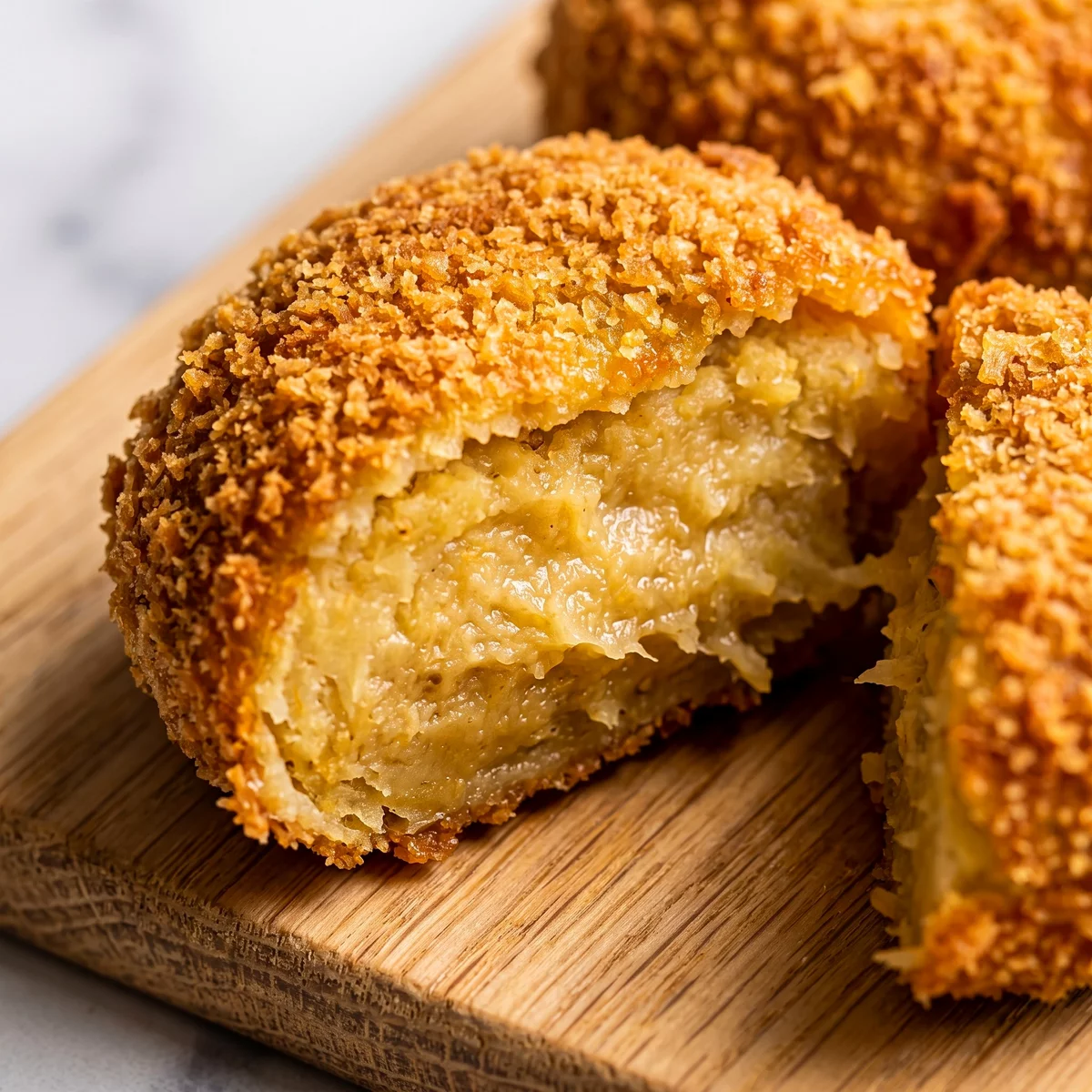
Croquettes live or die by the potato mix, and most of the trouble starts with a mash that still holds water. My vegan croquettes begin with floury potatoes that get dried over low heat, then bound with chickpea flour and cornstarch rather than a conventional custard base, so the centers stay creamy and the shells hold their shape whether you fry or bake them. The crisp panko crust is the part that makes the extra few minutes worth it, and it comes together in one pot before the shaping begins.
The potato you pick matters more than people expect. Russets and Yukon Golds mash into a soft, dry crumb that drinks up the binder, while waxy potatoes stay wet and slick and fight it the whole way. I keep the seasoning simple, just garlic, onion, and a little nutmeg, so the potato stays the star and the crust does the talking.
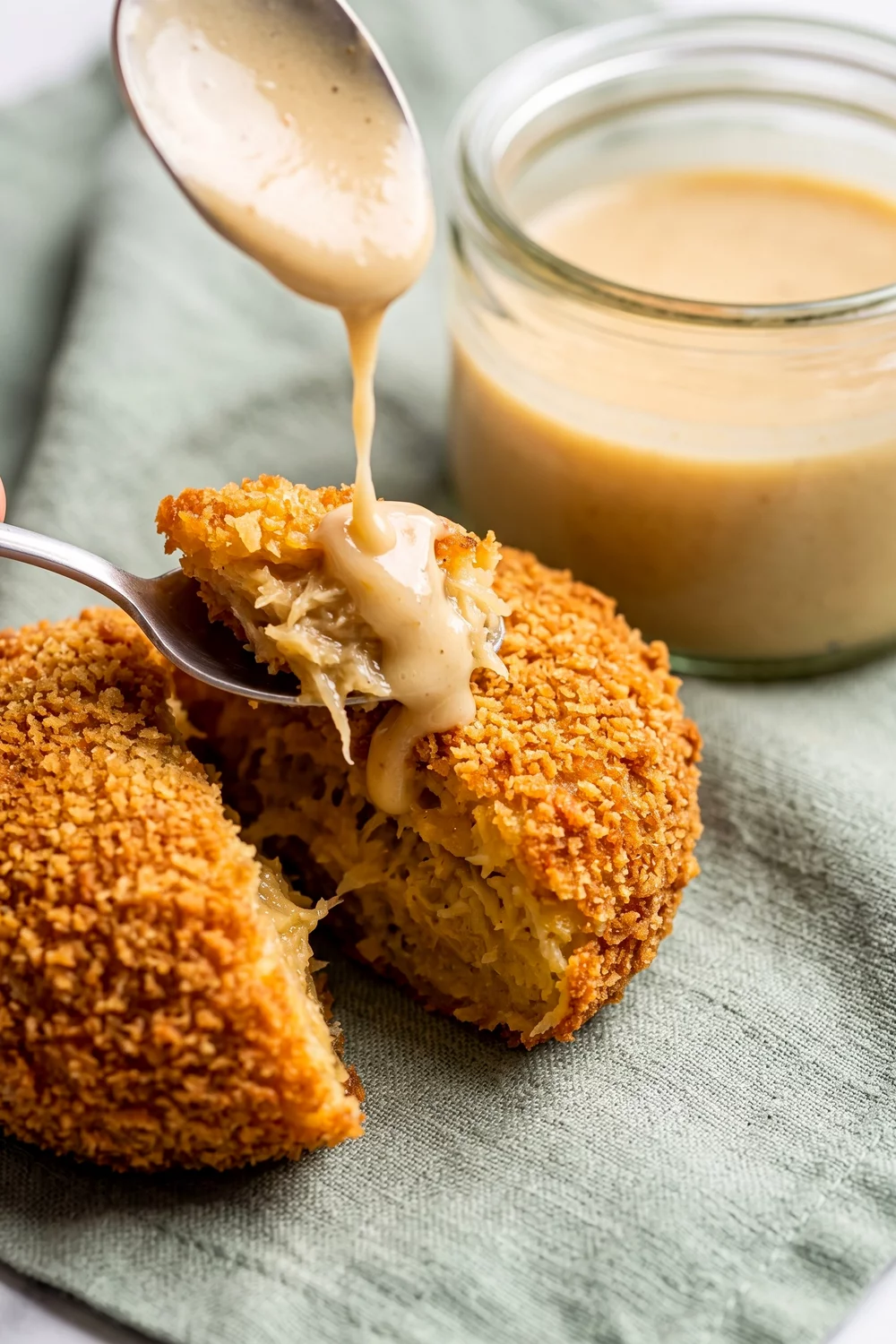
I lean on the same habits here that keep my vegan hush puppies light and my vegan scotch eggs from cracking: a dry filling, a firm chill, and a steady cooking temperature. These sit nicely next to vegan cauliflower mash on a plate, and I like them with a bowl of vegan chipotle aioli for dipping. One batch makes 16, which is enough to feed four as a side or a room full of people as a snack, and the shaped croquettes wait in the fridge until you are ready to cook, which makes the last step calm instead of rushed.
Vegan Croquettes
Ingredients
Method
- Put the potatoes in a large pot and cover them with cold water by an inch. Add a tablespoon of salt, bring to a boil, and cook for 15 to 20 minutes, until a knife slides in with no resistance.
- Drain the potatoes well, then return them to the hot pot and set it over low heat for a minute, shaking gently, so the last of the steam escapes. Mash them smooth with a potato masher or press them through a ricer until no lumps remain.
- Stir in the chickpea flour, cornstarch, nutritional yeast, garlic powder, onion powder, salt, pepper, nutmeg, vegan butter, and parsley. Mix until you have a firm, slightly tacky dough, then let it cool for 10 minutes so it is easy to handle.
- Line a tray with parchment. With damp hands, roll about 2 tablespoons of dough into a log roughly 3 inches long and 1 inch thick. Repeat to make 16 croquettes.
- Set up three shallow bowls with the flour, the oat milk, and the panko. Roll each croquette in the flour, dip it in the oat milk, then press it into the panko so the whole surface is coated.
- Park the breaded croquettes in the fridge for at least 20 minutes. This firms them up so they hold their shape in the oil or the oven.
- To fry, heat an inch of oil to 350F (175C) in a deep pan and cook the croquettes in batches for 3 to 4 minutes, turning once, until deep golden. To bake, heat the oven to 425F (220C), brush the croquettes with oil, and bake for 20 to 25 minutes, turning halfway, until crisp and golden.
Notes
Tips for Vegan Croquettes
A few details decide whether these come out crisp and creamy or heavy and split, and they all come down to how dry the potato is and how cold the shaped croquettes are when they hit the heat. Get those two right and the rest is easy, whether you fry them in a pan or bake them on a tray.
- Dry the potatoes twice. Drain them well, then put them back in the warm pot for a minute so the steam escapes. Any water left in the mash turns the middle gummy and pushes the coating off from the inside.
- Mash them completely smooth. Lumps create weak spots where a croquette splits as it cooks, so work out every bump with a masher or a ricer before the flour goes in.
- Chickpea flour and cornstarch do the binding. Together they soak up the extra moisture and hold the mix without a custard base, and the cornstarch is what keeps the center tender rather than rubbery.
- Chill the shaped, breaded croquettes for at least 20 minutes. Cold dough is firm dough, and firm dough is what survives the trip into hot oil or a hot oven without slumping.
- Hold the oil at 350F (175C). Colder oil lets the croquettes soak up grease, and hotter oil browns the crust before the middle is warm, which is the moment they burst open.
- For baking, oil the surface and use a hot oven. A brush of oil and 425F (220C) is what gets the panko to crunch without a pot of oil.
Storage
Cooked croquettes are best the day they are made, but they keep in an airtight container in the fridge for 3 to 4 days. Reheat them in a 400F (205C) oven or an air fryer for 8 to 10 minutes so the crust comes back, since the microwave softens the panko and leaves it limp. Serve them straight from the oven while the shell is still crisp, because the contrast between the crunch outside and the soft center is the whole point. To get ahead, freeze the breaded, uncooked croquettes on a tray until solid, then bag them for up to 3 months and cook them straight from frozen, adding 3 to 4 minutes to the fry or bake time. You can also make the potato dough a day ahead and keep it covered in the fridge, then shape and bread it when you are ready to cook.
FAQ
What binds vegan croquettes without a custard base?
Chickpea flour and cornstarch. The chickpea flour soaks up the extra moisture in the mash and the cornstarch tightens the mix as it heats, so the croquettes hold together on their own. You do not need a store-bought replacer for this dough to work, just a thoroughly dried potato and a short chill before cooking.
Why did my croquettes fall apart?
It is almost always wet potatoes or a skipped chill. If the mash still holds water from the pot, the dough stays soft and splits, and if the breaded croquettes go into the oil straight from the counter, they slump before the crust sets. Dry the potatoes over low heat and chill the shaped croquettes for at least 20 minutes.
Can I bake vegan croquettes instead of frying them?
Yes. Brush or spray the breaded croquettes with oil and bake them at 425F (220C) for 20 to 25 minutes, turning them halfway. They come out lighter than the fried version and a little less shattery, so the oil on the surface is what matters for the crunch. A hot oven and a thin coat of oil do most of the work.
Can I make these croquettes gluten free?
Yes, with a couple of swaps. Use a gluten-free all-purpose blend in place of the wheat flour and gluten-free panko or crushed cornflakes for the coating, and check that the oat milk is certified gluten free. The potato mix, the binding, and the cooking method all stay the same.