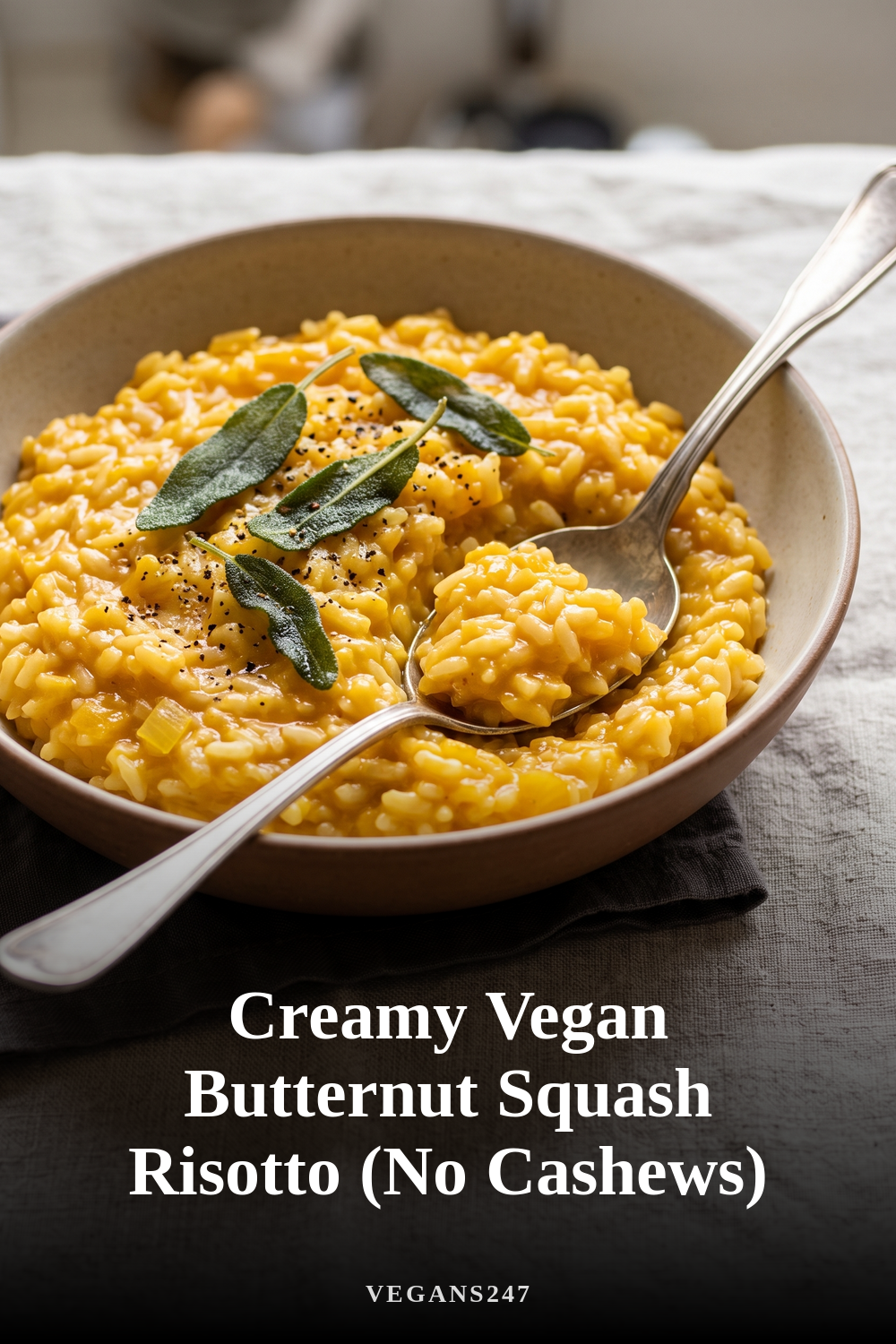
This vegan butternut squash risotto is creamy because of the squash, not because of a nut or coconut stand-in. I roast the squash, mash part of it into a puree, and stir that puree into the rice near the end, where it thickens the stock into a silky sauce the same way a classic risotto leans on dairy. The rest of the squash stays in cubes, so every bowl has something to bite into. The rice does the rest of the work: arborio releases enough starch to bind everything, as long as you keep the pot at a steady simmer and stir often.
The failure I see most often with risotto is a pot that turns stiff and gluey, and that usually comes from cooking past al dente or letting the rice sit without enough liquid. This version builds in a fix for that. It also sits right next to the same fall flavors as my roasted butternut squash soup and my mushroom barley soup, and it works as a main on its own or as a side next to a vegan turkey roast on a holiday table.

Vegan Butternut Squash Risotto
Ingredients
Method
- Heat the oven to 425F (220C) and line a large baking sheet with parchment. Toss the cubed squash with 2 tablespoons of the olive oil, the salt, and the pepper, then spread it in a single layer. Roast for 25 to 30 minutes, tossing once halfway, until the cubes are tender and browned at the edges.
- Measure out about 1 1/2 cups of the roasted squash into a bowl. Mash it with a fork, or blend it with 1/4 cup of the warm vegetable stock, until you have a mostly smooth puree. Set the puree aside and keep the remaining squash cubes warm.
- Heat the remaining 4 cups or so of vegetable stock in a saucepan until it just simmers, then drop the heat to low and keep it covered. Hot stock keeps the risotto cooking evenly and is the difference between a creamy pot and a gluey one.
- In a wide, heavy pot or Dutch oven, melt 2 tablespoons of the vegan butter with the remaining 1 tablespoon olive oil over medium heat. Add the onion and cook for 6 to 8 minutes, until soft and translucent. Add the garlic and cook for 1 minute more, until fragrant.
- Add the arborio rice and stir for 1 to 2 minutes, until the grains are coated and the edges turn slightly translucent. Pour in the white wine and stir until it has almost fully absorbed.
- Add the hot stock one ladle at a time, stirring every 30 seconds or so and waiting until each ladle is nearly absorbed before adding the next. After about 15 minutes, stir in the squash puree and half of the sage. Keep adding stock and stirring until the rice is tender with a slight bite in the center, 25 to 30 minutes total.
- Take the pot off the heat. Stir in the nutritional yeast, the remaining 1 tablespoon vegan butter, and the rest of the sage. Fold in the reserved squash cubes, taste, and add salt if it needs it. Let the risotto rest for 2 minutes, then loosen it with a splash of warm stock if it has tightened up. Serve in warm bowls.
Notes

Tips for Vegan Butternut Squash Risotto
Risotto is more about technique than a long ingredient list, and butternut squash brings a couple of its own wrinkles. These are the moves that matter most.
- Arborio is the rice to reach for because its high starch content is what makes the dish creamy. Long-grain rice like basmati stays separate and never turns silky, so save it for another dinner.
- Keep the stock hot and the pot at a steady simmer. Cold stock drops the temperature every time you add it, and a pot that keeps starting and stopping cooks the outside of the grains before the center is ready.
- The mashed roasted squash is the cream here. It thickens the stock into a sauce on its own, so you don’t need cashews or canned coconut milk, and the finished bowl tastes like squash instead of coconut.
- Roast the squash instead of boiling it. Boiling pulls out flavor and leaves the flesh watery, while roasting caramelizes the sugars and gives you both a sweeter puree and cubes that hold their shape.
- Stop the moment the rice is tender with a slight bite in the center. Risotto tightens as it cools, so a pot that looks perfect on the stove often turns stiff by the time it reaches the table.
- If the risotto does firm up before serving, warm a little vegetable stock and stir it in a splash at a time. You can fix a tight pot but you can’t undo rice that has cooked to mush.
- Crisp the sage in a little olive oil for the top if you want a restaurant finish. It takes about 30 seconds in a warm pan, and the crunch plays against the soft rice.
- Serve it with something sharp to cut the richness. A spoonful of vegan gravy on top of the cubes is a good move at a holiday meal, and a simple green salad works on a weeknight.
Storage
Leftover risotto keeps in an airtight container in the fridge for three to four days. It thickens a lot when cold, so reheat it in a small pan over low heat with a splash of vegetable stock or water, stirring until it loosens, or in short bursts in the microwave. Risotto doesn’t freeze well because the rice grains go grainy and split once thawed, so I plan to eat this within a few days rather than stash it long term. The squash cubes hold up better on a reheat than the puree does, so leftovers come back a touch looser than the first night.
FAQ
Do I have to stir risotto the whole time?
You don’t have to stir it the entire time, but you can’t ignore it either. The stirring rubs the grains against each other and releases the starch that makes the texture creamy, so I stir every 30 seconds or so as each ladle of stock goes in, then step away for a minute while it absorbs. Constant frantic stirring isn’t necessary, and a pot you never touch turns out uneven.
Why did my risotto turn gluey or mushy?
Gluey risotto is almost always a sign of overcooking rather than bad rice. Cook it only until the rice is tender with a slight bite in the center, then take it off the heat. If it has already gone past that point, you can’t undo the softness, but warming a little vegetable stock and stirring it in loosens the pot enough to serve. Rinsing the rice first would strip the starch you actually want, so don’t do that here.
Can I make this without wine?
You can make this risotto without any wine at all. Swap the dry white wine for an extra half cup of vegetable stock, then add a teaspoon of lemon juice or apple cider vinegar with the last ladle to bring back the brightness the wine would have given. The wine is there for acidity more than for alcohol, so a splash of vinegar does the same job.
Can I use a different squash or pumpkin?
Any winter squash works here, not just butternut. Delicata, kabocha, red kuri, and sugar pumpkin all roast in roughly the same time once they’re cubed. If you want to use canned pumpkin puree instead of fresh squash, skip the roasting step for the puree and stir two thirds of a cup in with the last of the stock. You’ll lose the caramelized cubes on top, so add toasted nuts or extra crispy sage for texture.